The United States continues to modernize the Marine Corps’ warfighting capabilities, as the service recently retired an amphibious troop transport platform—designed for ship-to-shore deployment—that had been in operation for more than half a century.
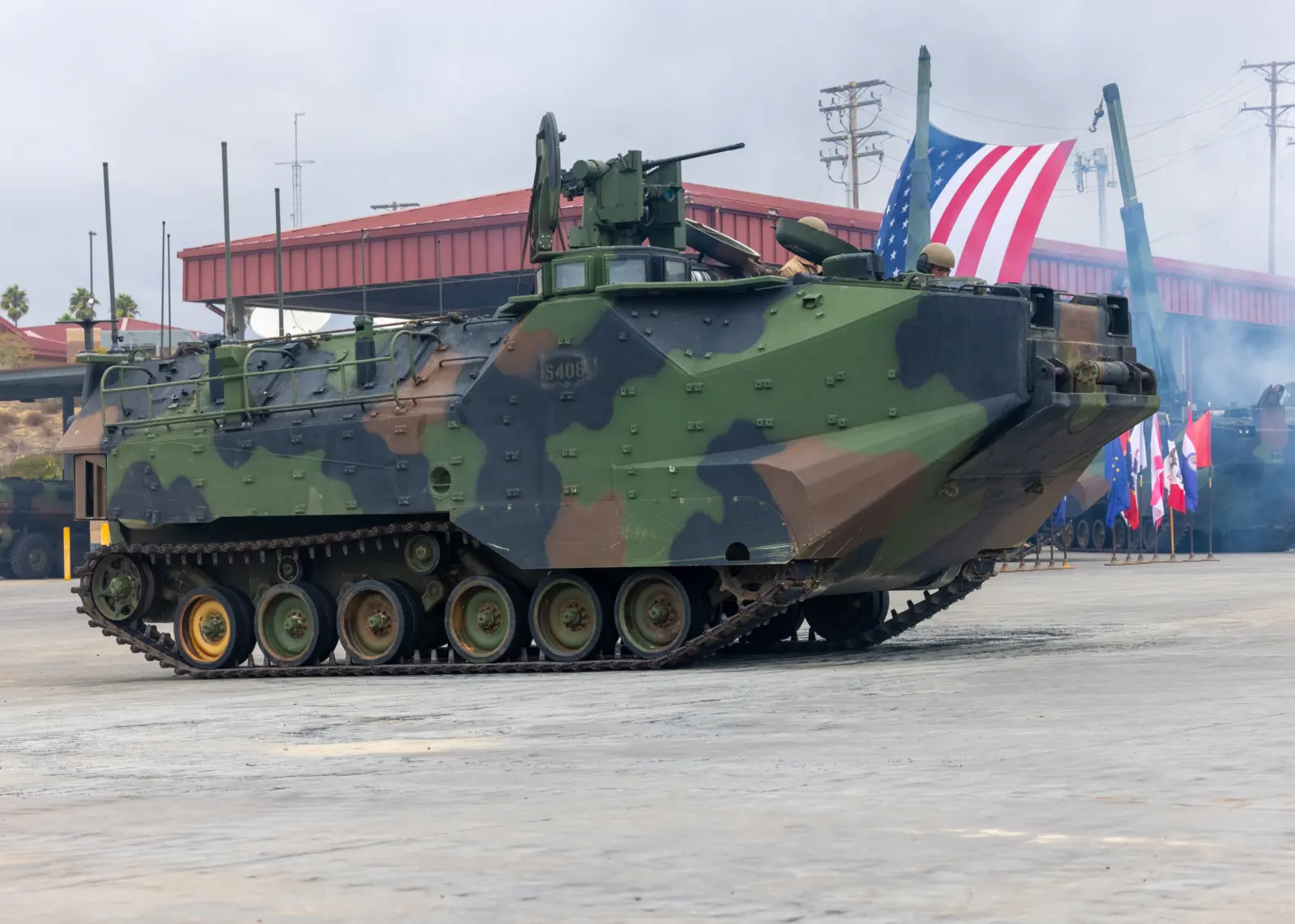
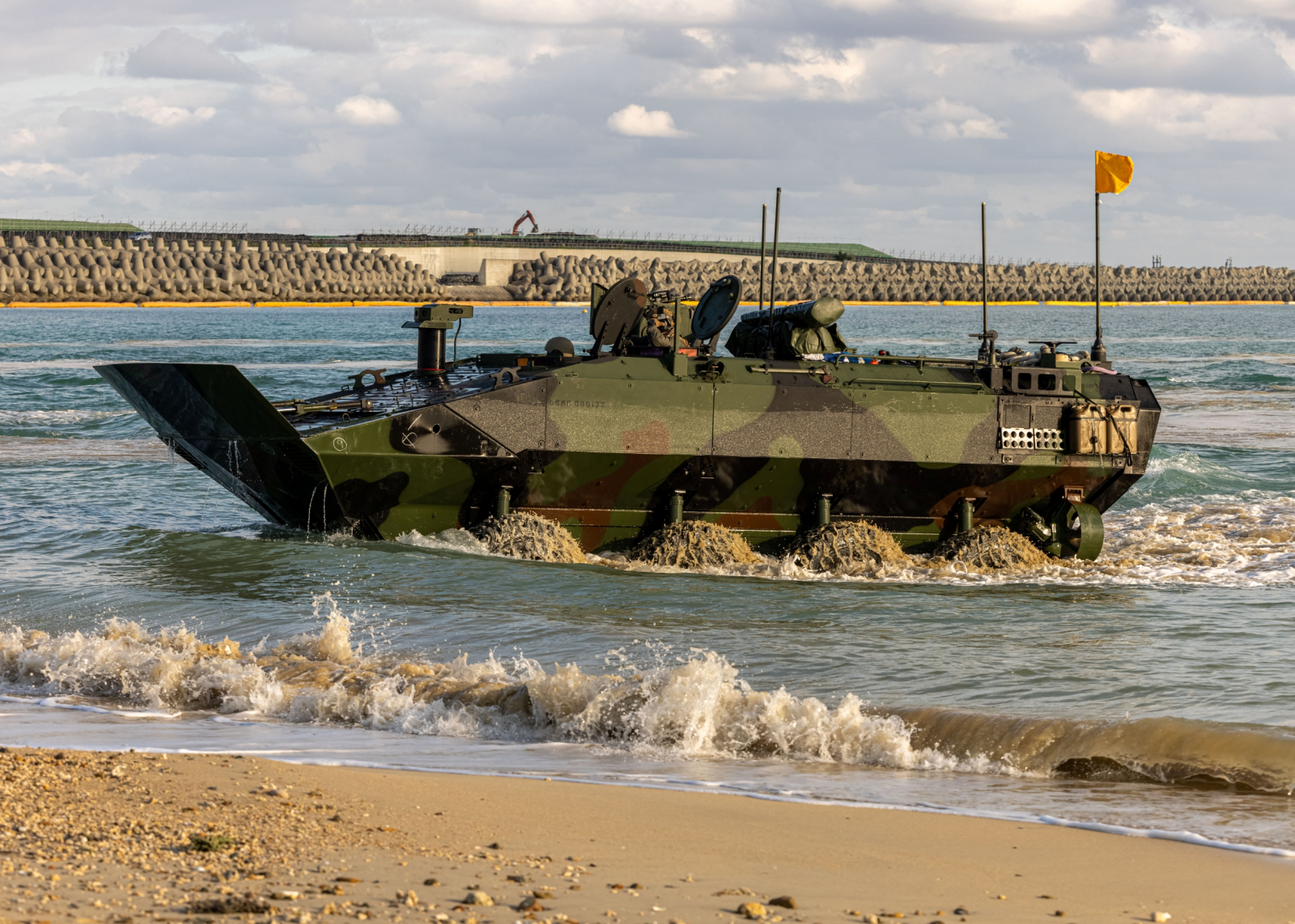
The decommissioning of the Assault Amphibious Vehicle (AAV) marked the transition to the next-generation Amphibious Combat Vehicle (ACV), capable of operating in contested environments, the U.S. Marine Corps Training and Education Command said.
Why It Matters
Facing China’s growing military challenges in the Indo-Pacific region, the U.S. Marine Corps has undergone a modernization initiative known as “Force Design” to redesign its force structure for future warfare, including a focus on using advanced military hardware such as mobile anti-ship missile systems and unmanned logistics vessels.
In a vast maritime expanse like the Pacific, where China has territorial disputes over islands with its neighbors, including U.S. allies Japan and the Philippines, amphibious warfare—which refers to the capability to project military air and ground power from ships to hostile shores—plays a key role in defending and recapturing remote islands.
What To Know
The AAV—introduced in 1972 for ship-to-shore troop deployments—was officially decommissioned at the Assault Amphibian School, Camp Pendleton, California, on September 26, according to the Marine Corps Training and Education Command.
During a ceremony, a group of three AAVs conducted a final pass across the parade deck, marking the end of their service and signaling the Marine Corps’ continued evolution toward modern, expeditionary amphibious operations, the command added.
Designed as a tracked vehicle equipped with a water-jet propulsion system, the AAV saw deployments for combat and humanitarian missions in Grenada, Somalia and Iraq. It had been upgraded and had its service life extended to meet operational demands.
Meanwhile, the ACV is an eight-wheeled armored vehicle designed for personnel transport, command and control, recovery and fire support. It supports the Marine Corps’ modernization efforts by advancing a lighter, faster and more resilient force.
According to the defense outlet The War Zone, wheeled armored vehicles, compared with tracked models, perform inconsistently on soft terrain such as beaches but achieve higher speeds on firm surfaces. The ACV is also no faster in water than the AAV.
The ACV made its operational debut during a war game in the Philippines in May last year and began deployment with the Japan-based III Marine Expeditionary Force—a unit responsible for defending allies and partners in the western Pacific—a month later.
What People Are Saying
U.S. Marine Corps Colonel Lynn W. Berendsen, commanding officer of the Assault Amphibian School, said in a press release on Thursday: “The AAV gave Marines both mobility and armored protection allowing them to close with the enemy and seize objectives at speed … In the desert, just as in the Pacific beaches decades earlier, showed it was more than a connector, it was a fighting vehicle at the heart of the Marine Air Ground Task Force.”
U.S. Marine Corps Lieutenant General Roger B. Turner, III Marine Expeditionary Force commanding general, said in a press release in June 2024: “III Marine Expeditionary Force is a modern, ready force … Upgrading our fleet with amphibious combat vehicles capable of supporting sea denial and maritime operations will further bolster our ability to support deterrence efforts and respond to contingencies in the Indo-Pacific.”
What Happens Next
It remains to be seen how the U.S. Marine Corps will further modernize by introducing advanced weapons adapted for warfare dominated by missiles and unmanned systems.