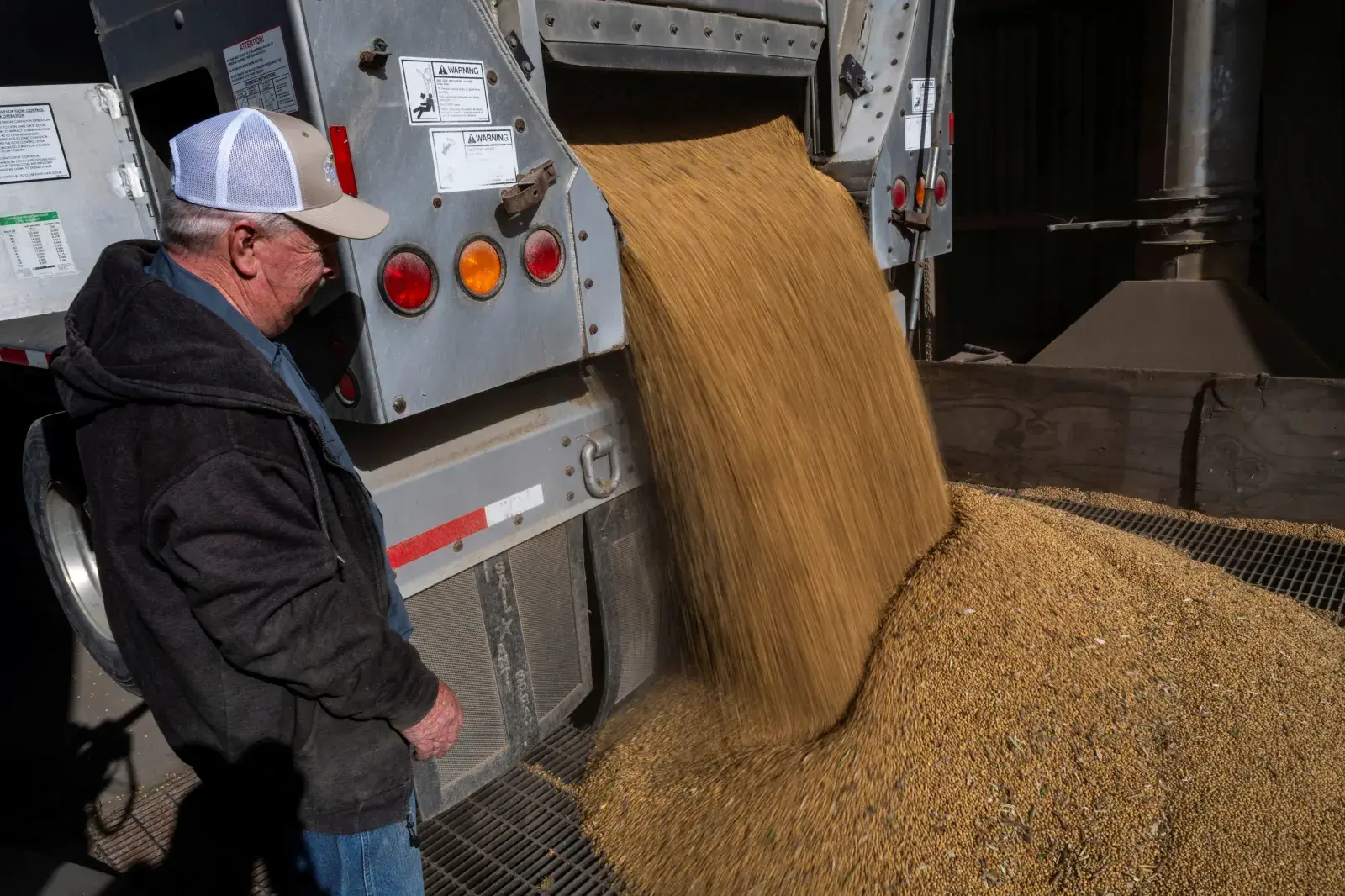
U.S. President Donald Trump announced a soybean deal on Thursday following his talks with Chinese President Xi Jinping, months after Beijing’s purchases ground to a near halt in retaliation for Trump’s tariffs on Chinese goods.
China’s reported pledge to buy 12 million metric tons through January, followed by an annual 25 million tons beginning next year, has brought relief to U.S. farmers in the middle of this year’s export cycle. Still, analysts say the deal will merely reset trade volumes to pre-tariff levels and warn that U.S. producers should seek new markets to insulate against future trade tiffs.
Newsweek contacted the American Soybean Association, the U.S. Department of Agriculture and China’s Ministry of Commerce for comment via email.
Why It Matters
China is the world’s largest soybean importer and has long been the top buyer of U.S. soybeans, accounting for roughly half of American exports in recent years—down from about 60 percent before the first round of tit-for-tat tariffs in 2018.
Soybeans are the United States’ most valuable agricultural export, but the trade war has again highlighted the industry’s heavy reliance on China and the leverage this gives the U.S. economic rival.
What To Know
Following Thursday’s meeting with Xi in South Korea, Trump wrote on Truth Social that he was “extremely honored by the fact that President Xi authorized China to begin the purchase of massive amounts of soybeans, sorghum, and other farm products.”
The import pledge, which Beijing has not confirmed, would bring total U.S. soybean exports to China to 18 million metric tons—down 32 percent from last year and marking the weakest year for American soy since 2018.
“In the past five years, China’s share of U.S. soybean exports has remained roughly unchanged at about 53 percent,” the Center for Strategic and International Studies wrote in a recent analysis. “Unless the U.S. soybean industry diversifies into other markets, it will remain exposed to coercive Chinese economic statecraft in the future.”
China has been diversifying its imports by increasing purchases of lower-cost soybeans from Brazil—its top supplier—and Argentina. Analysts say Beijing is unlikely to reverse this trend, even if relations with Washington stabilize.
The deal also included trade and tariff concessions from both sides. Trump agreed to delay his threatened 100 percent tariff on Chinese goods and reduce an existing duty on certain fentanyl precursor chemicals from 20 percent to 10 percent. In return, China postponed for at least one year its planned export restrictions on rare earth elements, which are crucial for defense and high-tech industries.
What People Are Saying
Texas Agriculture Commissioner Sid Miller said in a statement: “Texas soybean growers and producers across the country can rest easier knowing their product will find a strong and stable market.”
Economist Robin Brooks wrote on X: “U.S.-China trade deal: (i) trade negotiators will think we conceded far too much for soybeans; (ii) China hawks will say we look weak; (iii) foreign allies will be even more reluctant to join on things like secondary tariffs for fear the U.S. does an end-run trade deal.”
What Happens Next
It remains to be seen how successful U.S. exporters will be at expanding their share of the global soybean market.
Meanwhile, Japan signed a deal in September to boost annual purchases of American food and agricultural goods to $8 billion. Japan—the U.S.’s sixth-largest soybean importer—imported $1.31 billion worth of American soy products last year.