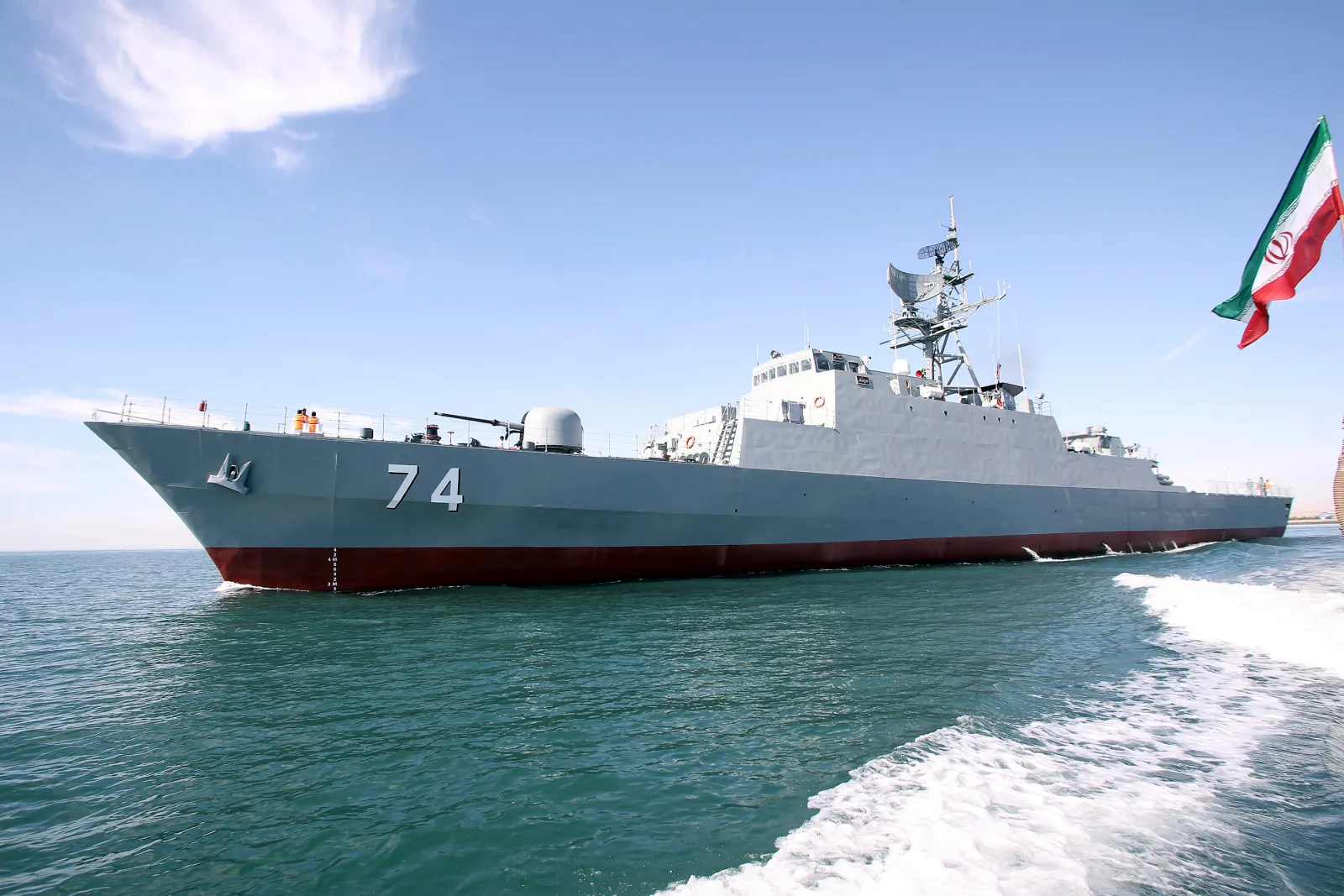
Iran has unveiled major additions to its naval forces, including a rebuilt warship and a floating military base, in a move officials described as a leap forward in maritime power and technical self-reliance.
The upgrades come amid heightened tensions in the Persian Gulf and the wider region, where Iran’s military activities have increasingly drawn scrutiny from the United States and its allies.
Over the weekend, the Iranian military emphasized that the additions would enhance long-range operations, strengthen Iran’s presence in international waters, and signal Tehran’s readiness to assert its influence.
Newsweek has contacted the State Department and Iran’s Foreign Ministry for comment.
Why It Matters
The expansion of Iran’s naval capabilities reflects Tehran’s broader push to strengthen its military defenses following its recent conflict with Israel and the U.S. strikes on its nuclear sites. Since these incidents, Iran has increased investment in missiles, unmanned systems, and coastal defenses to deter attacks and project power in the region.
The addition of mobile bases and advanced warships enhances Iran’s ability to secure strategic waterways and protect commercial shipping routes while signaling growing self-reliance in defense technology. The move also has the potential to shift the balance of power in the Gulf, Red Sea, and Indian Ocean, challenging regional rivals and complicating U.S. naval operations near Iranian waters.
What To Know
Over the weekend, Iran highlighted two major naval additions: the frigate Sahand, a Moudge-class warship armed with cruise missiles and stealth technology, and the floating base Kordestan, designed as a mobile port city capable of supporting both naval and non-naval combat units.
According to state media, Sahand had previously sunk during repairs but has been restored to operational status, while Kordestan enables sustained missions without reliance on permanent overseas facilities. Iranian forces also introduced new missile-equipped speedboats, unmanned aerial and underwater systems, and upgraded electronic and coastal defense equipment. Together, the assets underscore Tehran’s ambition to maintain a persistent maritime presence and expand its operational reach.
Photos and video of Sahand and Kordestan circulated widely on social media as Iranian outlets released new images of the vessels at sea, offering the public its first close look at the navy’s expanding fleet.
Naval Strength
In recent decades, the Iranian navy has expanded its fleet through domestically built surface hardware, beginning with its first locally produced destroyer in 2010 and followed by Moudge-class vessels such as the Sahand. These projects have been presented as necessary measures in the face of sanctions and arms embargoes that restrict Iran’s ability to import advanced military equipment.
Vessel Seized in Persian Gulf
Meanwhile on Sunday, the government of Eswatini (formerly Swaziland) rejected any connection to a vessel intercepted by Iranian authorities, stating that the ship was flying the kingdom’s flag without authorization and emphasizing that Eswatini does not maintain an active ship registry.
The response comes after Iran’s Islamic Revolutionary Guard Corps said it had seized an Eswatini-flagged tanker near the Strait of Hormuz in the Persian Gulf, alleging the vessel was carrying more than 350,000 liters of smuggled fuel.
What People Are Saying
Iran’s Major General Hatami said during the naval unveiling on Saturday: “Our defensive strategy is based on active defense and smart deterrence. This means that we will not wait for the enemy to attack, and we have the necessary readiness for any decisive and crushing response at any point where our national interests require.”
What Happens Next
The new Iranian capabilities allow for longer deployments, quicker responses at sea, and a more persistent watch over key shipping corridors.
As the vessels move into active service, regional governments and the U.S. are expected to track Iran’s activities more closely, particularly around strategic choke-points. The upgrades signal Tehran’s intent to remain a decisive and assertive force in the region’s evolving security environment.