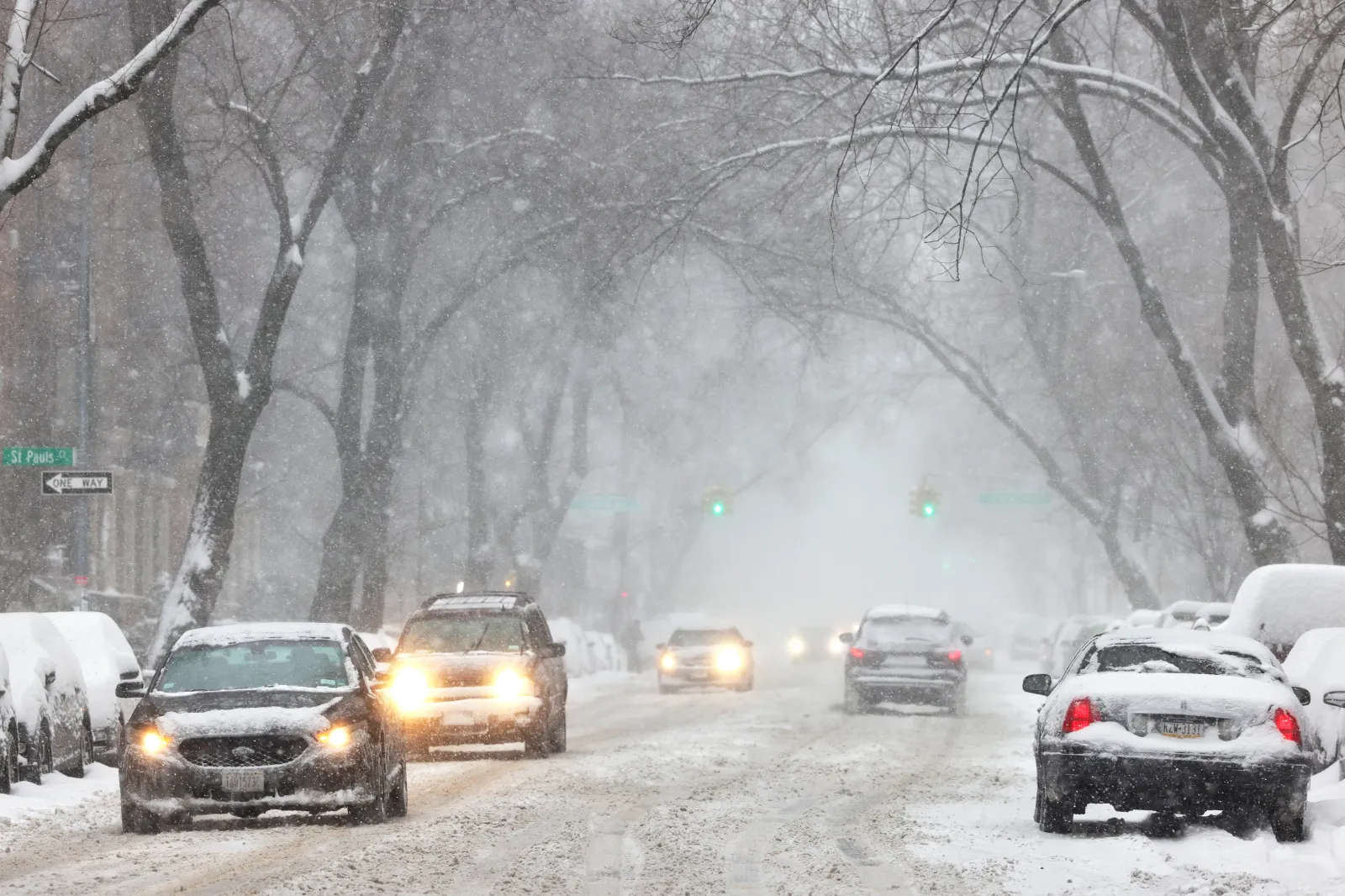
Winter storm warnings—which could bring up to 12 inches of snow in some places—have been issued to several states across the U.S. by the National Weather Service (NWS), which has advised those in badly affected areas to “delay all travel if possible.”
Why it Matters
Winter storms can bring heavy snow, drifts, ice, and high winds, which affect road conditions—especially over bridges and overpasses—making them slippery, dangerous, and sometimes impassable.
What To Know
Winter storm warnings are in place from Tuesday through to Wednesday, and the worst-affected states are expected to include: Massachusetts, Vermont, Georgia, New York, Maine, Alaska, Pennsylvania, Ohio, Kentucky, Montana, Wyoming, and Colorado.
Northern Worcester, northern Middlesex, and eastern Franklin counties in Massachusetts, the east central and southeastern parts of New York, and northern and southern Fulton counties in Georgia could see between 5 and 9 inches of snow through Tuesday and into Wednesday morning, in some cases.
Some areas in central and southern Vermont could also get up to 9 inches of snowfall, with up to 12 inches expected in the Green Mountains.
Parts of coastal DownEast, interior DownEast, and Penobscot Valley, in Maine, might get up to 8 inches with 35 mph winds, causing blowing and drifting snow—especially in Bangor and interior DownEast areas—and local power outages, particularly along the coast.
In Alaska, the Dalton Highway summits, lower Yukon River, lower Yukon and Innoko Valleys, the north slopes of the western Alaska Range, upper Kuskokwim Valley, and the Yukon Delta Coast could see between 4 and 8 inches of snow, with up to 0.20 inches of ice and 40 mph winds until Wednesday afternoon. The Bering Strait coast and St Lawrence Island could see up to 1 inch of snow, with winds as high as 50 mph until Tuesday evening, and the eastern Alaska Range and the southern Denali Borough could get between 3 and 6 inches, with up to 10 inches expected over higher ground.
Carbon and Monroe counties in Pennsylvania could see up to 6 inches of snow and ice accumulations until Tuesday night, and parts of central Pennsylvania could see up to 6 inches of snow until Tuesday afternoon.
Parts of north central and northeast Ohio could see up to 5 inches of snow until Tuesday night, and some counties in east central, south central, and southeast Kentucky could see up to 3 inches of snow and ice accumulation until mid-Tuesday morning.
In Montana, the northern Bighorn Mountains could see up to 9 inches of snow and 30 mph winds, and the Beartooth Foothills and Red Lodge Foothills could get up to 5 inches from Tuesday until Wednesday morning.
The Sierra Madre Range and Snowy Range in Wyoming could get between 5 and 10 inches of snow with 50 mph winds until Wednesday morning, and the Teton and Gros Ventre Mountains could see up to 12 inches, with 35 mph winds, until Tuesday night.
The Southern Front Range Foothills, the Denver metro, and the Palmer Divide in Colorado could get up to 7 inches of snow until Wednesday night, with the highest amounts expected in the southern foothills and Palmer Divide.
What People Are Saying
The NWS for Wyoming warned that: “Outdoor recreation could become dangerous to those caught unprepared for hazardous winter conditions. Hunters, hikers, and snowmobilers may become disoriented and lost due to low visibility in falling and blowing snow. Travel could be very difficult.”
What Happens Next
Those in unaffected areas are advised to exercise extra caution if they must travel and continuously monitor local weather forecasts, as conditions can rapidly change.