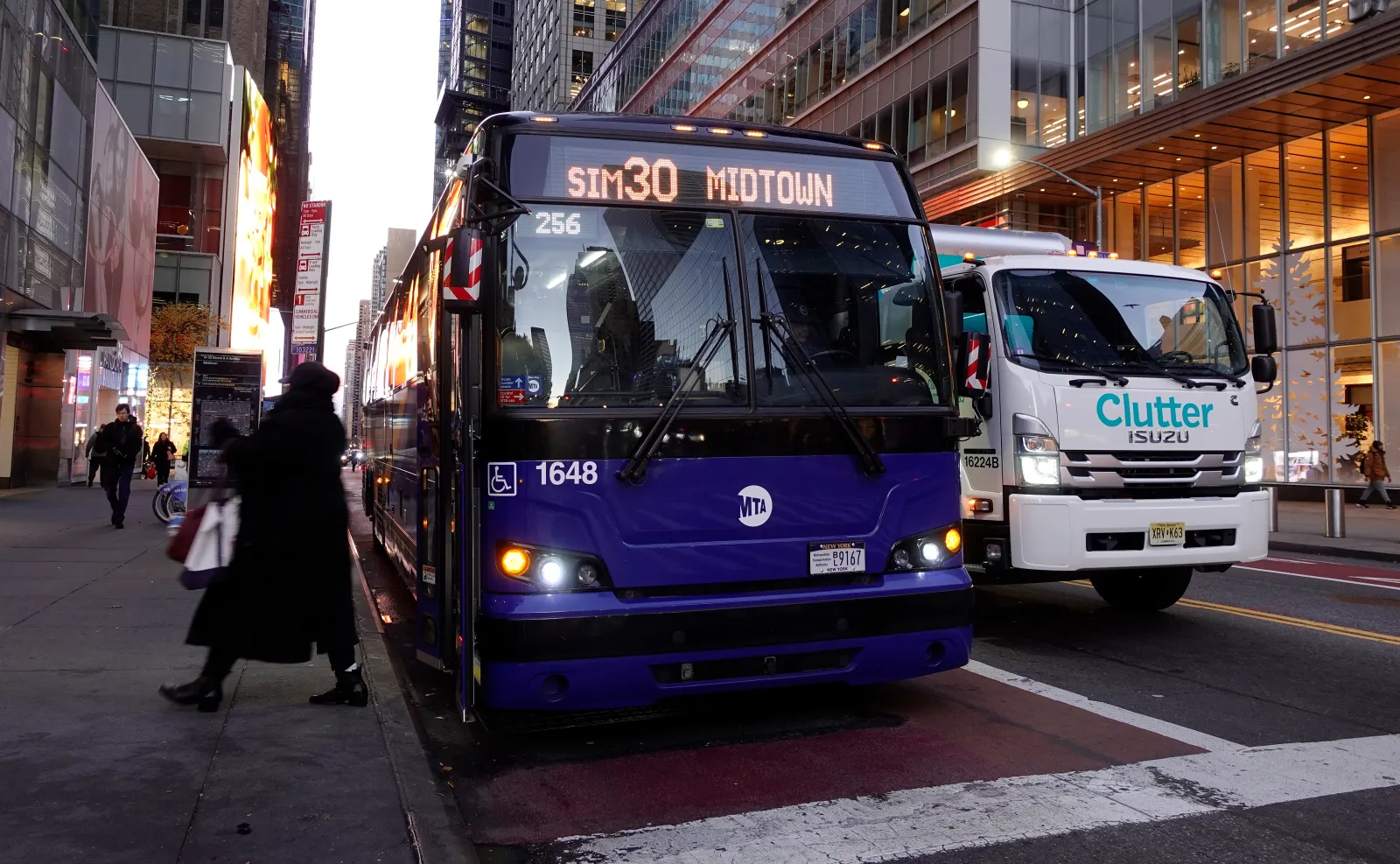
Passengers travelling on New York City buses may soon be required to show civilian fare inspectors proof that they’ve paid their fare after they’ve boarded, under new fare enforcement rules announced by the Metropolitan Transportation Authority (MTA).
Why It Matters
The shift toward tighter bus fare inspection rules is a direct response to increasing bus fare evasion, which cost the MTA an estimated $568 million in 2024, according to the watchdog group, Citizens Budget Commission (CBC).
What To Know
To crack down on escalating bus fare evasion, the MTA has announced plans to adopt a new enforcement model that will affect New York bus travelers.
Instead of police conducting spot checks, a dedicated team of civilian fare inspectors will roam bus routes across the city and verify whether passengers have or haven’t paid for their ticket, after they’ve boarded the bus—similar to systems used in many cities in Europe.
The AMNY reported that MTA Chair Janno Lieber said that the New York Police Department (NYPD) currently can’t deploy enough police officers to help catch bus fare dodgers, as the city is focused on addressing subway ticket evasion—which cost them around $350 million in 2024—so having a dedicated team of bus fare inspectors should help tackle the issue.
The MTA has already deployed an Evasion And Gate-less Enforcement (EAGLE) team on selected bus services—with notoriously high ticket evasion rates—which has caught over 370 bus ticket evaders since 2024.
Lieber believes that the rise in bus ticket evasion started after the COVID-19 pandemic, as passengers were encouraged to board the back of the bus, and weren’t asked for their fare—which was designed to protect both drivers and passengers, and to help prevent the spread of the virus.
The new enforcement model will begin once the OMNY contactless payment system rollout is complete.
What People Are Saying
According to reporting by Pix11, Lieber said: “We’re going to move to European-style fare payment enforcement, where you’ll have fare agents, not cops, who can go up to people and say, ‘Can you show me your phone or your OMNY card and I can validate that you paid.”
He also said, as reported by the AMNY: “We hope that will ultimately help us to make more progress on the bus issue, which I think got escalated quickly during COVID, when we told people, get on the back and don’t pay. We never put the toothpaste back in the tube.”
What Happens Next
According to the MTA, OMNY’s full implementation is projected for 2026, so the exact timing for the switch to a more European-style fare enforcement regime remains uncertain.