The Trump administration has ordered U.S. embassies and consulates worldwide to give top priority to visa applications from foreign investors and fans seeking to attend major sporting events in the United States, including the 2026 World Cup and 2028 Olympics, according to internal State Department cables obtained by The Associated Press.
At the same time, the administration has introduced new screening rules for highly skilled foreign workers applying for H-1B visas, directing diplomats to deny entry to applicants deemed to have participated in the “censorship” of American citizens online.
In one cable sent this week to all U.S. diplomatic missions, the State Department said visa applications from businesspeople pursuing “significant investments” in the United States, as well as those traveling for “major sporting events which showcase American excellence,” should rise to the top of consular appointment lists.
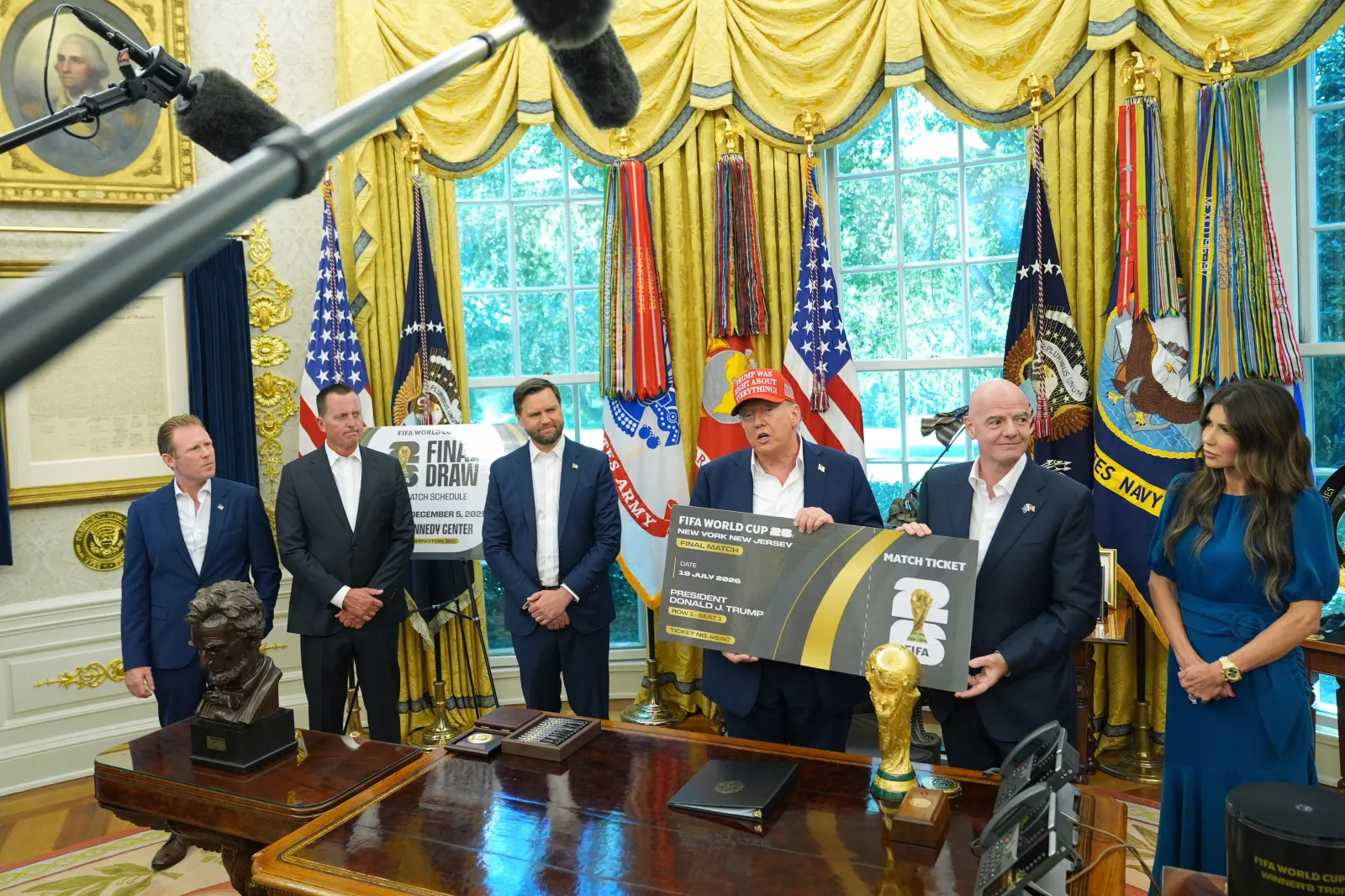
The guidance marks the latest shift in the administration’s efforts to tighten control over foreign travel to the U.S., even as it moves to accommodate the surge of international visitors expected for high-profile events such as the World Cup. The new policies come as consular officers around the world brace for increased demand ahead of Friday’s World Cup draw.
The prioritization of sports-related travel builds on a broader initiative announced last month, known as “FIFA Pass,” intended to help World Cup spectators secure visa interviews more quickly. Long waits for appointments — often for B1 and B2 tourist and business visas — have persisted despite an expansion of consular staffing. Secretary of State Marco Rubio said more than 400 additional consular officers have been deployed globally and that in roughly 80% of countries, visa appointments are now available within 60 days. Even so, the cables instruct posts to ensure “sufficient appointment capacity” for travelers heading to World Cup–related events, and to treat those applicants as higher priority than most others.
Only applications related to “American re-industrialization” may supersede them, according to the guidance. Other high-priority categories include foreign diplomats, government officials on official business, agricultural workers, religious personnel, physicians, nurses and students attending academic programs with low international enrollment. The cables emphasize that posts may reduce appointment slots for lower-priority groups to accommodate those higher on the list. “Applicants of higher ranked groups get priority over applicants in lower rank groups, regardless of demand,” the instructions said.
A second cable issued Tuesday outlines new visa scrutiny for H-1B applicants — workers in specialized fields such as technology and engineering — instructing U.S. consulates to “be on the lookout” for individuals suspected of aiding or participating in censorship efforts abroad. The administration defined such participation broadly, including adopting content moderation policies seen as inconsistent with free expression, complying with censorship demands from foreign governments or providing private data on Americans in connection with moderating online content.
Diplomats were told to review resumes, employment histories, social media activity and public statements for signs of involvement in such work. Evidence of participation, the cable said, could render an applicant ineligible for a visa. Although the criteria apply to all visa categories, consular officials were directed to pay particular attention to H-1B candidates because of the number of applicants working in the tech and social media sectors. “You must thoroughly explore their employment histories,” the instructions said, noting that discoveries of past censorship activity should lead to a finding of ineligibility.
President Donald Trump has repeatedly said he wants to impose steep new fees on H-1B visas and has cast the new restrictions as part of a broader attempt to protect American workers and limit what he describes as foreign influence over U.S. discourse. The policy shift — combining expedited processing for sports fans and investors with heightened scrutiny of skilled workers — reflects the administration’s attempt to reshape travel to the United States ahead of what will be one of the busiest periods for international visitors in decades.
This article includes reporting by the Associated Press.