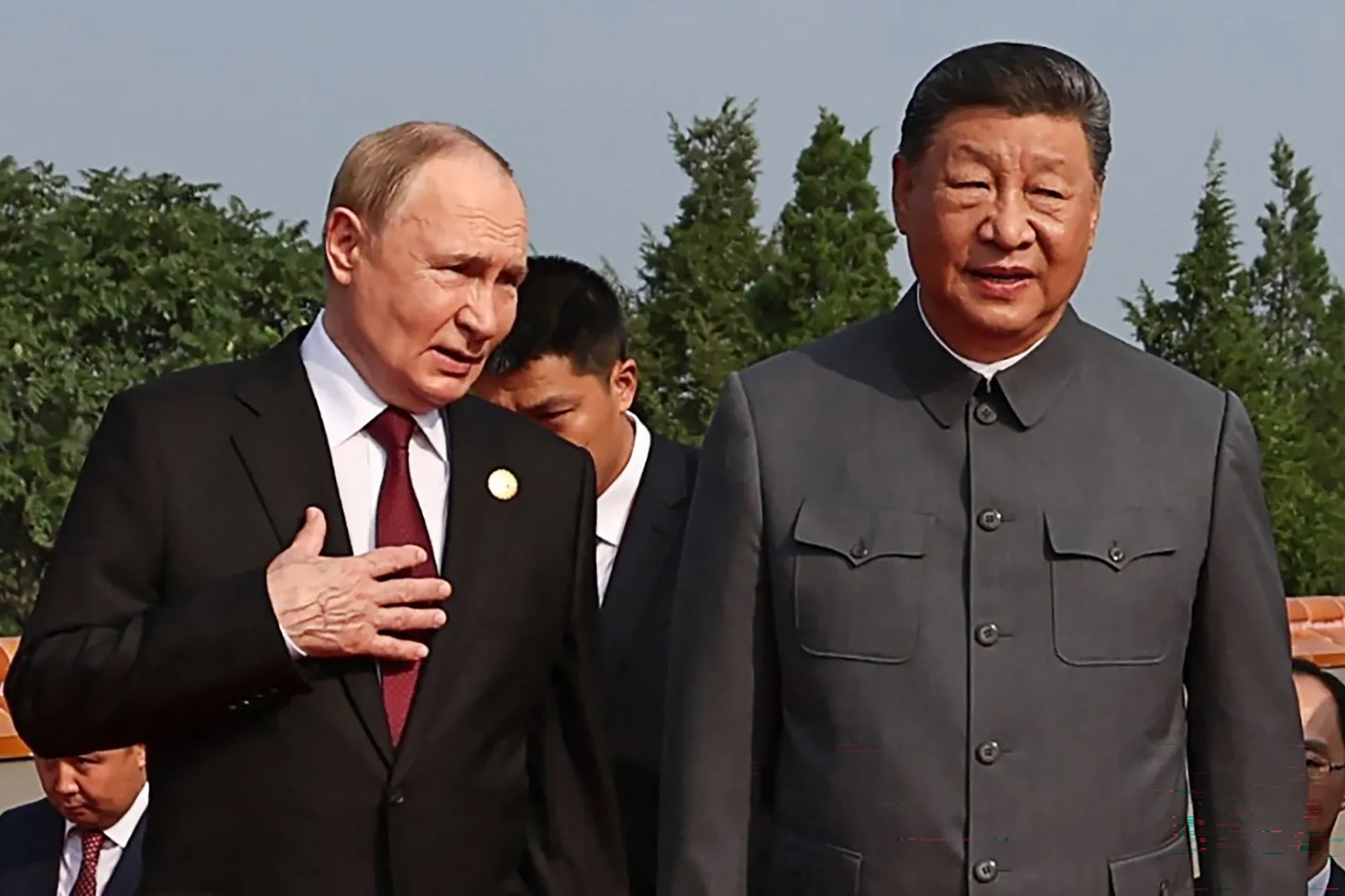
Recent moves by China reveal it has not forgotten the territory lost to the Russian Far East during its “Century of Humiliation.” This has raised speculation that the world’s longest border may be ripe for Chinese encroachment, even as “no limits partners” Beijing and Moscow appear increasingly aligned on the world stage.
Chinese Map Alterations and Border Disputes
The Chinese Ministry of the Environment in 2023 moved to dictate that new official maps must depict cities in this area, such as the Siberian city of Vladivostok, with their official names. Another change was to portray an island at the confluence of the Ussuri and Amur rivers, subject to a long-running dispute and a border agreement in 2008, as entirely Chinese. An uptick in Chinese purchases of farmland and decades-long leases across the border has also raised eyebrows.
Strategic Partnership and Power Imbalance
Meanwhile, Chinese nationalists openly call for the return of territory forcibly transferred to Tsarist Russia by a weakened Qing dynasty during the 19th century. These calls are not echoed by Beijing, which has downplayed the map changes while regularly touting the importance of ties with Russian President Vladimir Putin, who stood in the place of honor at Xi’s side during the June V-Day military parade in Tiananmen Square.
China has also supported Russia since Putin’s full-scale invasion of Ukraine and the heavy international sanctions that followed. As a top purchaser of Russian natural gas and oil, China has helped keep Russia’s war economy afloat. Russia, in turn, benefits from record trade flows with its neighbor and the adoption of the Chinese yuan for payments, helping to mitigate the impact of being dropped from SWIFT.
The partners are increasingly aligned diplomatically, giving rise to a potential multilateral order in opposition to U.S.-led hegemony. This includes stepped-up joint exercises in the Pacific, viewed by the U.S. and its allies as a challenge to Washington’s military dominance in the region.
Yet concerns have emerged in Russia about becoming a “junior partner” in the relationship, with some Kremlin-linked propagandists warning that overreliance on China could backfire.
Strained but Stable Ties
A New York Times report earlier this year cited a leaked document from Russian intelligence, revealing concerns about Chinese designs to expand its influence. The report highlighted a degree of mistrust on both sides, with Chinese agents said to be recruiting Russian nationals with Chinese spouses and conducting polygraph tests on returning agents returning from the Eurasian country.
How much China intends to capitalize on the growing power imbalance with Russia remains uncertain, with some observers arguing the concerns are overblown.
“Xi Jinping views Russia as an indispensable strategic partner in constructing a post-U.S.–led world order,” Patrick Cronin, the Asia-Pacific security chair at the Hudson Institute, told Newsweek. “Reconciling these competing impulses points toward a strategy of slow, steady accretions of effective sovereignty, punctuated by performative shows of solidarity, from parades to joint military drills, that mask an emerging asymmetry.”
Cronin said however that China “clearly appears poised to expand its influence across its shared borderlands through a mix of brazen cyber intrusions and opportunistic moves to anchor itself inside Russia’s increasingly enfeebled economy.”
The Future of China-Russia Relations
Lyle Goldstein, Director of Asia Engagement at the Defense Priorities think tank, argues that China-Russia ties have never been closer.
“Are there day-to-day frustrations and some bitter complaints here and there? Sure,” he told Newsweek. “Russians, in particular, are a little bit bitter that the Chinese have not helped them more in the Russia-Ukraine War, for example. But overall, the relationship is healthy and developing robustly in all directions.”
“I do believe that one reason the Chinese and Russians are getting along so well is that they have both faced substantial strategic pressure from ‘excessive balancing’ by the U.S. and its allies,” Goldstein added. “Nevertheless, the bilateral China-Russia relationship is healthy and stable. There have been no real crises in the last 30-plus years and, despite some dire predictions in the West, I see none on the horizon.”