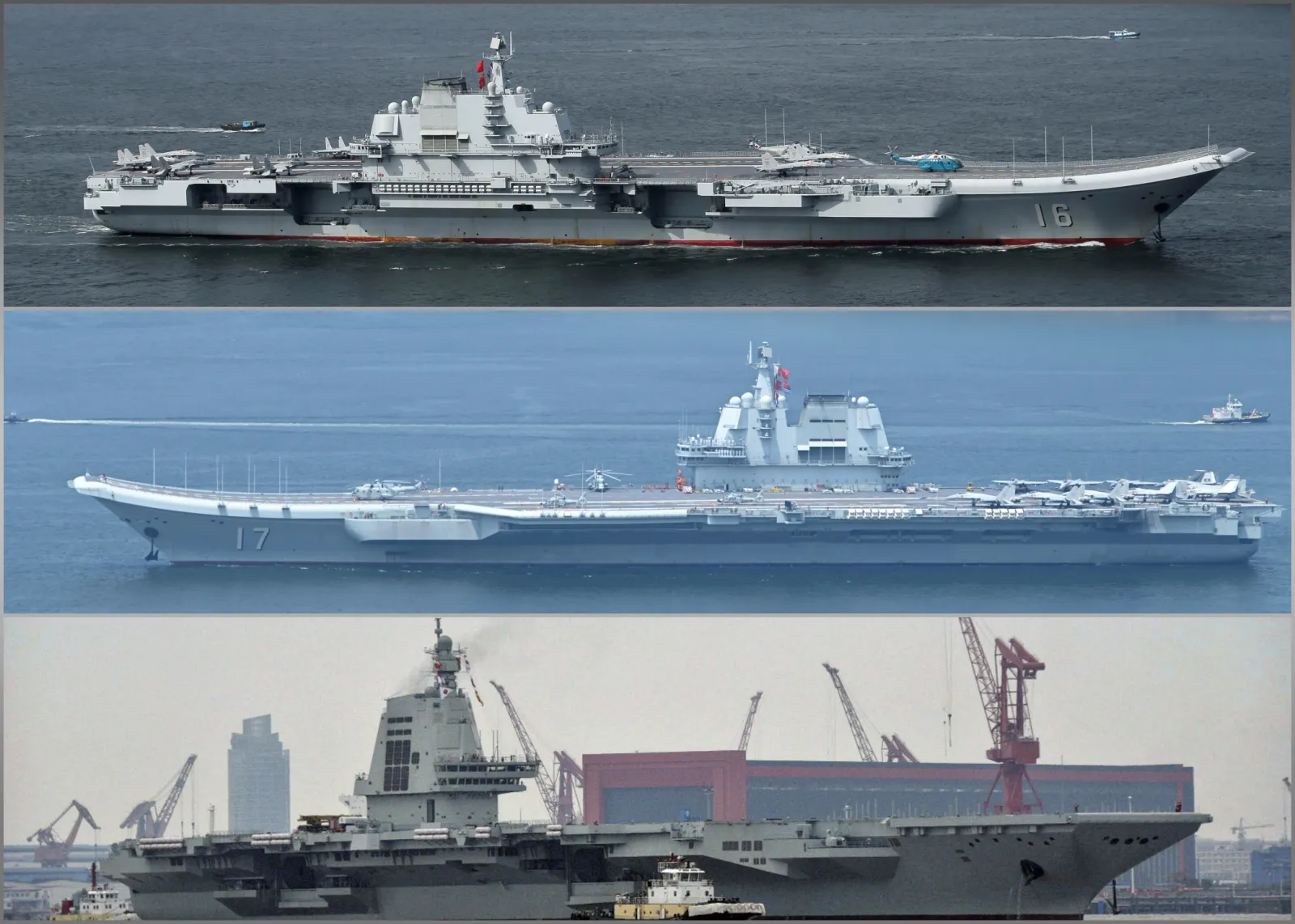
A pair of Chinese aircraft carriers—including the oldest and newest in service—was spotted at a naval base, satellite imagery shows, as China continues to develop its navy.
The Chinese Foreign Ministry did not immediately respond to a request for comment.
Why It Matters
As part of its modernization efforts to reach “world-class” status by midcentury, the Chinese military operates the world’s largest navy by hull count, with over 370 ships and submarines—including three aircraft carriers—in service as of early November.
The beginning of a trio-of-aircraft-carriers era—consisting of CNS Liaoning, CNS Shandong and CNS Fujian—represented a major leap in China’s power projection capability beyond East Asia into the broader western Pacific, signaling its naval might.
Facing China’s rapidly growing naval force, which threatens its allies, the United States maintains an aircraft carrier presence across the Indo-Pacific region, where it follows the island chain strategy to contain Chinese military activity in the event of a conflict.
What To Know
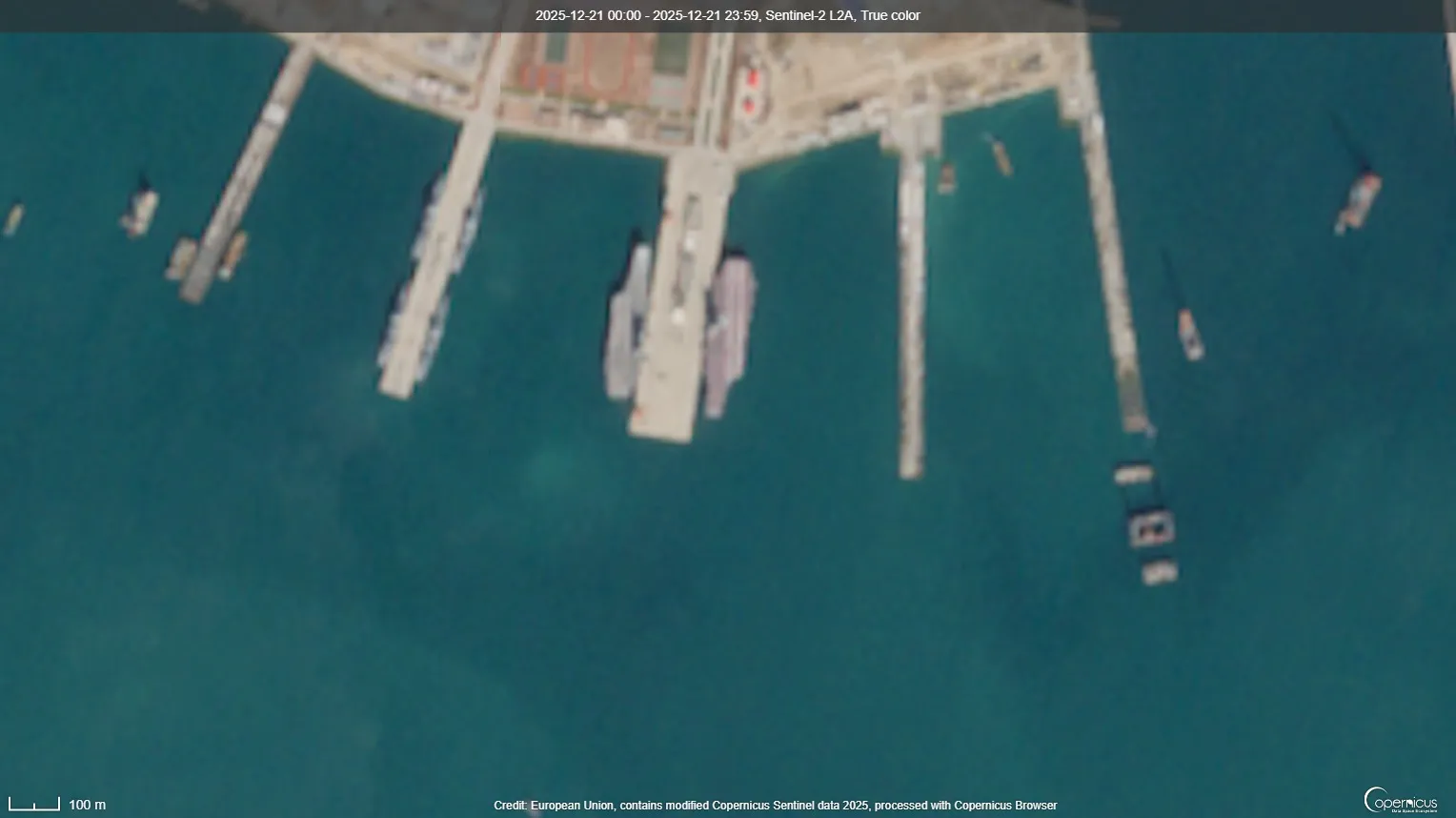
Satellite imagery captured on Sunday shows two Chinese aircraft carriers docking at Yuchi Naval Base in Qingdao, northeastern China. The naval port is the home of the country’s first aircraft carrier, the Liaoning, and appears to be undergoing an expansion.
The photograph was captured by the European Space Agency’s Copernicus Sentinel-2 mission, a constellation of three satellites—Sentinel-2A, 2B and 2C—in the same orbit.
According to Hidenori Watanave, a University of Tokyo professor and open-source intelligence analyst, the aircraft carriers were identified as the Liaoning and the Fujian.
The Fujian left its home at Yulin Naval Base on the South China Sea’s northern edge last week, followed by a northbound transit through the Taiwan Strait, a key waterway that lies between China and Taiwan and is about 80 miles wide at its narrowest point.
However, the purpose of relocating the Fujian from the south to the north along China’s coastline remains unclear. It would conduct training exercises with fighter jets or operate with the Liaoning in the Yellow Sea before returning to the South China Sea.
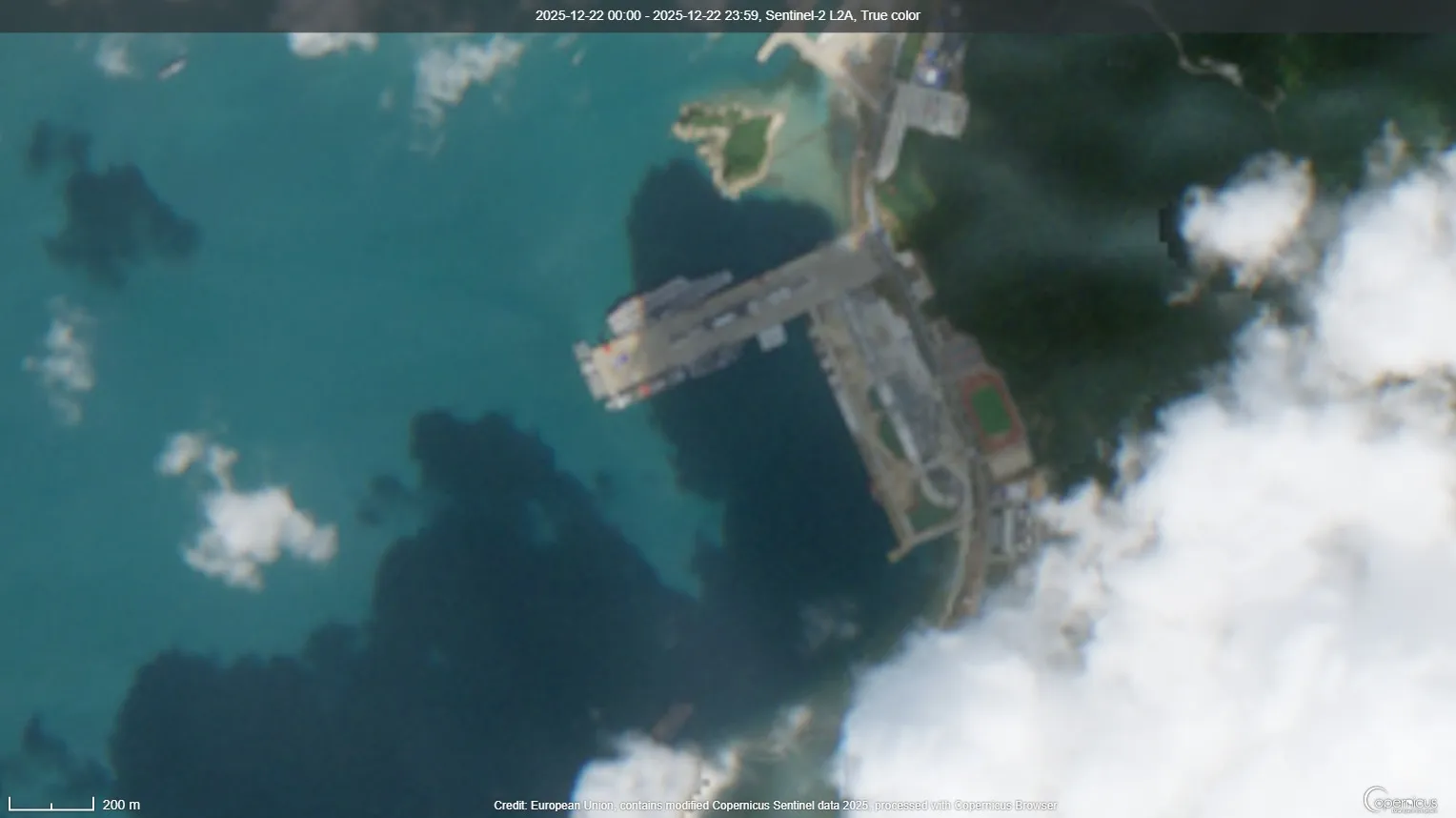
Meanwhile, imagery captured by the Sentinel-2 satellites and reviewed by Newsweek shows the Shandong docked at Yulin Naval Base, which it shares with the Fujian, as of Monday. It conducted a brief deployment in the South China Sea earlier this month.
Both the Liaoning and the Shandong were simultaneously deployed east of the First Island Chain—formed by Japan, Taiwan and the Philippines—in the broader western Pacific in June, following a similar mission in the South China Sea in October 2024.
What People Are Saying
The Pentagon commented in its report on Chinese military power: “The [People’s Liberation Army Navy, PLAN] continues to develop into a global force, gradually extending its operational reach beyond East Asia into a sustained ability to operate at increasingly longer ranges … The [People’s Republic of China, PRC] is in the beginning stages of operating its ‘multi-carrier force.'”
The defense outlet Naval News commented on the commissioning of CNS Fujian: “For now, the commissioning of the aircraft carrier Fujian into the active fleet underscores the transformation of the Chinese Navy into a true blue water force. The service stands second only to the United States both in the quantity of carriers it operates, and the operational capability of its naval aviation. The event represents the most notable benchmark in two decades of rapid modernization for PLAN.”
What Happens Next
It remains to be seen when the Fujian will officially conduct its first deployment since its commissioning. China is also expected to increase the frequency of dispatching two aircraft carriers to the western Pacific simultaneously to counter U.S. naval presence.