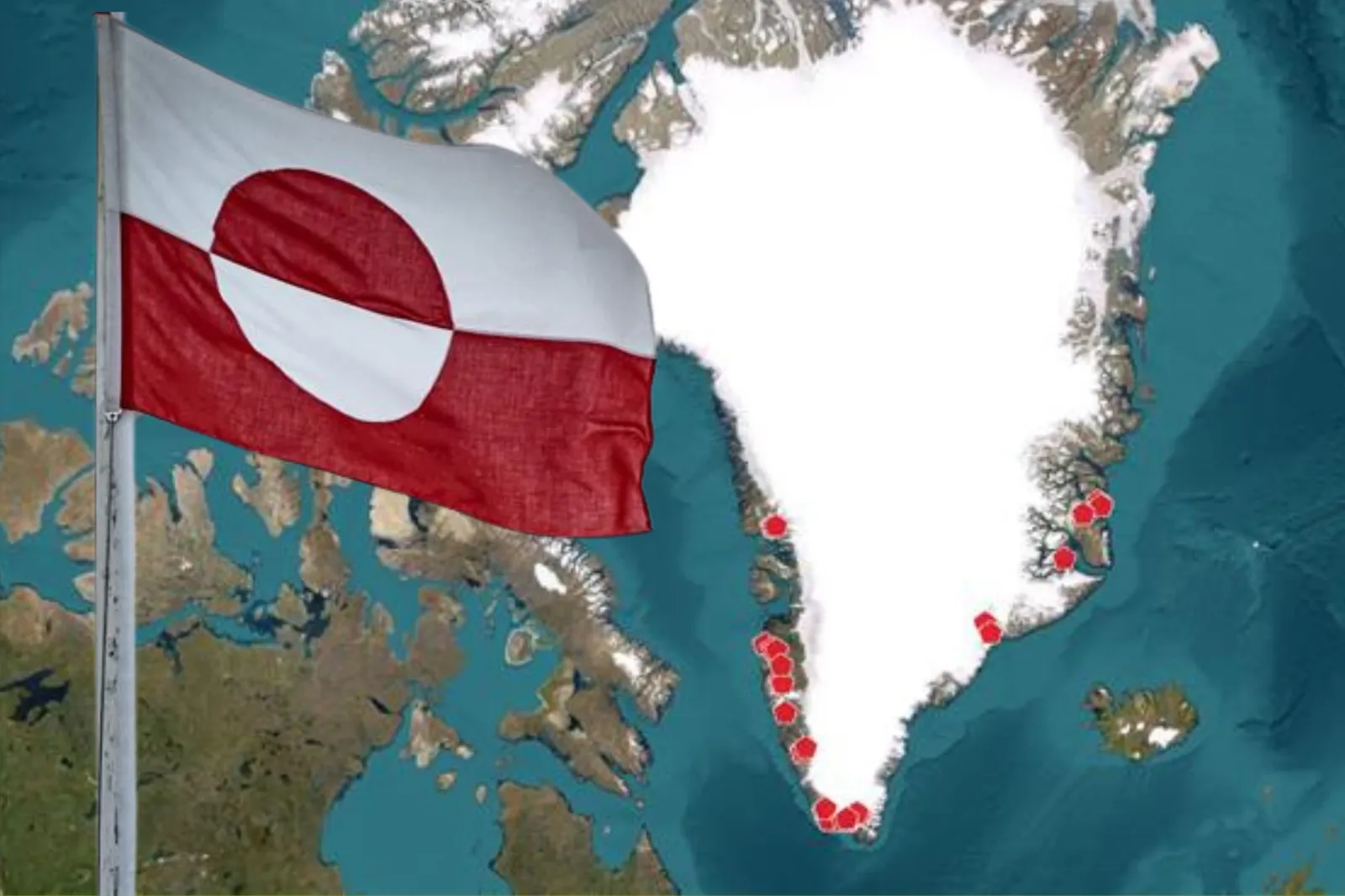
A new map compiled by Newsweek using data from the United States Geological Survey (USGS) shows how Greenland’s rare earth mineral resources compare to the rest of the world.
Why It Matters
Greenland possesses some of the world’s largest untapped reserves of rare earth elements (REEs)—minerals critical to modern technologies, clean energy transitions, and defense systems. As the global demand for these materials surges, Greenland’s strategic importance as an alternative source grows.
The latest data from the USGS highlights how the self-governing territory within the Kingdom of Denmark, a NATO member, compares with major producers, underscoring part of the reason why the island has become a focus of U.S. policy discussions, including President Donald Trump’s push to acquire it—a move which has raised geopolitical tensions.
What Are Rare Earth Minerals?
Rare earth minerals are a group of 17 metals found in the Earth’s crust that are unevenly distributed across the globe. Despite the name, they’re not actually rare—but they’re hard to extract and process.
These elements are essential for modern life—they power the magnets in electric car motors, the screens on your smartphone, and the turbines that generate clean energy.
Without them, technologies like renewable energy, advanced electronics, and even defense systems would struggle to exist. In short, rare earths are the hidden backbone of the tech-driven world.
What To Know
As of 2025, China dominated both the world’s rare earth mineral reserves—holding 44 million metric tons, nearly half of the world’s total estimated 91.9 million metric tons.
By comparison, Greenland’s reserves are estimated at approximately 1.5 million metric tons, according to the USGS.
While smaller than China’s, Greenland’s reserves rival those of the United States (1.9 million metric tons) and outpace those of Canada (830,000 metric tons), South Africa (860,000 metric tons), and much of Europe.
Brazil follows China with 21 million metric tons, while India and Australia hold 6.9 million and 5.7 million metric tons, respectively. Other significant players include Russia (3.8 million metric tons) and Vietnam (3.5 million metric tons).
Greenland’s rare earth wealth is concentrated in the south, notably at the Kvanefjeld site in the Kujalleq municipality, which contains significant deposits of neodymium, dysprosium, and other industrially critical elements.
Its size and mix of light and heavy rare earths make it strategically valuable for nations seeking alternatives to China’s supply dominance.
According to the USGS, resources found at the site are vital for manufacturing high-performance magnets, electric car batteries, wind turbines, and military equipment—products central to the ongoing energy transition and defense industries.
Despite the size of its reserves, mining in Greenland is constrained by logistical difficulties—including minimal infrastructure, a harsh climate, and environmental regulations due to concerns over radioactive byproducts such as uranium.
Local opposition rooted in concerns over ecological impacts and traditional livelihoods has also slowed development.
In 2021, Greenland’s parliament passed legislation restricting uranium byproducts, directly affecting the timeline of major mining projects.
Despite these challenges, Western interest in Greenland’s minerals has intensified. Foreign investments, such as the acquisition of Tanbreez Mining by New York-based Critical Metals, came after U.S. officials reportedly blocked Chinese buyers.
What People Are Saying
Linking access to Greenland’s minerals to national security, Trump told reporters on Air Force One: “We need Greenland from the standpoint of national security and the European Union needs us to have it and they know that.”
Karoline Leavitt, White House press secretary, said: “President Trump has made it well known that acquiring Greenland is a national security priority of the United States, and it’s vital to deter our adversaries in the Arctic region.
“The president and his team are discussing a range of options to pursue this important foreign policy goal, and of course, utilizing the U.S. military is always an option at the commander-in-chief’s disposal.”
Vice President JD Vance said last year: “We need to ensure that America is leading in the Arctic, because we know that if America doesn’t, other nations will fill the gap where we fall behind.”
Greenlandic Prime Minister Jens-Frederik Nielsen said: “We are not in a situation where we think that there might be a takeover of the country overnight and that is why we are insisting that we want good cooperation.”
Danish Prime Minister Mette Frederiksen said in a statement that the strategic, mineral-rich Arctic island “belongs to its people.”
A joint statement from the leaders of France, Germany, Italy, Poland, Spain and the United Kingdom said: “Greenland belongs to its people. It is for Denmark and Greenland, and them only, to decide on matters concerning Denmark and Greenland.”
United Kingdom Foreign Secretary Yvette Cooper, said on Monday: “Let me be very clear on the UK position. Greenland is part of the Kingdom of Denmark, our close European partners and longstanding NATO allies. And all our countries work closely together on security issues and will always do so. The future of Greenland is a matter for the Greenlanders and Danes and no one else.”
Eldur Ólafsson, CEO of Amaroq Minerals, told Newsweek last year: “Greenland’s vast mineral potential represents an opportunity for the West to secure a supply of essential critical minerals…so we can understand why Donald Trump’s administration has identified Greenland’s resource potential as a potential method to combat China’s dominance over the critical minerals supply chain.”
Harvey Kaye, executive director of U.S. Critical Materials, said: “U.S. Critical Materials would like to commend the administration for setting forth policies that may enhance our ability to help provide rare earth elements and critical mineral sovereignty for the USA. We are uniquely positioned to help Make America Critical Mineral Independent Again.”
What Happens Next
The U.S. Senate is weighing legislative restrictions on military action in Greenland, led by Democratic Senator Ruben Gallego of Arizona, while diplomatic debate continues over the territory’s future.