‘Career-Confused’ Millennial Explains Why Her Generation Is in Crisis
January 11, 2026
3,455
Millennials are often dubbed entitled or lazy workers who lack ambition. But one woman has hit back against those stereotypes, as she thinks her generation is going through “the great millennial career crisis.”
With just 33 percent of the world’s employees saying they are thriving, it is no surprise that burnout and quiet quitting is on the rise. A report by Gallup found that employee well-being has been declining since 2022, with global employee engagement also falling to 21 percent in 2024. With this disengagement comes loss of productivity, which is believed to have cost the global economy $438 billion in 2024 alone.
Given this challenging situation, many millennials are reconsidering their careers. This is something that 35-year-old Jessi Jean Cowan can personally relate to, as she told Newsweek that motherhood helped her seek “a recalibration of [her] capacity.”
Like many millennials, she grew up being told that, if she studied hard in school, got a degree and worked hard, then her future was set. But she and so many others have learned that it doesn’t exactly work like that anymore.
Cowan, of Denver, Colorado, said: “So many millennials are realizing that the version of success we were told would be there for us if we did everything right is not available anymore. It doesn’t exist in the way we were told.
“I think millennials listened and played by the rules, and were told, if we did that, we’d be financially set. However, the expected sense of security and fulfillment never arrived. Rising costs have left us feeling that the goal posts keep moving,” she continued.
Indeed, Cowan said this shift has “nothing to do with entitlement,” but, instead, it is a sign of disillusionment.
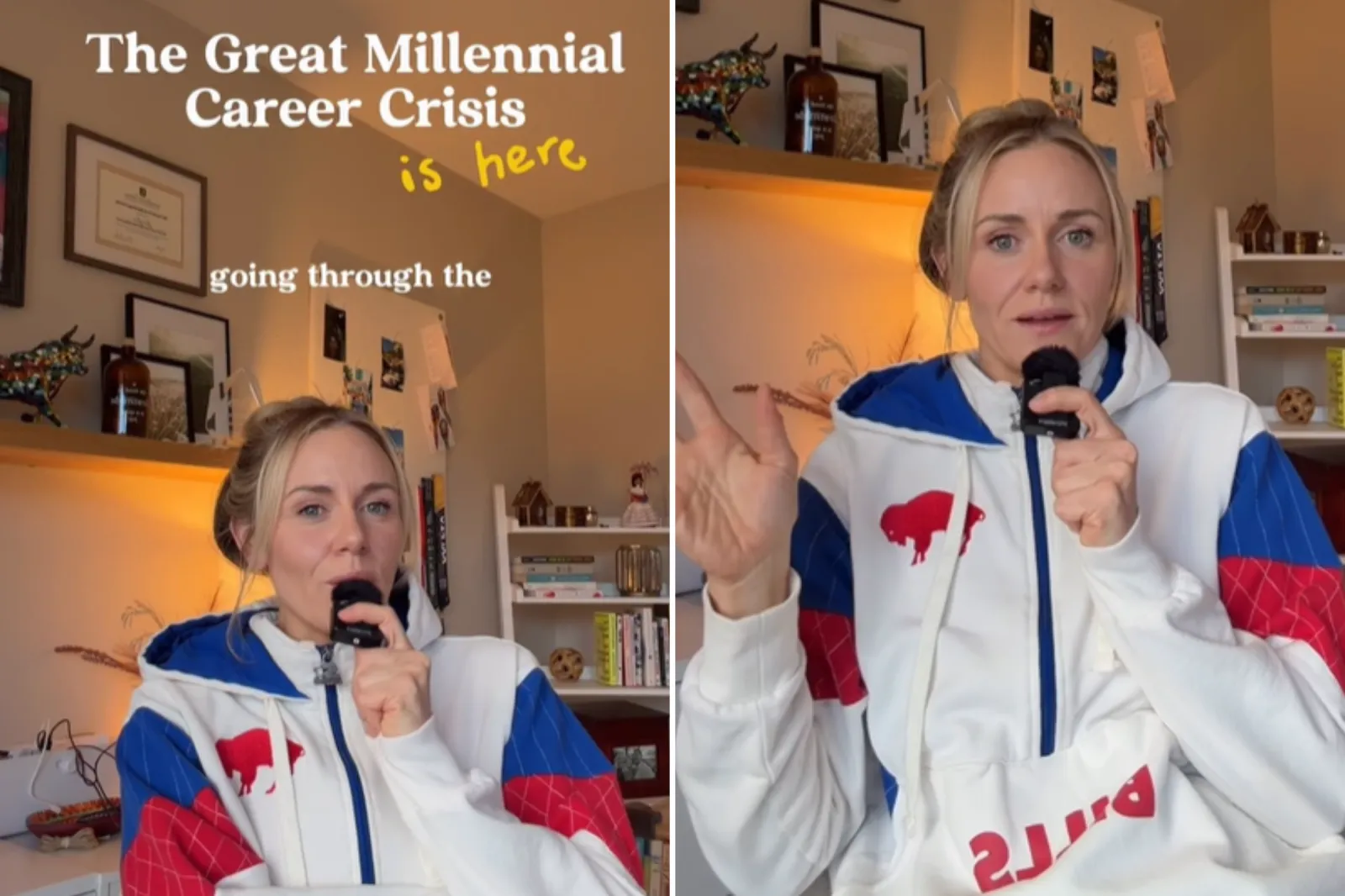
While in her own “career-confused era,” Cowan shared her thoughts on social media (@jessijeanhome on TikTok and Instagram). The video about this so-called millennial career crisis has gone viral with over 2 million views on TikTok and more than 4.5 million views on Instagram at the time of writing.
Cowan was inspired by fellow content creator Mike Mancusi (@mikemancusi), who often discusses millennial existentialism online. Mancusi has previously spoken to Newsweek about how millennials can overcome the crisis and prioritize their well-being.
After working hard all her life and investing time and money into her career, Cowan reached a point where she needed a change. She started to crave work that felt lighter and more sustainable.
“I think the belief was that linear progression and delayed gratification led to a payoff. If we struggled, we believed the fix was to try harder or wait longer, but that isn’t even moving the needle anymore,” Cowan said.
“I was at a pivot point when I couldn’t muster the same drive I once had. For seven years, I built a business I’m deeply proud of, working in binge-eating recovery and getting to work with more than 2,500 women in healing their relationship with food and their bodies. But becoming a mom two years ago changed me. My emotional capacity shifted, and I could no longer do both. The work still matters deeply, but it started to feel heavier.”
Perhaps this shift is a result of millennials realizing there is more to life than work, or perhaps it’s a sign of the times. Many millennials joined the workforce during a recession while already carrying the burden of student loan debt. Away from work, many can’t buy a home or start a family given how high those costs are.
Cowan undoubtedly believes these factors played a role in the millennial career crisis. She said that it is why so many people are reevaluating what is important to them, asking themselves whether traditional careers are “worth the emotional and physical cost.”
After sharing her thoughts on social media, Cowan was inundated with messages and comments from fellow millennials. So many people related to Cowan’s analysis and shared their own reasons for recalibrating in their thirties or forties.
It is also a conversation she has regularly with friends, many of whom are tired of the corporate grind, even after years of climbing the ladder and gaining success.
Cowan said: “Millennials are tired of the grind that isn’t even leading to the promised payoff. They want time, space for their mental health, and the ability to be present for themselves and their families. We’re far less interested in titles and more interested in curating a life that feels aligned, flexible, balanced.
“So many of my friends are exhausted, or feeling resentful of careers they worked hard to build or feeling a little bamboozled that they got advanced degrees and went hundreds of thousands of dollars into debt, and the promised financial return is not there.”
While Cowan doesn’t have the answers, she said she believes the first step is awareness. By talking openly about this phenomenon, she hopes to connect with other millennials and help them feel less alone or ashamed of going through a career pivot.
Cowan now realizes this isn’t just her individual issue, but it is generational instead. After all, one things millennials do best is stick together.
Um die besten Erfahrungen zu bieten, verwenden wir Technologien wie Cookies, um Geräteinformationen zu speichern und/oder darauf zuzugreifen. Wenn Sie diesen Technologien zustimmen, können wir Daten wie das Surfverhalten oder eindeutige IDs auf dieser Website verarbeiten. Die Nichteinwilligung oder der Widerruf der Einwilligung kann bestimmte Merkmale und Funktionen beeinträchtigen.
Functional
Always active
The technical storage or access is strictly necessary for the legitimate purpose of enabling the use of a specific service explicitly requested by the subscriber or user, or for the sole purpose of carrying out the transmission of a communication over an electronic communications network.
Preferences
The technical storage or access is necessary for the legitimate purpose of storing preferences that are not requested by the subscriber or user.
Statistics
The technical storage or access that is used exclusively for statistical purposes.The technical storage or access that is used exclusively for anonymous statistical purposes. Without a subpoena, voluntary compliance on the part of your Internet Service Provider, or additional records from a third party, information stored or retrieved for this purpose alone cannot usually be used to identify you.
Marketing
The technical storage or access is required to create user profiles to send advertising, or to track the user on a website or across several websites for similar marketing purposes.