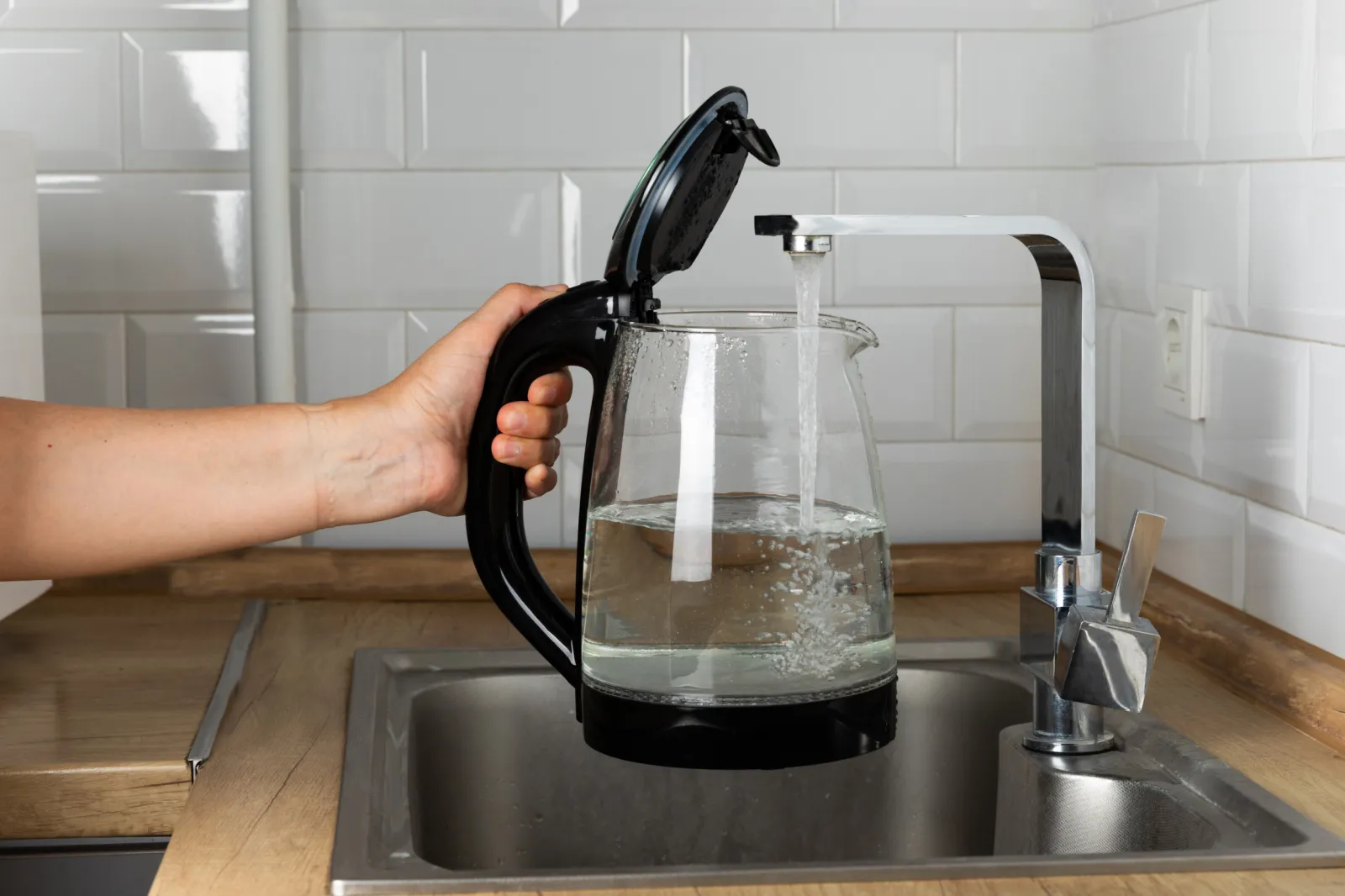
A woman has taken to social media to warn of the dangers of cooking with and drinking hot water from the tap.
In her TikTok, which has now been viewed more than 130,000 times, Cathy Pedrayes (@cathypedrayes) explains that hot water from the tap carries a higher risk of lead exposure than cold water.
She points viewers to guidance from the Environmental Protection Agency (EPA), which advises against using hot tap water for drinking, cooking or making baby formula.
According to the EPA, hot water can dissolve lead more quickly than cold water, increasing the likelihood that the metal leaches into water as it moves through household plumbing.
In the comments, TikTok users expressed a mix of surprise and skepticism, with some acknowledging the warning while others noted that water safety can vary widely.
“Wow, didn’t know that,” one TikTok user wrote, while another cautioned that the risk isn’t always straightforward: “Depends on so much, like your pipes, what you’re doing with the hot water.”
One commenter claimed, “As long as your plumbing is newer than 1986, there’s no lead,” to which Cathy replied, “Not according to the EPA and other health orgs. Not saying it’s high risk, but even low levels affect kids, so that’s why they recommend this.”
Those reactions reflect a broader reality: lead exposure from drinking water depends heavily on local infrastructure, plumbing materials and how water is used in the home.
Why Hot Water Can Carry More Lead
While the water coming from municipal treatment plants is typically treated to reduce corrosion, lead can still enter drinking water through service lines, solder or fixtures in older buildings.
Heating water can accelerate that process, which is why federal health agencies consistently recommend starting with cold water when preparing food or beverages.
According to the EPA, lead in drinking water is most often caused by corrosion of plumbing materials rather than contamination at the water source itself.
‘Harder to identify’
Homes built before 1986 are more likely to contain lead pipes, fixtures or solder, though newer buildings are not entirely risk-free.
“If you know your supply lines are not made of lead, it is still recommended to use cold water for drinking/cooking/baby formula,” Natalie Exum, assistant scientist at the Johns Hopkins Bloomberg School of Public Health, told Nexstar in an email.
“There can still be lead in solder and faucets that are harder to identify.”
Even low levels of lead exposure can be harmful, particularly for infants, children and pregnant people.
What Health Agencies Recommend for Safer Water Use
Health and environmental experts note that using hot tap water for cooking doesn’t automatically mean someone is being exposed to dangerous lead levels, but it does increase the potential risk.
For households concerned about lead, certified water filters, pipe replacement and regular testing are often recommended steps.
Here are some well-reviewed NSF/ANSI 53-certified water filters:
Replacing these pipes with modern materials like copper or plastic is widely recognized as the most effective long-term solution to prevent lead contamination at the source.
At the federal level, the Environmental Protection Agency has stepped up regulatory action in recent years to tackle the issue nationwide.
Under the updated Lead and Copper Rule, utilities are required to accelerate the replacement of lead service lines and take corrosion-control measures to keep metals from leaching into drinking water, with a goal of removing most lead pipes over the next decade.
Newsweek has reached out to Cathy Pedrayes for comment via TikTok. We could not verify the details of the case.
To read how Newsweek uses AI as a newsroom tool, click here.