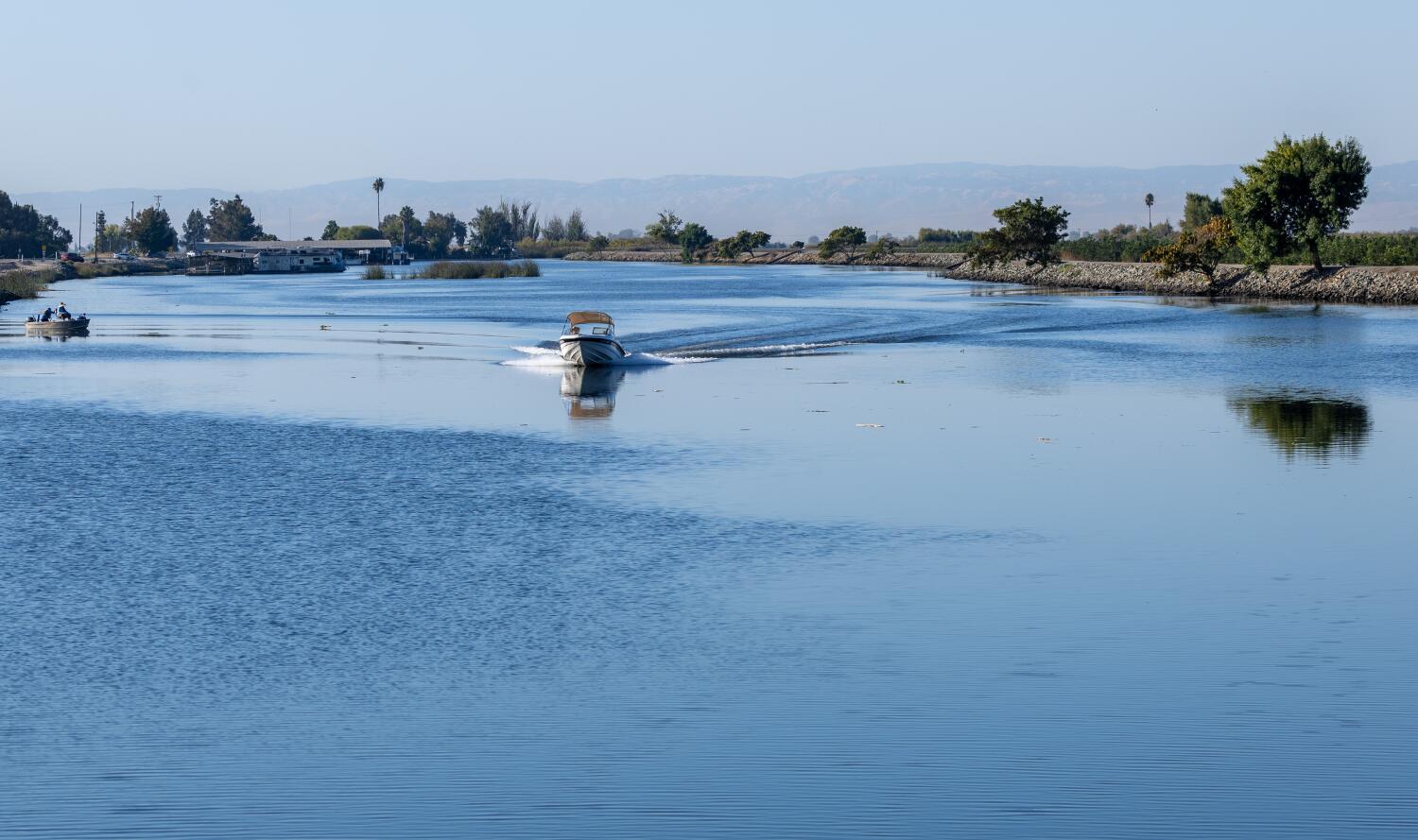
The question of how to protect fish and the ecological health of rivers that feed California’s largest estuary is generating heated debate in a series of hearings in Sacramento, as state officials try to gain support for a plan that has been years in the making.
“I am passionate that this is the pathway to recover fish,” said state Natural Resources Secretary Wade Crowfoot. “This is the paradigm we need: collaborative, adaptive management versus conflict and litigation.”
The plan is being discussed in three days of hearings convened by the State Water Resources Control Board. It sets out rules for water quality that will determine how much water can be pumped out of the Sacramento-San Joaquin River Delta for the state’s farms and cities.
Years of research shows that fish do better when there is more water in the region’s rivers and the Delta itself. The fish contend with dams that cut off their spawning grounds, nonnative fish such as bass that prey on them and powerful pumps that pull them into areas where they are vulnerable.
The approach backed by Gov. Gavin Newsom would give water agencies more leeway in how they comply with water rules.
Environmental advocates said the proposal would take too much water out of the Delta and threaten fish already in severe decline. They also point out that toxic algae blooms have increased in Delta waterways, but the plan doesn’t address that.
“Native fish and wildlife populations are crashing,” said Gary Bobker, program director of the environmental group Friends of the River, adding that the board’s upcoming decision is critically important in determining whether the state will protect the Delta’s ecosystem or allow it to deteriorate further.
Native fish that are increasingly threatened include the finger-sized Delta smelt and white sturgeon, the largest freshwater fish in North America, which can reach more than 10 feet long.
“What we are witnessing can only accurately be described as ecosystem collapse,” said Eric Buescher, an attorney for the group San Francisco Baykeeper.
The plan would give water agencies two ways of complying with Delta water quality goals — either limit pumping to maintain required minimum levels of water in the rivers, as has traditionally be done, or take part in so-called “voluntary agreements,” in which water agencies commit to ensuring certain river flows for the environment while contributing funds for projects that restore habitat for fish and other wildlife in the Delta.
This approach, which state officials call the Healthy Rivers and Landscapes program, has strong support among water agencies that serve California’s farms and cities.
“The traditional regulatory approach has severe water supply impacts to California’s communities,” said Stephen Pang, state relations advocate for the Assn. of California Water Agencies, which represents about 470 public agencies. “Climate change will continue to constrain water supply.”
Participating agencies have agreed to begin a collaborative effort to restore wetlands and a science program to guide the effort. Pang said leaders of the water agencies believe this approach would “improve habitat conditions and ensure adequate flow to protect and support native species.”
State officials say if the more collaborative approach falters and water agencies fail to meet commitments, they still have the option of terminating the program.
“The parties that would be subject to the regulation have sort of a vested interest in ensuring its success, and we think there’s a lot of value in that as well,” said Eric Oppenheimer, the board’s executive director.
The board is holding hearings through Friday, and accepting written comments from the public until Feb. 2. A decision on the plan is expected later this year.
The new update of the Delta water plan, formally called the Bay-Delta Water Quality Control Plan, has been years in the making.
The last substantial changes to the plan date to 1995 for much of the watershed. In 2018, the state water board released new rules intended to increase flows in the San Joaquin River. The update will set rules for the Sacramento River and the rest of the Delta, where pumps operated by state and federal agencies send water flowing in aqueducts to farmlands and cities.
The hearings are being held after a three-year shutdown of commercial salmon fishing because of a decline in the Chinook salmon population.
“Excessive water diversions are killing California’s key salmon runs,” said Barry Nelson, an advisor to the Golden State Salmon Assn., a nonprofit group.
Nelson said he believes that the voluntary agreements are designed to weaken environmental protection at a time when the Newsom administration is proposing to take out more water by building a 45-mile water tunnel beneath the Delta as well as the new Sites Reservoir, which is planned northwest of Sacramento.
He urged the board to reject the voluntary agreements, calling them a “backroom water scam.”