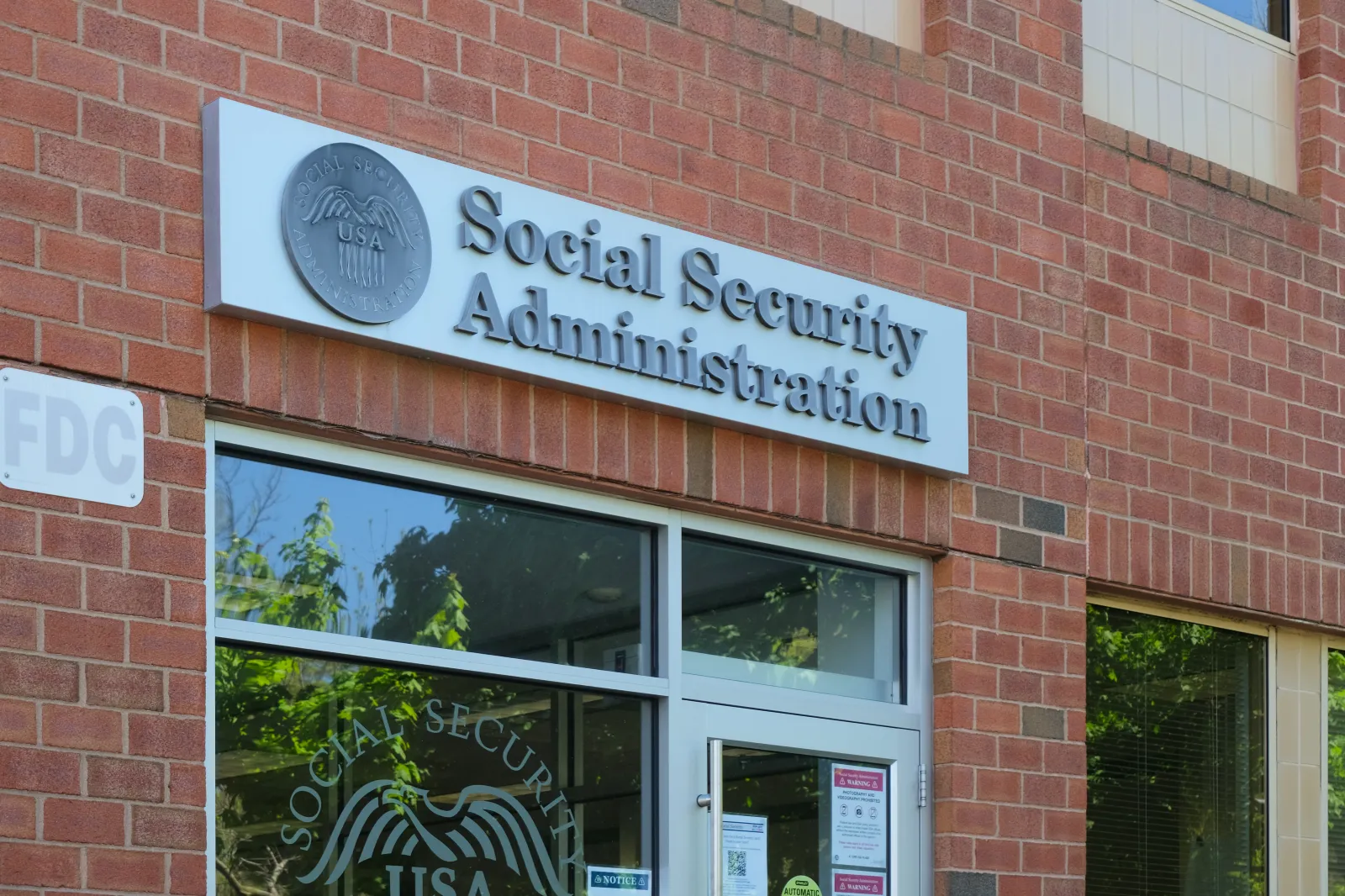
A major change is happening at the Social Security Administration this weekend, and customer service may be affected for beneficiaries nationwide.
Beginning Saturday, Social Security recipients will no longer be served by workers from their local field offices when scheduling appointments, as the agency moves to a fully nationalized customer service system.
Why It Matters
The change marks one of the most significant overhauls to Social Security’s customer service structure in years and comes as the agency seeks to streamline operations while reducing in‑person visits.
From October 2024 to October 2025, there were more than 31.6 million SSA field office visits nationwide. But the agency is aiming for 50 percent fewer visits in order to streamline operations and boost efficiency.
What Is Changing at Social Security
Until now, Social Security beneficiaries who needed to schedule appointments or resolve benefit questions typically interacted with staff at their local SSA field office. Under the new system, those requests will instead be handled through a nationalized appointment and customer service model, rather than being routed locally.
The SSA has said this transition is part of a broader effort to modernize its internal systems and improve efficiency. According to the agency, the rollout of the new technology will occur gradually throughout the year, and customers should not notice changes beyond increased appointment availability.
When the Change Takes Effect
The shift officially begins on March 7, meaning Social Security recipients who schedule appointments after that date will be routed through the national system instead of their local field office.
While the change has been planned for months, its timing means millions of beneficiaries could encounter the new system for the first time as early as this weekend.
Who Is Affected
The change has broad implications because of the sheer number of Americans who rely on Social Security. More than 70 million people receive Social Security benefits each month, often using those payments for essentials such as food, housing, and medical care.
Beneficiaries who regularly interact with their local field office—particularly those managing benefit updates, appointments, or complex claims—are likely to feel the impact most directly.
Why the SSA Says It’s Making the Change
The SSA says the move to a nationalized system is designed to improve customer service and expand access. In a statement cited by Nexstar, an SSA spokesperson said the agency is “utilizing technology to improve the customer experience and give our employees the tools they need to better serve the American people.”
The agency has emphasized that the system change is internal-facing and that customers should not see any disruptions beyond expanded appointment availability during the transition.
What People Are Saying
Kevin Thompson, CEO of 9i Capital Group and host of the 9innings podcast, told Newsweek: “We’re seeing a shift from more localized support to a centralized, national response model. On paper, that sounds more efficient. In reality, it comes with trade-offs. The expectation is that AI and automation will fill in the gaps, but that assumes the technology can actually handle the nuance of real-world issues, which isn’t always the case.”
Alex Beene, financial literacy instructor for the University of Tennessee at Martin, told Newsweek: “The changes coming to Social Security March 7 have nothing to do with the benefits recipients receive, but rather the customer service they sometimes use. The administrative side of Social Security will shift to a nationwide model to scheduling and receiving support. This change is coming out of necessity, as the administration has seen a sizable reduction in their workforce over the last year.”
What Happens Next
Beginning Saturday, getting help for your specific Social Security situation may become more difficult, especially when it involves state or local nuances, Thompson said.
“You’re no longer dealing with someone who understands your region; you’re dealing with a broader system…Staffing shortages are real. Phone wait times are now stretching past an hour in some cases,” Thompson said. “While in-person visits may still be relatively quick—around six minutes based on some reports—that’s assuming you can even get in front of someone.”
In a polarized era, the center is dismissed as bland. At Newsweek, ours is different: The Courageous Center—it’s not “both sides,” it’s sharp, challenging and alive with ideas. We follow facts, not factions. If that sounds like the kind of journalism you want to see thrive, we need you.
When you become a Newsweek Member, you support a mission to keep the center strong and vibrant. Members enjoy: Ad-free browsing, exclusive content and editor conversations. Help keep the center courageous. Join today.