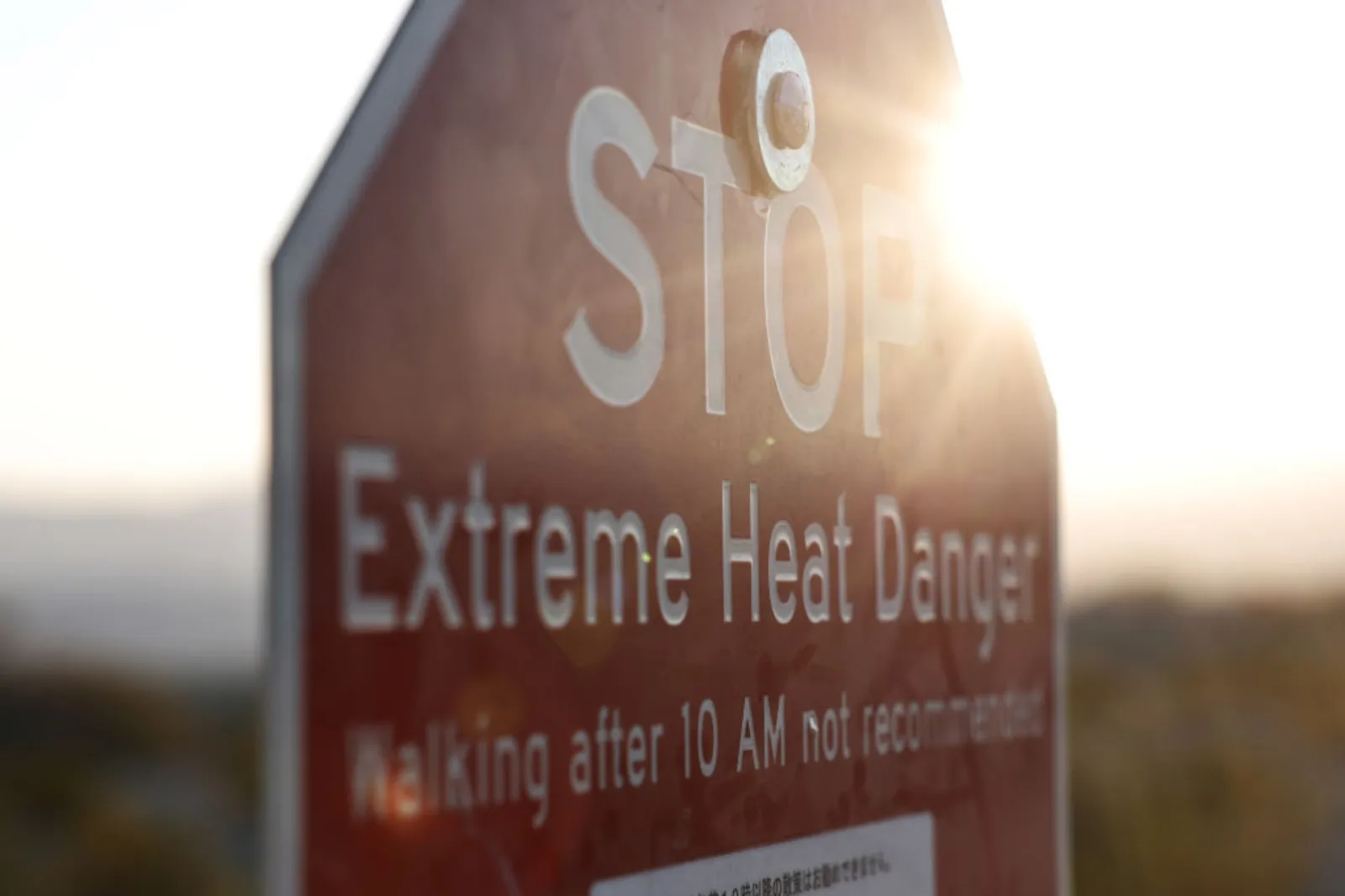
The NWS has issued an extreme heat watch for three states in the southwestern U.S., warning them to expect “dangerously hot conditions” and “record-breaking heat” throughout this coming week, which begins on Monday, March 16.
Parts of California, Arizona, and Nevada are expected to experience extreme heat next week, and, according to the NWS, some temperatures—particularly in California—will be around 20 to 30 degrees above the average for this time of year.
California
Temperatures ranging between 105°F and 110°F could blast the Coachella Valley, the San Diego county deserts, and the San Gorgonio Pass, near Banning, through Thursday and Friday, and the Riverside, San Bernardino, and San Diego county mountains should prepare for temperatures to reach 95°F, from Thursday morning until Friday evening.
Parts of southeast and southern California could see afternoon highs of between 103°F and 109°F from Wednesday through to Sunday next week, and a part of southwest California could see temperatures reaching up to 104°F from Monday until Friday next week.
San Bernardino county, including the upper Colorado River Valley, is expected to see temperatures reaching 106°F, and the Cadiz Basin, the Death Valley National Park, the Morongo Basin, and the eastern and western parts of the Mojave Desert are expected to get up to 108°F from Wednesday into Friday.
The San Miguel, Santa Rosa, Santa Cruz, and Anacapa Islands could get up to 92°F from Monday, lasting all week until Friday. The NWS has warned that there is a “high risk for dangerous heat illness for anyone, especially for the very young, the very old, those without air conditioning, and those active outdoors.”
Arizona
Parts of southwest and south-central Arizona could see temperatures—particularly in the afternoon—soaring to a high of 109°F from Wednesday, lasting until Sunday, March 22.
Areas below 5,000 feet in the eastern Cochise county, and the upper Gila River, San Pedro River, and Santa Cruz River Valleys—including Altar Valley—are expected to experience “dangerously hot conditions,” with temperatures soaring up to 100°F through Thursday into Sunday. The hottest days are expected to be on Friday and Saturday.
South-central and southeast Pinal County, the Tohono O`odham Nation, the Tucson metro area, and western Pima county should prepare to see temperatures reaching up to 108°F from Thursday until Sunday night, with particularly high temperatures on Friday and Saturday.
Temperatures reaching 106°F are possible across Lake Havasu, Fort Mohave, and parts of the Lake Mead national recreation area from Wednesday until Friday.
From Thursday, the northwest deserts—which includes southern Mohave county—could reach 105°F, lasting until Friday.
Nevada
Parts of the Lake Mead National Recreation Area could get up to 106°F from Wednesday morning until Friday evening.
In the Las Vegas Valley and southern Clark county, temperatures in the mid-to-upper 90s are expected from Thursday morning until Friday evening.
Advice for Coping With Extreme Heat
The NWS has issued plenty of advice for those living in the sweltering areas, which includes drinking plenty of water, staying out of the sun, checking in on neighbors and relatives, and not leaving children or pets in unattended vehicles—“Car interiors will reach lethal temperatures in a matter of minutes.”
It suggests that visitors, or those unaccustomed to extreme heat, should take extra precautions to avoid exposure during the hottest parts of the day and to limit outdoor activities.