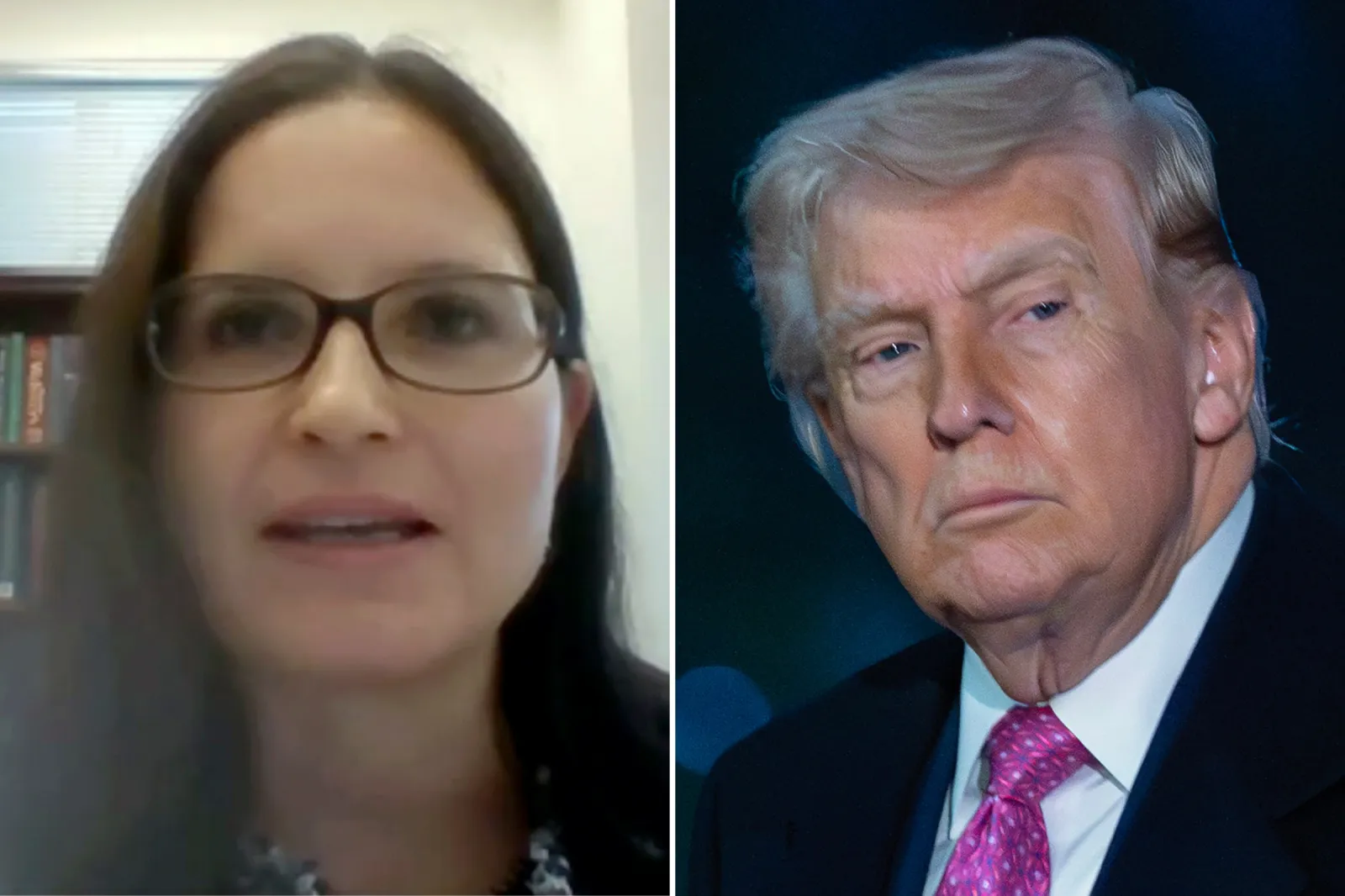
Judge Aileen Cannon, who has long-been accused of bias by critics in relation to her handling of President Donald Trump’s classified documents case, now faces perhaps her starkest neutrality test yet.
Florida-based Judge Cannon may have thought she put Trump’s classified documents case to bed last month, when in a February 23 order she barred anyone at the Justice Department (DOJ) from “releasing, distributing, conveying, or sharing with anyone outside the Department of Justice any information or conclusions” from prosecutor Jack Smith’s report.
However, the ink was barely dry when new revelations emerged last week that pose a fresh headache for Cannon.
The latest dispute stems from a March 13 DOJ production to the House Judiciary Committee the committee’s top Democrat, Representative Jamie Raskin of Maryland, said included non-public materials covered by Cannon’s earlier secrecy rulings in the classified-documents case. DOJ disputes that, saying neither Cannon’s order nor grand-jury secrecy rules were violated.
The committee said that release included a January 13, 2023, memo that suggested Trump took documents that “pertained to [his] business interests,” and that Susie Wiles, White House chief of staff and the then-chief executive officer of Trump’s super PAC, “witnessed President Trump showing off a classified map to passengers on his private plane.” Trump has denied any wrongdoing.
“In short, the position of the DOJ appears to be that it can violate Judge Cannon’s order and grand jury secrecy whenever it sees an opportunity to smear Jack Smith,” ranking member Jamie Raskin, a Maryland Democrat, wrote to U.S. Attorney General Pam Bondi last Wednesday.
In other words, Raskin alleges someone at the DOJ may have violated a court order, a possible contempt issue. When asked about that possibility, a committee spokesperson previously told Newsweek, “it is time for [Cannon] to reconsider her order and put an end to these selective leaks by lifting her gag order.”
White House press secretary Karoline Leavitt retorted that Raskin “has zero credibility” and called his letter “a cheap political stunt” based on “untrue and salacious claims” allegations. The Justice Department said Cannon’s order “was not violated, and none of the documents produced by DOJ violated 6e as none of them disclosed matters occurring before a grand jury.” 6e refers to the barred release of grand jury materials.
Cannon could choose to take up the issue if she concludes her order may have been violated, although the procedural path for any contempt inquiry is far from straightforward. Newsweek contacted the DOJ and an assistant to Cannon via email on Friday.
The case against Trump was dropped when he won a second White House term, but the lack of a prosecution team does not prevent contempt inquiries. Judges can initiate contempt-related inquiries on their own, as Chief U.S. District Judge James Boasberg did using the Alien Enemies Act litigation last April. But that path has been heavily contested on appeal, making it an imperfect comparison rather than a straightforward model for Cannon.
Boasberg had challenged Trump’s use of the 1798 act to remove alleged members of the Venezuelan gang Tren de Aragua without individual hearings, and issued a temporary restraining order on March 15, 2025, prohibiting their removals.
The order included a demand that the Department of Homeland Security turn around planes carrying those being deported.
That order was not carried out. Boasberg found “probable cause that Defendants’ actions constitute contempt” and launched an inquiry, despite no motion seeking it, to “identify the contemnor(s) and refer the matter for prosecution.”
The DOJ has said the then-Homeland Security Secretary Kristi Noem made the decision to not turn the planes around following advice from lawyers. Boasberg later ordered two Justice Department lawyers to testify.
The DOJ, which has repeatedly accused Boasberg of bias, has appealed the order. An appellate court has paused the order for now, and at time of publication had yet to rule on the merits.
Judge Cannon, a Trump-appointee, has previously been accused of unfairly making rulings favorable to Trump, such as delaying the trial until after the 2024 election, dismissing the case entirely, stating special counsel Jack Smith’s appointment violated the Constitution, and the blocking of Smith’s final report.
Will Cannon open a contempt inquiry to establish what was leaked and if so, by whom? Her critics will be watching closely.
In a polarized era, the center is dismissed as bland. At Newsweek, ours is different: The Courageous Center—it’s not “both sides,” it’s sharp, challenging and alive with ideas. We follow facts, not factions. If that sounds like the kind of journalism you want to see thrive, we need you.
When you become a Newsweek Member, you support a mission to keep the center strong and vibrant. Members enjoy: Ad-free browsing, exclusive content and editor conversations. Help keep the center courageous. Join today.