Democratic Party affiliation has surged in one-party identification trend over the past five quarters, flipping a late-2024 Republican advantage into a double-digit lead by early 2026, potentially reshaping the upcoming midterms.
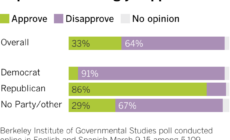
According to Gallup and related polling data reviewed by Newsweek, Americans identifying as independents reached a modern high, while there was a net 14-point swing toward the Democrats from late 2024 through early 2026. Despite this, both parties remain historically unpopular.
Why It Matters
The trajectory reported by Gallup has historically correlated with gains for the out‑party in midterm elections, particularly when that party—in this case the Democrats—has no control in Congress. With favorability for both parties remaining low, the movement likely reflects dissatisfaction with President Donald Trump more than renewed enthusiasm for Democrats.
What To Know
Gallup’s surveys of American voters showed Republicans with a 4-point advantage in the fourth quarter of 2024, a tie in the first quarter of 2025, Democrats up 8 points in the fourth quarter of 2025, and Democrats up 10 points in the first quarter of 2026, indicating a net 14-point shift toward Democrats over this span.
Additional Gallup indicators released in January showed both parties with low favorability and a narrowing Republican advantage on national security and prosperity in 2025, underscoring that the party ID shift reflected discontent with the governing party more than improved views of Democrats.
Other polling has shown shifts across the political spectrum. An Economist/YouGov poll found a record 27 percent of Americans self‑identifying as MAGA in late March 2026, including 65 percent of Republicans, even as separate polling showed Democrats leading the generic congressional ballot and the Democratic Party trailing Trump’s personal standing on some favorability measures.
The rise in independent identifying voters has largely been seen among millennial and Gen Z age groups, with these voters feeling more disenfranchised with both main political parties.
While voter party identification trends tend to follow similar patterns, the shift away from both parties comes at a time when GOP supporters have been divided over Trump’s decision to go to war in Iran, as well as the administration’s handling of the cost of living, and the Jeffrey Epstein files.
On the Democratic Party side, the perceived lack of clarity on its policies and leadership, nearly 18 months on from the 2024 election, as well as a seeming lack of ability to stand up to Trump and his policies, have left traditional blue voters feeling disenchanted with the party.
What People Are Saying
Todd Belt, director of the Political Management Program at George Washington University, told Newsweek Tuesday: “Democratic leadership, especially in D.C., has been ineffective at stopping Trump. Democrats haven’t given voters anything to vote for, just being against Trump is not enough, especially when voters have voiced concerns about the economy, affordability and health care costs.”
White House spokesperson Davis Ingle told Newsweek in an emailed statement on March 24: “According to the RealClearPolitics average, President Trump is enjoying a higher approval rating than former Presidents Obama and Bush at this point in their second term, with much more hostile media coverage.”
Former Representative Marjorie Taylor Greene, a Georgia Republican, said in February: “I think people are realizing it was all a lie. It was a big lie for the people… What MAGA is really serving in this administration, who they’re serving, is their big donors.”
Republican National Convention national press secretary Kiersten Pels told Newsweek March 31: “President Trump is lowering drug prices, securing the border and putting more money back in Americans’ pockets… It is no surprise 73 percent of voters disapprove of Democrats.”
Democratic National Committee rapid response director Kendall Witmer, in a press release on voter concerns March 31: “Donald Trump, JD Vance, and Republicans have already slashed health care funding to pay for their massive tax cuts for their billionaire friends, sending health care costs soaring for Americans.
“Now, as working families grow even more worried about how to afford health care while prices at the pump and the grocery store continue to skyrocket, Republicans want to make even more cuts to health care to pay for their war of choice with Iran.
“After promising to put ‘America First,’ Trump and Vance are using taxpayers as a piggy bank to fund tax cuts for billionaires and big corporations and deadly and costly wars. Americans have had enough of this b*******.”
What Happens Next
There are still seven months to go until the midterms, giving both parties plenty of time to either win over or push away voters.