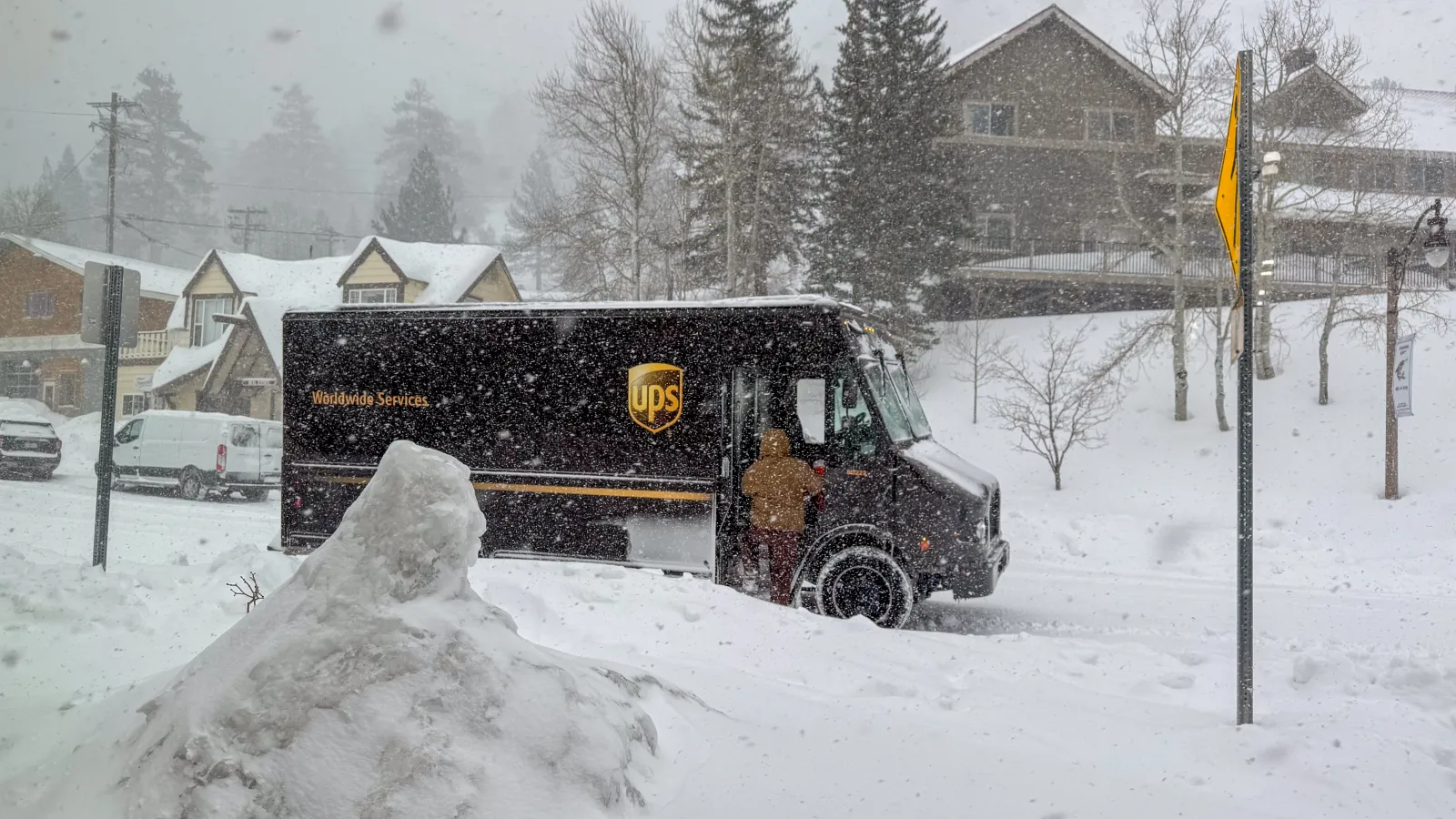
Heavy snow war nings have been issued to 12 states as the National Weather Service (NWS) warns that up to 24 inches of snow could hit from Thursday, urging drivers to “consider delaying all travel.”
States Hit by Heavy Snow Thursday
Winter storm warnings and winter weather advisories are in place from Thursday, April 2, until the weekend, in some cases. The worst affected areas are in Illinois, Wyoming, Montana, Maine, Oregon, Michigan, South Dakota, Minnesota, Idaho, Utah, Washington, California, and North Dakota.
Illinois
The southern Cook and southern Lake Counties could get up to 9 inches of snow and 40 mph winds from Thursday, lasting until Saturday night. The NWS said that the heaviest snowfall is likely to be during the day, but due to the high sun, and above freezing temperatures, it was likely to create a “slushy mess.”
Wyoming
The Sierra Madre and Snowy Ranges are expected to get between 12 and 18 inches of snow—with up to 20 inches likely across the highest peaks—and winds reaching 60 mph from around noon on Thursday until late Friday afternoon. The NWS warned that “outdoor recreation could become life-threatening to those caught unprepared for severe winter conditions.”
From Thursday afternoon/evening, through Friday, the northeast Bighorn Mountains could get between 10 and 20 inches of snow and 50 mph winds; the Teton and Gros Ventre Mountains could get between 12 and 18 inches of snow—with up to 24 inches possible along the western slopes of the Tetons—and 45 mph winds, and northern parts of the Yellowstone National Park could get up to 10 inches of snow.
Eastern and western parts of the Wind River Mountains, and the Salt River and Wyoming Ranges could see up to 16 inches of snow and 50 mph winds from Thursday night through Friday.
Montana
Between 6 and 10 inches of snow and 40 mph winds are forecast for the Big Belt, Bridger, and Castle Mountains and up to 12 inches of snow and 35 mph winds are expected over the Little Belt, Highwood, Gallatin, Madison, and Centennial Mountains through Thursday, lasting until around noon on Friday. According to the NWS, “Travel could be very difficult, and tire chains may be required for some vehicles.”
Parts of the Absaroka and the Beartooth and Crazy Mountains could get up to 18 inches of snow, coupled with winds gusting around 45 mph, and the Pryor and northern Bighorn Mountains could get up to 20 inches of snow and winds reaching 50 mph until early Friday evening. The NWS has warned that Highway 14, through Burgess Junction, could become “nearly impossible” to drive across, due to drifting and blowing snow.
The Continental Divide, along the Rocky Mountain Front, the upper Blackfoot and MacDonald Passes, and the Elkhorn, Boulder, and Beaverhead Mountains could get between 3 and 6 inches, especially in areas above 7,000 feet, and winds reaching 40 mph from Thursday morning until Friday morning.
Maine
Northeast and northwest Aroostook Counties could see up to 6 inches of snow and ice accumulations from Thursday night until Friday afternoon.
California
The western slopes of the northern Sierra Nevada could get up to 12 inches of snow and 60 mph winds, lasting until Thursday morning.
Oregon
The southern Oregon Cascades, north of Howard Prairie Lake, and areas above 3,000 feet along the foothills of eastern Douglas County—including the passes along highways 140, 62, 138, 230, and 58—have been told to expect up to 8 inches of snow (with up to 12 inches likely to fall across the Crater Lake National Park), and winds reaching 50 mph, through Thursday.
The eastern slopes of the Cascades could see up to 7 inches of snow and 45 mph winds, and the Cascades of Lane, Marion, and Linn could get between 6 and 12 inches of snow and 35 mph winds through Thursday.
Michigan
Keweenaw and Ontonagon Counties are expected to get up to 6 inches of snow, thick ice, and 40 mph winds from Thursday morning until Saturday morning. The NWS warned of possible power outages due to the ice and strong winds.
South Dakota
Spink, Brown, Day, Marshall, Roberts, Faulk, Potter, Campbell, Edmunds, McPherson, and Walworth Counties could get up to 10 inches of snow, ice, and winds gusting around 35 mph from Thursday until Saturday.
Minnesota
Between 3 and 9 inches of snow, ice, and 35 mph winds could strike Koochiching, Itasca, Crow Wing, Aitkin, Cass, Traverse, Pine, Carlton, and south St. Louis Counties from Thursday through Saturday.
Wadena, Hubbard, Lake of the Woods, north and south Beltrami, and north Clearwater Counties could get up to 9 inches of snow by Saturday night.
Idaho
Parts of the West Central Mountains, including McCall, Cascade, and other Long Valley locations, are likely to get up to 12 inches of snow, especially along the higher areas, by Friday morning.
The Big Lost Highlands, Copper Basin, Frank Church Wilderness, Sawtooth, Stanley Basin, and the Sun Valley could get up to 10 inches of snow in areas between 6,500 and 8,000 feet—with up to 2 feet expected along the highest peaks—and winds reaching 40 mph, through Thursday.
The Big Hole Mountains, Island Park, and the Bear River and Caribou Ranges could see up to 16 inches of snow, especially in areas above 6,500 feet, and 40 mph winds, lasting until noon on Friday.
Utah
Between 6 and 12 inches of snow could fall across the Wasatch and western Uinta Mountains by Friday morning, with the upper Cottonwoods expected to get over a foot.
Washington
Holden Village, the Loup Loup and Stevens Passes, the Cascades of Snohomish, Whatcom, Pierce, along with Skagit, Lewis, and southern and northern King Counties, are expected to get between 3 and 9 inches of snow by mid-Thursday morning.
Also by mid-Thursday morning, Sherman Pass, Chesaw and Boulder Creek Road, and Highway 20 at Wauconda Summit are expected to get up to 8 inches of snow.
North Dakota
Parts of south central, southwest, and southeast North Dakota—including the James River Valley—could see between 6 and 12 inches of snow from Thursday night through to Saturday afternoon, with blowing snow likely to “significantly reduce visibility.”