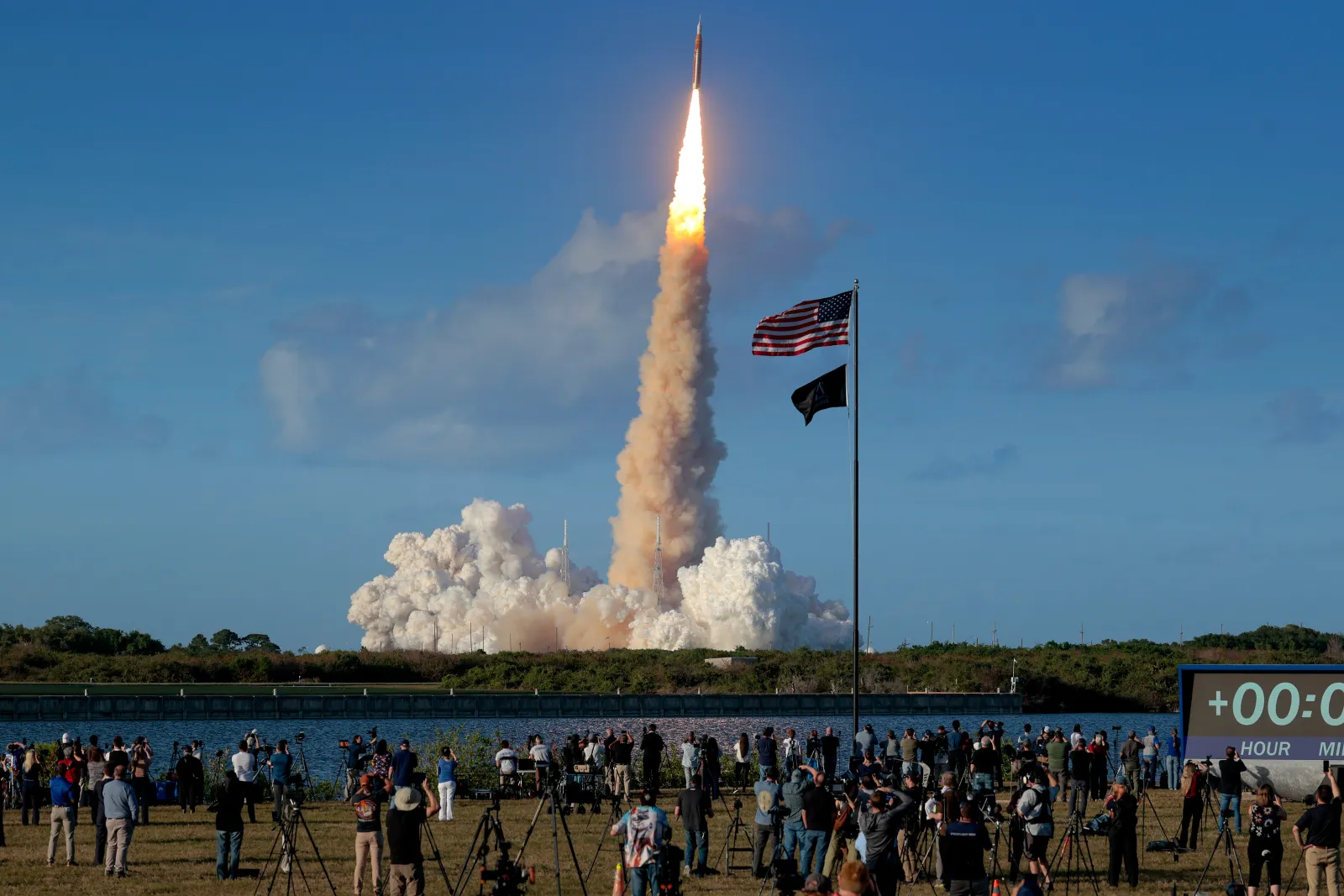
Artemis II Fixes Post-Launch Issues, Can Proceed With Mission
4 hours ago
2,603
NASA’s Artemis II mission to the moon can proceed after overcoming some potential major speed bumps after launch, including the now-famous malfunctioning toilet.
Mission Control announced Thursday that the ship’s toilet, which cost around $30 million to produce, is now “go for use” after Houston was able to help the astronauts troubleshoot the problem. The crew will now commence the 10-day mission to send four astronauts around the moon for the first time in more than 50 years.
However, the malfunctioning toilet was not the only issue the crew faced: Astronauts reported a “loss of communications” shortly after launch, during which time NASA was unable to receive data from the crew—even though the crew was able to hear Mission Control—putting the entire mission in jeopardy.
NASA officials ascribed the error to a “glitch,” and after resolving the issue are investigating what triggered the snag in the first place, stressing “there were no issues with the vehicle itself.”
“Comms with the crew have been restored. We’re actively working the issue,” NASA Administrator Jared Isaacman said at a post-launch news briefing.
And, perhaps most humorously, the astronauts reported issues setting up their Microsoft Outlook: Reid Wiseman, commander for the mission, radioed Mission Control to tell them that he found he had two Microsoft Outlooks, but that “neither one of those are working.”
Again, NASA was able to work through the issue, gaining remote access to the computers and ensuring everything was online and accessible for the crew.
While some of these issues seem minor, they ultimately could have proved immensely problematic for a crew that has to focus on navigating the ship and sling-shotting around the moon.
The toilet, officially known as the Universal Waste Management System, is designed to vent urine overboard and store feces until the crew’s return, but if it had continued to malfunction, the astronauts would have had to use “collapsible contingency urinals” and collect their urine in bags, according to NBC News.
This system in the past proved problematic as it was prone to leaks, leading to general crew dissatisfaction, even as NASA determined that the primitive system broadly met its objectives. The new system is fitted into a private toilet cubicle—the first time such a system has been used on a space shuttle—although a similar system was tested on the International Space Station.
Jeremy Hansen, mission specialist on the crew from the Canadian Space Agency, said in a video ahead of the launch how much he appreciated the more modern approach, saying it was nice to have “one place during the mission where we can go and actually feel like we’re alone for a moment.”
Um die besten Erfahrungen zu bieten, verwenden wir Technologien wie Cookies, um Geräteinformationen zu speichern und/oder darauf zuzugreifen. Wenn Sie diesen Technologien zustimmen, können wir Daten wie das Surfverhalten oder eindeutige IDs auf dieser Website verarbeiten. Die Nichteinwilligung oder der Widerruf der Einwilligung kann bestimmte Merkmale und Funktionen beeinträchtigen.
Functional
Always active
The technical storage or access is strictly necessary for the legitimate purpose of enabling the use of a specific service explicitly requested by the subscriber or user, or for the sole purpose of carrying out the transmission of a communication over an electronic communications network.
Preferences
The technical storage or access is necessary for the legitimate purpose of storing preferences that are not requested by the subscriber or user.
Statistics
The technical storage or access that is used exclusively for statistical purposes.The technical storage or access that is used exclusively for anonymous statistical purposes. Without a subpoena, voluntary compliance on the part of your Internet Service Provider, or additional records from a third party, information stored or retrieved for this purpose alone cannot usually be used to identify you.
Marketing
The technical storage or access is required to create user profiles to send advertising, or to track the user on a website or across several websites for similar marketing purposes.