Almost two months to the day after a shocking second-trimester miscarriage upended our lives, I received a call from the clinic that conducted my dilation and evacuation (D&E), the medical procedure to remove a baby once doctors have determined there is no heartbeat.
It was an unknown number, and I was rushing to prepare for a work presentation, so I let the caller leave a voicemail. As my phone chimed with the sound of a new message, I absentmindedly put it on speaker while I moved around my office getting ready for my next meeting—touching up my makeup and adjusting my Zoom background as I went. But then I heard something that caught my attention: The voice on the phone said she had some “troubling news” to share and asked me to call her back as soon as I could.
I tried to imagine what the news could possibly be. Was it something to do with my insurance claims? Was my insurance company refusing to cover the procedure? Nothing could have prepared me for the revelation that followed. The cremation facility we had entrusted with our daughter—the one that this clinic had recommended—had been shut down when at least 18 bodies were discovered piled together, neglected, and in conditions too cruel to comprehend. Somewhere in those piles was our baby.
My heart began to race. My palms were sweating. I honestly wasn’t sure what to say or how I was supposed to react. Just as I was about to hang up the phone, a realization stopped me: “Wait,” I said. “How could this be? We have her ashes in my bedside drawer.”
The woman sounded surprised. I heard her rifling through pages, double-checking she had the right file. “I’m so sorry,” she said. “I’m not sure what you were given, but your daughter’s body was never cremated. The ashes you have are likely fake.”
Fake. As I struggled to comprehend why anyone would prey on families in their most vulnerable moments, even going so far as to create fraudulent remains, I felt tears slip down my cheeks, leaving faint black streaks at the corners of my eyes from the mascara I had just applied.
I hung up the phone, wiped my face and clicked “Join Zoom” for my next meeting. I had an hourlong call to get through. I told myself I would process everything after that. I couldn’t think about it right now.
A year slipped by, and I tucked what had happened so far out of reach that avoidance started to feel second nature. I steered clear of all articles and mentions of Heaven Bound Cremation Services, unable to absorb descriptions of the unspeakable conditions there without intrusive images following me into sleepless nights. After years of fertility struggles to conceive our baby, it felt too unbearable to contemplate where we had unknowingly sent her. But then, last February, the State of Maryland filed misdemeanor charges against Heaven Bound’s operators for mishandling the remains of eight infants. These babies, one of whom was our little girl, weren’t even discovered in the cremation facility, but rather, they had been found in the garage of the defendants’ private residence.
There is no question that the two defendants are primarily at fault for these heinous actions. However, there were others who could have stopped them much sooner. According to public records, the first complaint about this facility was made in December 2017, seven years before our daughter’s body was entrusted to them. It took multiple failed inspections, numerous probation violations, and conditions deemed so severe that they posed a threat to public health before the Maryland Board of Morticians and Funeral Directors finally suspended Heaven Bound’s license and shut them down.
Alarmingly, this is not the first time something like this has happened. Cremation horror stories have appeared all too often lately, both in the news and in pop culture.
In the late 1980s, a California funeral home operator pleaded guilty to 21 criminal charges after he was found to have mishandled thousands of bodies and conducted mass cremations. His story has since inspired a 2025 HBO Series, The Mortician, and his case led to numerous reforms in mortician licensing, oversight, and ethical standards. The 2002 Tri-State Crematory scandal in Georgia became the subject of a popular 2024 podcast, Noble. And in 2025 alone, multiple lawsuits were filed against funeral homes and cremation facilities in Indiana, Illinois, Colorado, and Maryland, with Michigan seeing at least four cremation scandals since 2017. Shockingly, until January 1, 2027, Colorado remains the only state in the country that doesn’t even require a license to be a funeral director (this changed with the passage of a 2024 law that will go into effect next year). Tragically, these kinds of fraudulent activities are even more prevalent in pet crematories, where only a few states have specialized statutes governing their actions.
Given the importance of end-of-life care, which should undoubtedly include care for the dead, it is a troubling truth to learn that this industry continues to be largely regulated by state boards that possess varying degrees of power. In Maryland, the Board of Morticians and Funeral Directors is mostly made up of industry professionals. I couldn’t help but wonder: What incentive do these practitioners have to demand more regulation of themselves? Why would they empower stronger oversight when doing so may lead to more mandatory inspections, steeper fines, and longer sentences for violations?
In 2025, as part of hearings related to Heaven Bound, it came to light that some funeral facilities in Maryland hadn’t been inspected in more than a decade. A bill was introduced to change this, but it didn’t pass in the state senate. It’s clear that, over time, systems that operate with limited oversight grow comfortable in that autonomy, making meaningful reform increasingly difficult to impose.
A few months after I was thrust back into the Heaven Bound case, I received a package in the mail from the Maryland State Anatomy Board. Our daughter was no longer considered “evidence,” so she was finally cremated and returned to us. I couldn’t help but think how bizarre it was that after all this time, she was dropped onto our doorstep as if she were a DoorDash delivery or an Amazon order. It felt so impersonal. Did the mailman have any idea what he was carrying in his delivery truck that day? Would it phase him if he did?
I held the package close to my chest, and I went back to the drawer by my bedside where I had placed the first box of ashes many months prior. I sat and stared at it, gripping the new box—the real box—in my hands, tracing the edges under my fingertips as I contemplated the magnitude of what lay inside.
I knew it was time to move forward, but what happened to our daughter changed me in ways I am still struggling to name. I no longer move through the world with blind trust. I question what I once accepted without hesitation: that the systems we are told we can rely on are operating in good faith to support us in our most vulnerable moments. I now know all too well that is not always the case.
There is so much more that needs to be done to standardize how crematories operate and how violators are held accountable. I hope by sharing what this experience did to us, I can inspire lawmakers across our country to do more to protect their own citizens from these horrendous crimes. After all, death should not diminish our right to dignity.
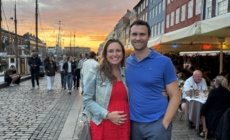
Vaughan Bagley is a former director of social impact strategy for MTV Entertainment Studios. She lives in Washington, D.C., with her husband and two young children. You can find her via her Substack, Becoming Mom, where she covers issues of fertility, pregnancy loss, postpartum mental health, and motherhood.
All views expressed in this article are the author’s own.
Do you have a personal essay you want to share with Newsweek? Send your story to MyTurn@newsweek.com.