After initial jubilation, some Iranian Americans fear a quagmire
2 hours ago
4,190
Software engineer Arin Saghatelian shed no tears when he heard that the supreme leader of his native land had been killed by American bombs.
“I don’t think you’re going to find many people in support of that dictatorship or the mullahs that are in power right now,” said Saghatelian, who lives in La Crescenta and fled Iran with his family when he was 10. “I think the world is a better place today.”
But the fleeting relief that Saghatelian, 45, felt last week as an exile from Iran quickly turned to the dread he feels as an American citizen and taxpayer: What if his adopted country gets sucked into another long, deadly and expensive conflict like the war in Iraq?
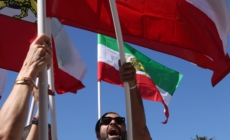
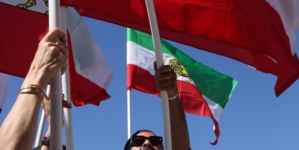
After the initial jubilation in “Tehrangeles” and other local Iranian American communities, with thousands taking to the streets to celebrate the death of Ayatollah Ali Khamenei, the tone of some conversations this week grew more sober.
Customers sit at Sipp Coffee House across the street from Tochal Market and Damoka rug store on Westwood Boulevard in Los Angeles on Friday.
(Christina House / Los Angeles Times)
As Iranian Americans like Saghatelian watch the rapid escalation of the war that began with U.S. and Israeli bombs falling on Iran, some fear that their native country, and perhaps the whole Middle East, could descend into chaos.
In Iraq, after a U.S. invasion toppled dictator Saddam Hussein in 2003, sectarian leaders stepped into the vacuum. The long-simmering rivalry between Sunni and Shiite Muslims erupted into a civil war that killed tens of thousands of civilians.
Roozbeh Farahanipour, a former Iranian dissident who now lives in Los Angeles, worries that a destabilized Iran, with its complex cultural heritage and patchwork of ethnic and religious groups, could devolve into a far worse mess than post-invasion Iraq.
“It’s more complicated ethnically, civically and historically,” so a protracted war there “is not going to be like Iraq — it’s going to be 10 times worse,” he said.
Of the 600,000 or so Iranians living in the U.S., about half are in California, according to the Iranian Diaspora Dashboard produced by UCLA’s Center of Near Eastern Studies. By far the biggest surge in immigration followed the 1979 Islamic Revolution that sent the U.S.-backed shah into exile and swept religious hard-liners into power.
Religious minorities, including Christians and Jews, make up a larger share of the expatriate community in the U.S. than they do in Iran — they have more reason to leave — but Islam is still the dominant religion among Iranians here, said Kevan Harris, an associate professor of sociology who teaches courses on Iran and Middle East politics at the UCLA International Institute.
Those who fled the revolution, and the hard-line Islamic rule that followed, often consider themselves exiles from their home country. But the flow of migrants has remained so steady that half of the Iranian-born people in the U.S. arrived after 1994, Harris said.
The politics of younger Iranian immigrants, who come to the U.S. for all kinds of reasons, and consume the full range of content available online, are more diverse than those of their older compatriots.
Pro-Palestine protesters hold a rally in front of campus police at UCLA on March 11, 2025.
(Juliana Yamada / Los Angeles Times)
For example, the UCLA students protesting Israel’s war in Gaza last year set up their encampment not far from Harris’ office window. He recognized some Iranian American students inside the makeshift compound, while others lined up outside with counterprotesters.
“There are enough Iranians in the U.S. now, especially in L.A., that you will find them on every side of most conflicts,” Harris said.
Saghatelian, the software engineer, fled after years of war that began with Iraq’s invasion of Iran in 1980 and took the lives of nearly a million people. His parents wanted to make sure that he and his older brother would never get sucked into such slaughter.
As a kid, Saghatelian was forced to flee his Tehran neighborhood during Iraqi bombardments.
“So I had real, personal interest in seeing Saddam fall,” he said.
But he also remembers the nightmare that followed. All the military and civilian deaths, all the cost to U.S. taxpayers.
“As an American citizen, I worry about that happening again,” he said.
And he worries that his American-born friends, who have enjoyed relatively peaceful lives, don’t realize how quickly things can slide into catastrophe.
As Christian Armenians, his family had it pretty good under the shah of Iran, Saghatelian said, and didn’t suffer that much in the immediate aftermath of the 1979 Islamic Revolution.
“As the religious mullahs came to power, they still respected the Armenian community. We got to keep our churches,” Saghatelian said. “But every year, there was more and more pressure. You’re almost like a second-class citizen.”
Other ethnic minorities had it worse, Saghatelian said: “If you were Jewish, the more hard-line the country got, the more danger you were in.”
After fleeing Iran, Saghatelian’s family spent two years in refugee camps in Germany and Austria. At one point, they were kicked out of the Austrian refugee program and became homeless until a Catholic priest took them in and made them caretakers of a medieval church.
But like so many others fleeing Iran, his family’s plan was to find a way to the United States, which they finally did, settling in Glendale when he was 12.
Since then, he has focused on building his life here, with no real desire to return. But he has kept an eye on conditions in his native country over the years, and his mother stays in touch with an uncle who is still there.
“It’s a beautiful country. I would love to be able to visit freely as a United States citizen,” he said.
“Regime Change in Iran” signs and photos of Reza Pahlavi, the exiled son of Iran’s last shah, can be seen in lots of shop windows on Westwood Boulevard as community members and business owners react to the U.S. and Israel bombing Iran..
(Jason Armond / Los Angeles Times)
But he doesn’t think the Iranian government will give up without a long fight, nor does he believe the Trump administration has a long-term plan.
Farahanipour, 54, also considers himself an exile. In the summer of 1999, he was a 27-year-old journalist in Tehran who became a recognizable figure in a student protest movement that called for a free press, the end of government censorship and equal rights for women. Some, including him, publicly called for Khamenei to resign — which was unthinkable at the time, Farahanipour said.
In response, the regime shut down a well-known reformist newspaper, sent security forces into a college dormitory and beat and jailed students who participated in public demonstrations.
On July 12, 1999, Khamenei took to the national airwaves and called the students “rioters” and pawns of foreign enemies. Far from being discouraged, Farahanipour said, he was in awe. Forcing Khamenei to respond was “the proudest moment of my life,” he said, smiling at the memory.
But he didn’t have much time to bask in the glory.
“I received a death sentence from the regime,” he said, as calmly as others might say they got a parking ticket. Then came three fatwas — religious decrees — calling for his death, he said.
That was after years of seeing family members and acquaintances get “arrested, tortured and executed” by the government.
“They hated me and I hated them. It was a two-way street,” he said, which left him with only one choice: seeking asylum in the United States.
Roozbeh Farahanipour, owner of Delphi Greek restaurant in Westwood, stands for a portrait as community members and business owners in the community react to the of bombing of Iran.
(Jason Armond / Los Angeles Times)
He has lived in Los Angeles since 2000, opening a couple of restaurants. In 2017, he became an American citizen, arriving at that momentous decision while walking in a Westwood cemetery.
“This will be my final address,” he thought.
Still, he could not look away from the news earlier this year when a collapse of the Iranian currency drove people into the streets, sparking a brutal government crackdown that killed thousands of protesters.
When Farahanipour heard about Khamenei’s death, he popped the cork from a champagne bottle and celebrated “the happiest moment of my life.”
But like Saghatelian, he soon began thinking of Iraq.
Shortly after the collapse of Hussein’s ruling party, crowds looted government offices and cultural sites. Heavy infrastructure damage from the U.S. bombing led to chronic and constant failure of the electric and water systems in major cities — making them almost unlivable, especially in the sweltering summers.
At the height of the sectarian war, parts of Baghdad were so riddled with impromptu militia checkpoints that many Iraqis started carrying two official-looking IDs — one genuine and the other a forgery with a last name and birthplace associated with the other sect.
Choosing which to present, especially in heavily contested neighborhoods, was like tossing a coin with your life in the balance.
“We don’t have a good track record,” Faranhipour said. “How many American lives did we waste in Afghanistan? How much money did we waste over there just to replace the Taliban with the Taliban?”
He’s praying the United States won’t get bogged down again.
“Hopefully the president and his team know what they’re doing,” he said. “They should declare victory and withdraw.”
Um die besten Erfahrungen zu bieten, verwenden wir Technologien wie Cookies, um Geräteinformationen zu speichern und/oder darauf zuzugreifen. Wenn Sie diesen Technologien zustimmen, können wir Daten wie das Surfverhalten oder eindeutige IDs auf dieser Website verarbeiten. Die Nichteinwilligung oder der Widerruf der Einwilligung kann bestimmte Merkmale und Funktionen beeinträchtigen.
Functional
Always active
The technical storage or access is strictly necessary for the legitimate purpose of enabling the use of a specific service explicitly requested by the subscriber or user, or for the sole purpose of carrying out the transmission of a communication over an electronic communications network.
Preferences
The technical storage or access is necessary for the legitimate purpose of storing preferences that are not requested by the subscriber or user.
Statistics
The technical storage or access that is used exclusively for statistical purposes.The technical storage or access that is used exclusively for anonymous statistical purposes. Without a subpoena, voluntary compliance on the part of your Internet Service Provider, or additional records from a third party, information stored or retrieved for this purpose alone cannot usually be used to identify you.
Marketing
The technical storage or access is required to create user profiles to send advertising, or to track the user on a website or across several websites for similar marketing purposes.