Taiwan enjoys strong bipartisan support among Americans, with 60 percent now favoring direct military intervention in the event of a Chinese invasion, according to a new poll.
It was among the most striking findings in the latest annual National Defense Survey by the Washington, D.C.-based Reagan Foundation, which reported rising support for maintaining a military edge to deter adversaries.
Why It Matters
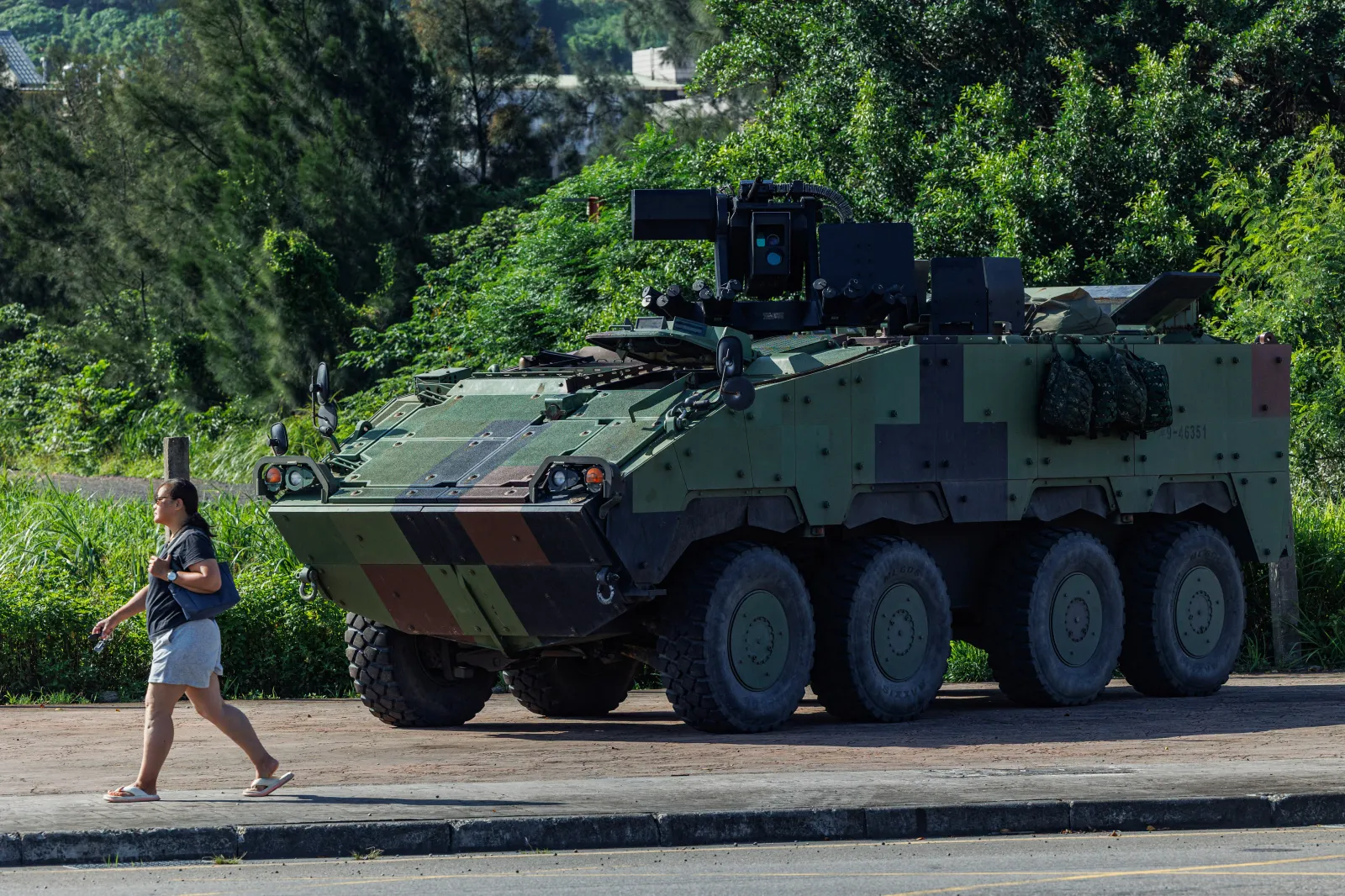
Taiwan, a global tech hub and important U.S. trade partner, is a major potential flashpoint in the Asia-Pacific region.
China claims Taiwan as its territory and says unification is inevitable, though the Chinese Communist Party has never ruled there. While Washington is Taiwan’s top arms supplier, U.S. administrations have for decades supported the status quo in the Taiwan Strait, deliberately leaving ambiguous whether they would intervene in a conflict with nuclear-armed China.
Newsweek reached out to the foreign ministries of Taiwan and China and to the Pentagon for comment.
What To Know
A supermajority of respondents (77 percent) in the Reagan Institute survey said it’s important for the Pentagon to help defend Taiwan against “Chinese aggression.” This sentiment enjoys broad bipartisan support, with 78 percent of registered Democrats and 81 percent of Republicans in favor.
Asked to explain their stance, top reasons included America’s commitments to strategic partners (23 percent) and the defense of democracy and sovereignty (16 percent).
Support for committing U.S. military forces in a direct defense climbed to 60 percent, up from 48 percent last November. Nearly two-thirds (62 percent) now back establishing a no-fly zone over the area in the event of a Chinese invasion—an increase of 11 points year-on-year.
In terms of indirect assistance for Taiwan, support for providing it with more military equipment rose even more sharply, to 71 percent of respondents compared with 56 percent last year. Backing for a greater U.S. military presence—such as deploying more assets to the region—rose 12 points to reach 70 percent.
Nearly three-quarters (74 percent) said they would support economic sanctions against Beijing if China moves against Taipei.
Support for officially recognizing Taiwan as an independent country has also edged up, reaching 79 percent from 73 percent last year.
The survey was conducted from October 23 to November 3, with a sample size of 2,507 adult Americans.
Taiwan functions as a sovereign state with its own government, military, and foreign relations. However, like almost all countries, the U.S. switched diplomatic recognition from Taipei (officially the Republic of China) to Beijing (the People’s Republic of China) in the 1970s. Under the U.S. “One China policy,” Washington recognizes—but does not formally support—Beijing’s sovereignty claim over Taiwan.
China has threatened war if Taiwan were to declare formal independence, though President Lai Ching-te says Taiwan is already de facto independent and does not need to take that step.
What People Are Saying
The Reagan Institute said in its analysis of the 2025 National Defense Survey: “Around the world, Americans want to reinforce, not retreat from, U.S. global interests and commitments. Support for aiding Ukraine and defending Taiwan has grown, along with approval of NATO and Article V commitments. Americans see alliances as important to U.S. security, even as many also favor a greater focus on the Western Hemisphere and securing the homeland.”
What Happens Next
China’s rapidly expanding military continues to ramp up pressure on the island democracy. Top defense and intelligence officials of both the Trump and Biden administrations have warned that Beijing may launch an offensive before the end of the decade—a scenario analysts warn would spark a humanitarian disaster and economic upheaval.
President Donald Trump has said Chinese President Xi Jinping assured him he would not move against Taipei during the U.S. leader’s term, which ends in January 2029.