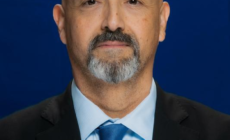
When two Los Angeles police officers refused to leave his apartment during a welfare check, Slade Douglas felt he had no choice but to call 911.
The August 27, 2019, encounter began after someone from the Department of Veterans Affairs incorrectly reported to authorities that Douglas may be suicidal, according to a lawsuit he later filed against the city and the two officers who responded to his door.
Douglas told police there had been a misunderstanding and that he wasn’t a danger to himself or others. But instead of leaving, the officers insisted on taking him into custody for his own safety under California’s Welfare and Institutions Code, known as a 5150 hold.
They put him in handcuffs and took him to a hospital. What followed, he said, was a nightmare of forced sedation, drug testing and the increasingly desperate attempts by the officers to justify his detainment.
Douglas sued, claiming that the incident violated his constitutional rights — and a jury agreed with him, awarding $6.8 million in damages after a civil trial that ended earlier this month.
A U.S. Army veteran and former college football player, Douglas, 49, said he felt he had no choice but to take the city to court to “ensure that this doesn’t happen to another person.”
“There was no basis for this forced treatment. Mr. Douglas was not a danger to himself or others, and he was not on drugs, nor has he ever used illegal drugs,” Douglas’ lawsuit read.
Emails seeking comment from the LAPD and the city attorney’s office were not immediately returned Monday.
In an interview with The Times, Douglas said the helplessness and humiliation he felt at being detained still leaves him angry.
Douglas had been on the phone earlier with a representative from the VA’s assistance hotline to make a complaint about discrimination he said he was facing. But the conversation went sideways and eventually he hung up in frustration.
The VA worker called the LAPD and urged them to conduct a welfare check on him — even though the lawsuit says that he “did not have any intention to harm himself, nor did he express such a desire to the hotline operator.”
When LAPD officers Jeffrey Yabana and Jeremy Wheeler showed up at his apartment, Douglas said he invited them in and explained that there had been a misunderstanding. Footage from the officers’ body cameras — released as exhibits during the trial — captured what happened next: Douglas remains calm at the start of the encounter, but soon begins to question why the officers aren’t leaving.
“I’m about to put you in handcuffs, sir,” Wheeler is heard saying.
“If you do that that’s your choice,” Douglas responded.
“OK,” Wheeler says. “Turn around. Put your hands behind your back.”
Douglas said he tried to maintain his composure, but when he pulled out his cellphone and said was calling 911, the lawsuit contended, they responded by knocking it out of his hands.
“Put down the damn phone!” Wheeler can be heard saying on the body-camera footage.
The officers proceeded to handcuff Douglas with his hands behind his back, ignoring his pleas that he suffered from spinal injuries, and took him to the hospital.
Once there, Douglas said he overheard the officers discussing what to do with him, saying something to the effect of needing to “find something” in his system to justify the arrest. At one point, medical staff inserted a catheter over his objections, he said.
In court filings, the officers said they worried that Douglas might use his phone “as a weapon.” Wheeler acknowledged that Douglas appeared calm, but said it was his experience as a police officer that suicidal people will deny wanting to harm themselves to avoid being detained.
Douglas said he feels somewhat vindicated by the jury’s decision, and is eager to start putting the incident behind him. But he still has trouble sleeping, he said, sometimes snapping awake in the middle of the night, thinking about the ordeal.
A former standout football player who won a national championship with Florida State, followed by a brief stint in the Army that ended with a medical discharge for PTSD, Douglas has shared his story in a documentary and on national programs like “The Tavis Smiley Show” and said he is weighing a run for Congress.
His lawsuit argued that the LAPD was ultimately responsible under what is known as a Monell claim, which can hold supervisors liable for the actions of lower-ranking officers if it can be proven that the behavior was part of a long-standing custom or practice.
The jury award — which will likely be appealed and still needs approval from city leaders — adds pressure on LAPD Chief Jim McDonnell to address the costly payouts from police-related lawsuits each year. Because taxpayer money is used to cover the payouts, such lawsuits have come under increasing scrutiny given the city’s financial problems.
During trial, Douglas’ attorneys presented evidence that Wheeler had a history of alcohol abuse and had been diagnosed with bipolar disorder and schizophrenia — resulting in several off-duty violent episodes, including one instance in which his ex-wife called the station where he worked to report that he had threatened her. In 2014, he underwent 30 days of treatment at the Betty Ford Clinic.
According to personnel records released to the plaintiffs, the department had previously recommended Wheeler’s termination after an internal investigation found that he had failed to render aid to a bicyclist he had sideswiped with his police motorcycle.
It’s unclear how Wheeler kept his job, but, Douglas’ attorneys argued that the department should not have allowed him to continue carrying a badge and gun.
Lauren McRae, a civil rights attorney who was part of Douglas’ legal team, said the case revealed bigger problems within the Police Department about oversight of its officers.
“I think that the verdict really sent a message to the city that we’re not going to stand for you guys putting dangerous officers onto the streets,” she said.