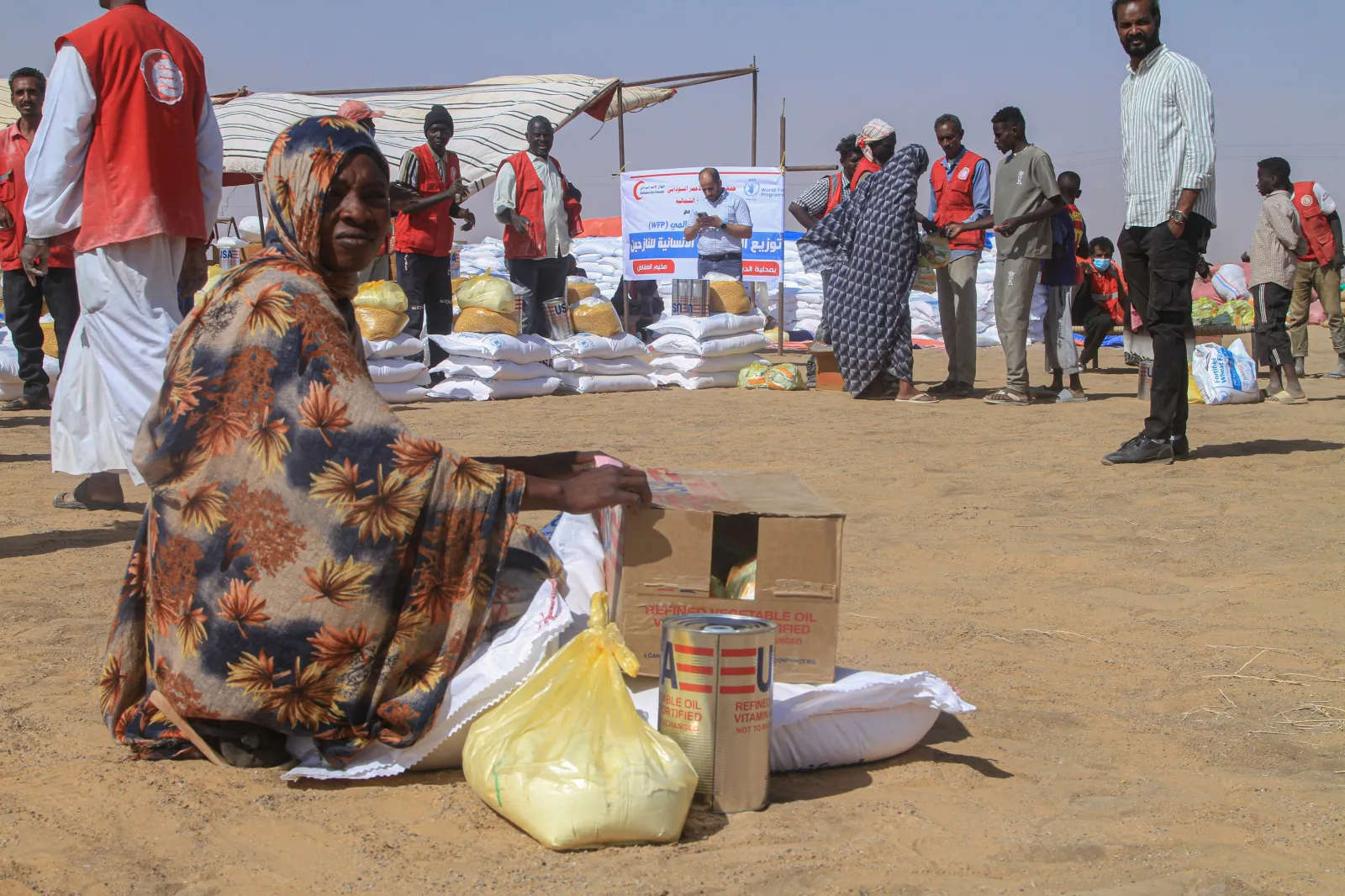
The Red Cross is running 42 emergency appeals around the world. Funding is running at only 20 percent. The picture for longer-term aid looks even bleaker.
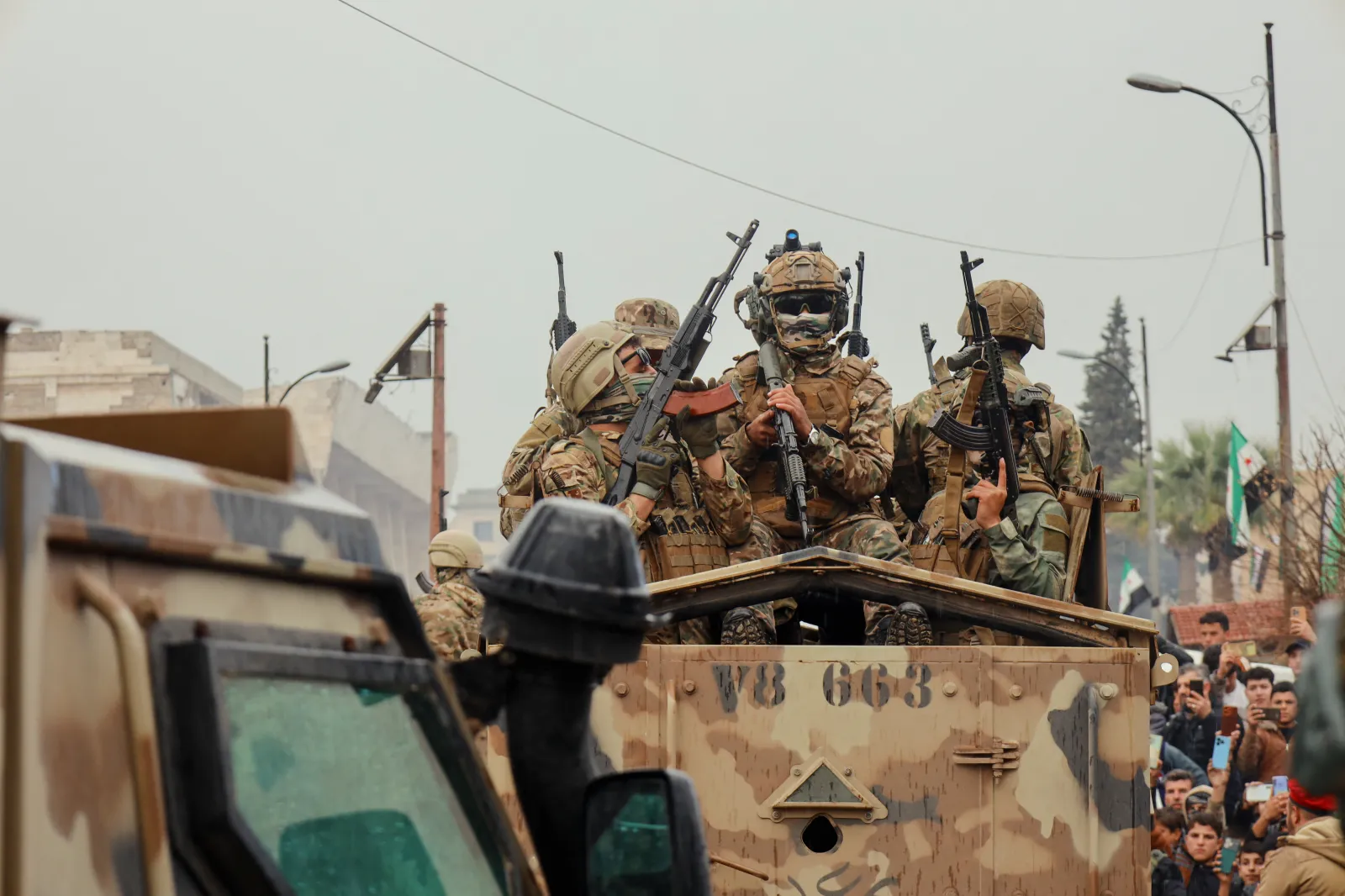
Meanwhile, weapons makers have had their best year ever given the biggest wars for decades in Europe and the Middle East and the fears of insecurity that are driving countries everywhere to tool up for conflict. That is driven not only by the global dynamics of a retrenching United States under President Donald Trump and an increasingly powerful China, but also a multitude of smaller arms races.
A perfect storm is brewing of more conflict and fewer resources to prevent it or cope with it, humanitarian workers say.
“It has now become acceptable to say you will cut back on supporting the most vulnerable to invest in guns and bombs,” Caroline Holt, Director for Disaster, Climate and Crises at the International Federation of Red Cross and Red Crescent Societies, told Newsweek.
“The more that governments prioritize the security agenda, which appears to be the way of politics right now in many countries, not only are they taking funding away from the humanitarian sector for us to be able to do our work, but they are also generating more and more displacement,” she said.
She spoke on the sidelines of the recent Doha Forum, which drew everyone from Donald Trump Jr. to Hillary Clinton to a five-star luxury venue in the Gulf state of Qatar to discuss critical challenges in a world where the shift under Trump is as much an indicator of the global direction as it is a driving force.
“The international global order post-World War II is dead,” pronounced Einar Tangen, a senior fellow at the Canada-headquartered Center for International Governance Innovation. “If you have any doubt about that, you just need to read Trump’s latest security analysis, where he’s basically said it’s returned to the jungle.”
That’s evident in Ukraine as the biggest war in Europe since World War II grinds on with Russian advances that have been stopped by neither Ukraine’s hard-pressed forces nor European statements of outrage. Wars between Israel and Hamas, Hezbollah, Iran and the Houthis have quietened but not ended. There are now signs of potential U.S. action in Venezuela.
Those conflicts have grabbed the headlines, but there are also Sudan, Yemen, Africa’s Horn, Great Lakes and Sahel regions; and there’s now Thailand-Cambodia clashes to join the long-running Myanmar civil war in Southeast Asia while the last year also saw fighting between Pakistan and India.
“We are seeing more and more protracted crises, long-standing crises, overlapping crises, multiple crises happening at the same time, greater frequency, greater intensity. So communities haven’t got a chance to bounce back at all before the next thing is on them,” said Holt.
Arms Races
Arms makers are thriving. The combined revenue from the world’s largest weapons manufacturers and defense-related companies climbed nearly 6 percent last year to its highest ever, according to the Stockholm International Peace Research Institute.
That is fueling arms races while battlefields are becoming proving grounds for the rapid evolution of lethal technologies.
“You layer on top of that the AI, and there’s a positive side about AI, but there’s also the negative impact about how it further accelerates arms and technology, and you put those in the hands of some worrying non-state activists and states, and then it starts to yield problems,” Comfort Ero, president and CEO of International Crisis Group, an independent organization working to prevent wars, told Newsweek.
The ramping up of spending on weapons and the cutting of aid budgets has also had consequences for development aid, whose supporters have long argued that it is a tool for preventing conflict as well as fighting poverty.
The aid budgets of Western countries had been falling even before Trump dismantled the USAID behemoth shortly after the start of his second term. The impact has been felt not only by those who have lost their direct support, but more broadly as the aid pools dry up.
Among those seeing a change is the Doha-based Education Above All Foundation, which supports education projects around the world, but requires its partners to come up with their own share.
“There’s been a lot of funding shifts and priority shifts, and there have been several casualties of that: education being one, health being another, agriculture being another,” the foundation’s Chief Education Officer, Mary Joy Pigozzi, told Newsweek.
“I think the big picture of that is it’s just less money at a time when we know and we’re beginning to really understand the value of education in terms of its role in such things as good health, well-being, a strong economy, youth employment and, ultimately, peace.”
New Donors
The foundation has an advantage over some given its funding from gas-rich Qatar, which is emerging as an increasingly important donor as it also swings its growing diplomatic clout in the Middle East and beyond.
The Qatar Fund for Development’s Director General Fahad Hamad Al-Sulaiti told Newsweek that the pullback of aid in part marked a shift toward investment for development, which could be seen as positive.
“The shift is transforming the financing mechanism,” he said.
“We understand that sometimes we need grants for humanitarian aspects: for saving lives and all these things, but we believe strongly that the shift is not something so bad because this shift is helping in a good way for the development for the future.”
The retreat from humanitarian aid by the West is also providing an opening for China, which has sought to fill some of the gaps left by dwindling Western funds as it spreads its influence through its giant Belt and Road infrastructure investment scheme as well as humanitarian aid.
“When the existing power is getting out of the public goods and then the rising power was not quick enough to provide them, there could be a gap in between, so I think we’re probably in that kind of situation,” Henry Huiyao Wang, Founder and President of the Beijing-based Center for China and Globalization told Newsweek. “China is taking some of that leadership now.”