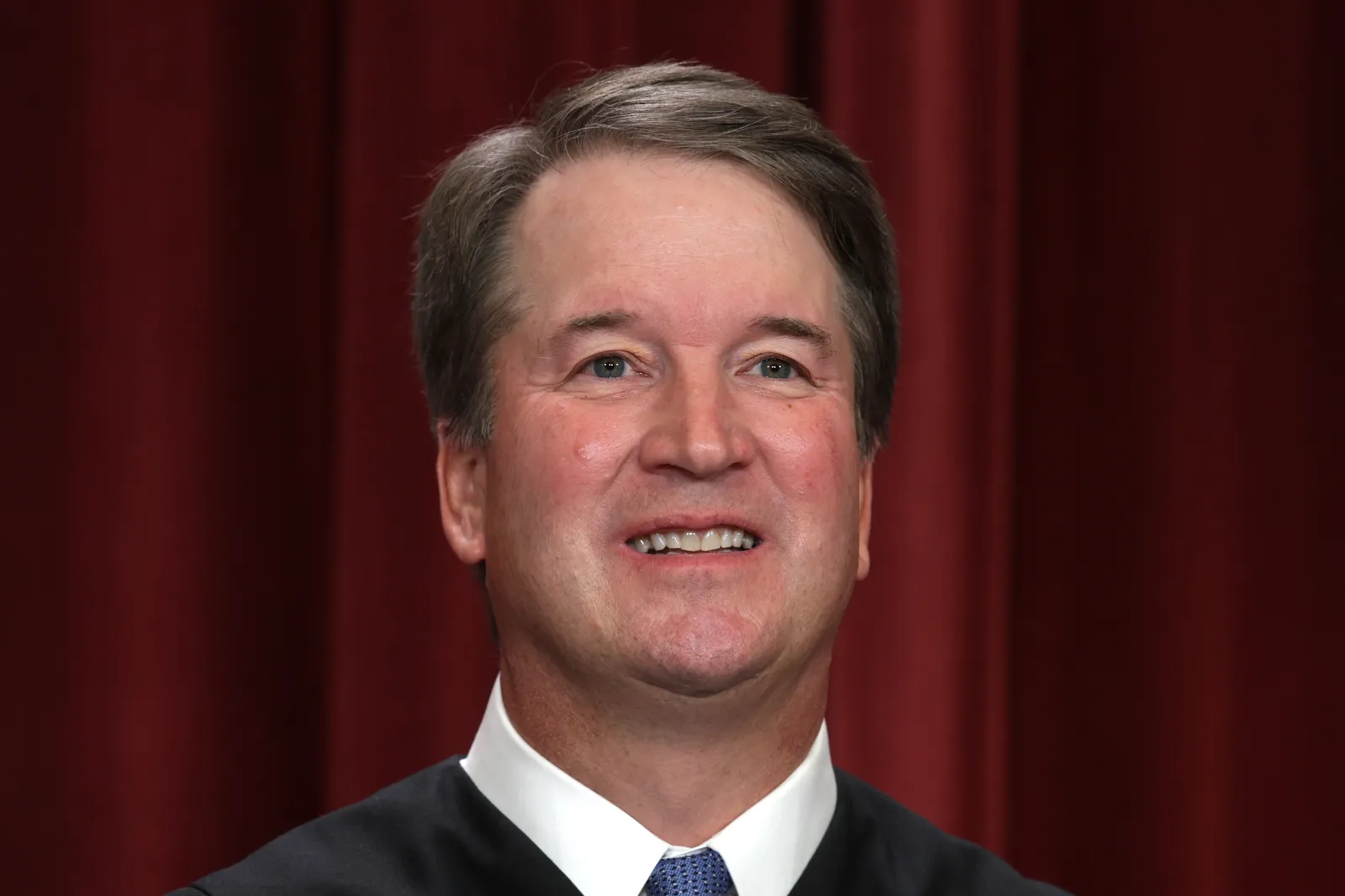
Supreme Court Justice Brett Kavanaugh added a pointed footnote in a recent case opinion, saying that federal officers “must not make interior immigration stops or arrests based on race or ethnicity.”
Legal and political analysts say the clarification responds to criticism stemming from a prior decision that allowed broad immigration enforcement tactics in California and drew accusations of enabling discriminatory practices.
Why It Matters
The High Court’s ruling in Trump v. Illinois marks a rare loss for the Trump administration, which had previously succeeded in a series of emergency appeals on immigration and federal authority. The decision left in place a lower court injunction issued by U.S. District Judge April Perry, who found no substantial evidence of unrest that would justify a National Guard deployment in Illinois. An appeals court also declined to lift her order.
What To Know
Legal analysts say a single footnote in the opinion marks a rare clarification on immigration enforcement after backlash to a prior ruling.
The footnote, included in Kavanaugh’s concurring opinion in Trump v. Illinois, said that federal officers “must not make interior immigration stops or arrests based on race or ethnicity.” Though not central to the case, the line drew widespread attention and was widely interpreted as an attempt to distance Kavanaugh from the perception that he supported race-based enforcement practices.
“This is a critically important clarification,” Joe Scarborough, MS NOW host and former congressman, wrote on X, quoting the footnote’s language.
Josh Gerstein, senior legal affairs reporter at Politico, said the note seemed designed “to try to calm outrage” over Kavanaugh’s earlier solo opinion in a September ruling that lifted court-imposed limits on U.S. Immigration and Customs Enforcement operations in California. That decision had been criticized over enabling racial profiling, prompting the phrase “Kavanaugh stops” to circulate among legal observers and advocates.
“He goes out of his way to pen a footnote not having to deal with the case at hand,” added NYU law professor Ryan Goodman on X, suggesting the justice was seeking to soften fallout from the prior ruling.
Kavanaugh’s footnote came in Trump v. Illinois, a case in which the Supreme Court rejected the Trump administration’s request to send National Guard troops to Chicago to support immigration enforcement. The administration said the troops were needed to protect federal personnel and property, but the Supreme Court ruled it hadn’t shown legal authority to justify military usage.
While the justice joined the majority in denying the deployment, he cautioned that the High Court’s interpretation of federal law could constrain executive authority during future emergencies. “The Court’s legal interpretation, as I understand it, could lead to potentially significant implications for future crises that we cannot now foresee,” he wrote.
Analysts say Kavanaugh’s clarification—though legally nonbinding—may carry influence in shaping how lower courts approach the boundaries of immigration enforcement, particularly amid ongoing lawsuits over federal actions in cities with sanctuary policies.
What People Are Saying
The Supreme Court, in a majority opinion: “At this preliminary stage, the Government has failed to identify a source of authority that would allow the military to execute the laws in Illinois.”
Kavanaugh, in a concurring opinion: “The potential consequences, combined with the novelty and difficulty of the statutory issues addressed by the Court, underscore why I would not opine more broadly than necessary to resolve this application.”
Supreme Court Justice Samuel Alito, in a dissenting opinion: “In this case, the Court has no good reason to stray beyond the issues that the parties chose to present, and based on those arguments, the Court should grant the application. There is no basis for rejecting the President’s determination that he was unable to execute the federal immigration laws using the civilian law enforcement resources at his command. In concluding otherwise, the District Court likely committed both legal and factual error.”
What Happens Next
The Supreme Court’s order is not a final ruling, but it could impact other lawsuits challenging Trump’s attempts to deploy the National Guard in other Democratic-led cities.