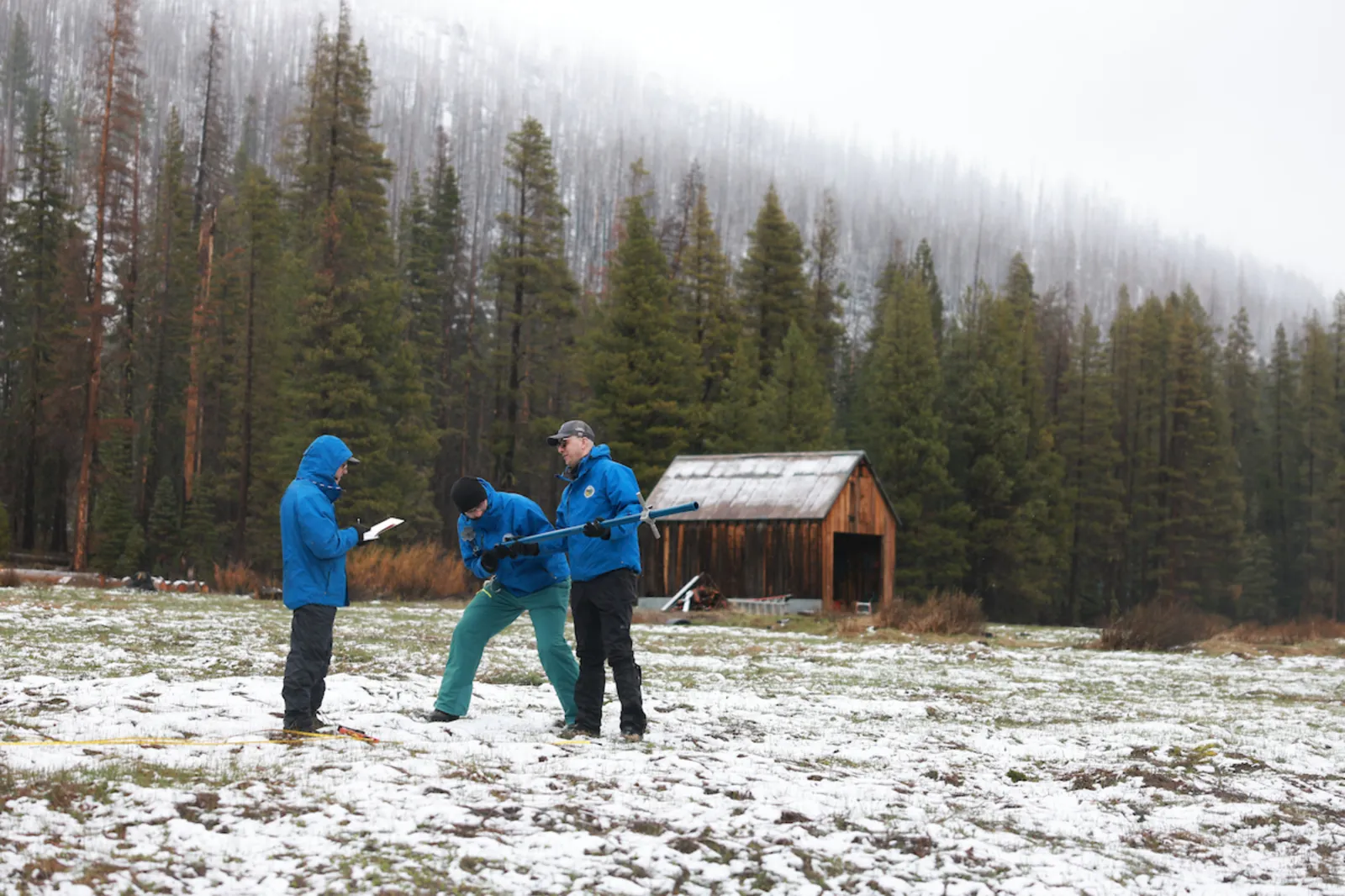
California water managers received grim news on Wednesday after the Department of Water Resources (DWR) found no measurable snow during its critical April survey at Phillips Station, a stark confirmation that record March heat and high‑elevation rain have effectively erased the Sierra Nevada snowpack months ahead of schedule.
The statewide snowpack now sits at just 18 percent of average, marking the second‑lowest April reading ever recorded at the longtime monitoring site.
“Today’s results are the second lowest April measurement on record for Phillips Station, largely because there was still some visible snow on the ground,” a DWR spokesperson told Newsweek. “By contrast, the lowest April reading occurred in 2015 when no snow was present at the site. Although DWR and its partners in the California Cooperative Snow Surveys Program are completing additional surveys across the Sierra Nevada, preliminary data indicates this year’s April 1 snowpack is the second lowest on record.”
Warm storms and unusually hot temperatures rapidly melted what was already a historically sparse snowpack. Typically, the April measurement marks the point at which California’s mountain snowpack reaches its maximum volume before melting into streams and reservoirs. This year, that melt came far too early—accelerated by a March heatwave that scientists say more closely resembled summertime conditions.
Snowpack in the Sierra Nevada acts as California’s natural reservoir, slowly releasing water throughout spring and summer—precisely when demand rises statewide. In an average year, Sierra snowmelt supplies about one‑third of California’s total water for households, farms and ecosystems.
But with the snowpack now at only a fraction of normal, water managers warn that runoff will be severely limited heading into the dry season. Snowpack surveys are a crucial forecasting tool: They help determine how much meltwater will flow into major reservoirs like Shasta, Oroville and Trinity, which collectively serve millions of residents and a vast agricultural network.
This year’s near‑absence of snow also deepens concerns about drought and wildfire risk. California relies heavily on mountain snow to sustain water supplies through the summer, and without it, the state enters its driest months more vulnerable to water shortages and heightened fire conditions. Officials note that while some reservoirs remain high from earlier storms, that stored water may be the only significant supply California receives this year.
“It feels like we skipped spring this year and dropped straight into a summer heatwave,” DWR Director Karla Nemeth said in a press release. “What should be gradual snowmelt happened suddenly weeks ago. To me, this is another reminder that aging water systems need to be retrofit for more volatile precipitation patterns. We’re seeing fewer, warmer storms and shorter wet seasons. Future water supplies will depend upon our ability to capture water when it’s available and manage it more efficiently.”