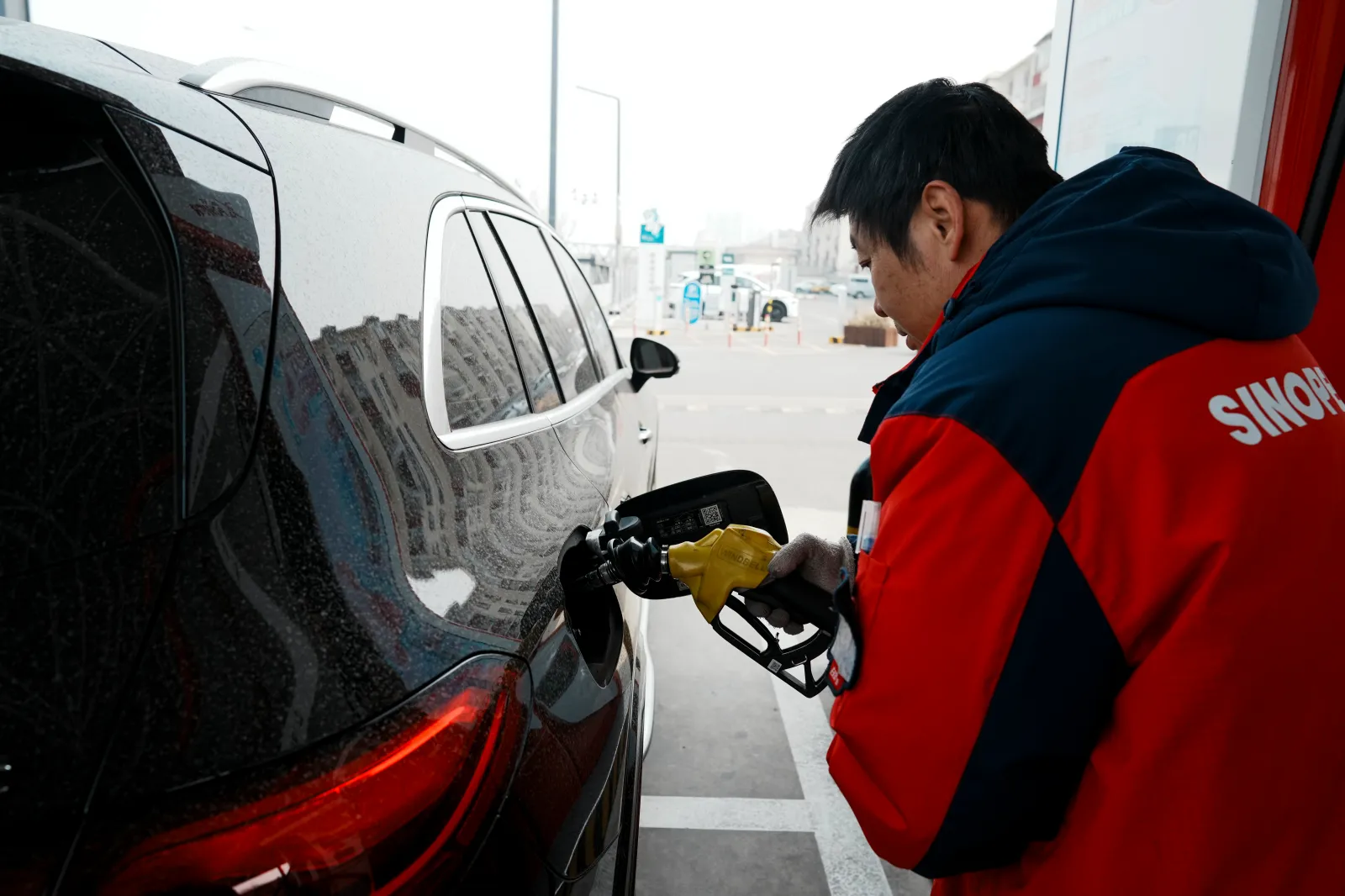
China’s government has put a cap on fuel prices for the first time in more than a decade as the U.S.-Israeli war with Iran disrupts oil flows and rattles global markets.
The move comes amid broader efforts by Asian countries to cushion the impact of the more than three-week disruption to shipping in the Strait of Hormuz. As much as one-quarter of the world’s seaborne oil trade passes through the critical waterway. Asia is the most exposed region, accounting for roughly 45 percent of flows.
Newsweek reached out to the Chinese Foreign Ministry via email for comment.
China’s top economic authority on Monday announced a cap on refined fuel prices to limit the impact of the shock on downstream users, amid reports of anxious drivers forming long lines at fuel stations across the country. The ceiling was set at RMB 1,160 ($168.59) per ton for gasoline and RMB 1,115 per ton for diesel.
Crude processing companies, including state energy giants Sinopec, PetroChina and China National Offshore Oil Corporation, were ordered to implement pricing policies and ensure the production and transport of refined products to support a stable supply, according to the National Development and Reform Commission statement.
The Chinese government hasn’t intervened in fuel prices since 2013.
The measure follows a move earlier this month to ban exports of gasoline, diesel, and jet fuel to preempt possible fuel shortages.
While more than 40 percent of China’s oil imports transit the Strait of Hormuz, the country is better positioned than many neighbors to weather a crisis. The country benefits from one of the world’s largest strategic reserves, diversified supply—including imports from Russia—and expanding renewable capacity.
Asian economies more acutely exposed to the supply shock have also taken action in recent weeks.
In Japan, authorities began releasing crude from national reserves on March 16 as the squeeze intensified, as part of a coordinated International Energy Agency effort involving major consuming nations to stabilize markets.
South Korea has drawn on government oil reserves, expanded fuel tax relief and price controls, and taken steps to secure additional crude oil imports to stabilize domestic supply.
Across Southeast Asia, countries with limited reserves and heavy reliance on spot imports have moved to conserve fuel while shoring up supply.
Vietnam has focused on supply and price management, moving to loosen fuel import restrictions, give state energy firm PetroVietnam greater flexibility to secure oil cargoes, and stabilize domestic distribution as prices climb.
The Thai government instructed public agencies to set air‑conditioners to 26 degrees Celsius, expand work‑from‑home arrangements for civil servants, and suspend overseas travel to reduce energy demand.
The Philippines imposed a temporary four‑day work week for government offices and ordered agencies to cut energy use, including restrictions on air‑conditioning and nonessential travel.
Manila, which imports as much as 98 percent of its oil from the Middle East, is under particularly acute pressure. President Ferdinand Marcos Jr. declared a national energy emergency on Tuesday after officials warned the Philippines’ fuel stocks could run dry in just two months if alternative supplies are not secured.
In a polarized era, the center is dismissed as bland. At Newsweek, ours is different: The Courageous Center—it’s not “both sides,” it’s sharp, challenging and alive with ideas. We follow facts, not factions. If that sounds like the kind of journalism you want to see thrive, we need you.
When you become a Newsweek Member, you support a mission to keep the center strong and vibrant. Members enjoy: Ad-free browsing, exclusive content and editor conversations. Help keep the center courageous. Join today.