A diabetic Norwegian woman who was arrested by Immigration and Customs Enforcement (ICE) has told Newsweek that she feared she might die in detention as her requests for insulin were repeatedly ignored.
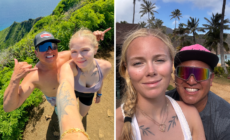
Hanne Daguman (née Engan) 24, moved to San Diego, California, in July 2022 where she met her now-husband Joshua Daguman only a month later. After their friendship blossomed, they got engaged and later married on October 13, 2024.
Although her visa expired on September 17, 2024, Hanne was advised by multiple immigration attorneys that this “would not be an issue” due to the U.S. immigration law section INA § 245(a). This clause states that someone who is already in the U.S. and meets certain requirements may be able to get their green card without leaving. One stipulation of this law is that an immigrant visa must be immediately available, unless you are the immediate relative (e.g. spouse) of a U.S. citizen.
A spokesperson from the Department of Homeland Security (DHS) said in a statement to Newsweek that Hanne was arrested on November 17, 2025 because she overstayed her student visa. “A pending green card application does not give someone legal status to be in our country,” the statement said.
While Hanne was aware that she overstayed her visa, she told Newsweek that she was “never concerned about being arrested by ICE” because she was following section INA § 245(a).
“At the time, this type of enforcement action had not yet been reported in San Diego, so I had no reason to believe this would happen to me,” Hanne said.
However, after attending a green card interview on the morning of November 17, Hanne and her husband were informed that ICE agents were outside and wanted to speak with her. Upon entering the room, they arrested Hanne, leaving her speechless and in “complete shock.” Her husband started crying as Hanne was placed in handcuffs.
“We were given approximately two minutes to say goodbye, but it felt as if I had lost the ability to speak. Eventually, I was able to tell him that I loved him and that I needed him to stay strong. Then I was taken down to the parking garage, shackled wrists and ankles to my midsection and placed in an unmarked van with other women,” Hanne said.
In the days following her arrest, Joshua spoke to Newsweek about the case and said that ICE was “detaining a really good person that helps the community.”
What Happened Following Arrest?
Hanne was taken to the Otay Mesa Detention Center in California, where she said they were “denied water” for almost 12 hours. She was also not allowed access to her Continuous Glucose Monitor (CGM) reader, which she requires as a Type 1 diabetic. Hanne also claims that she was given only a T-shirt to wear, despite the cold temperature, which added to the “painful experience.”
Hanne continued: “Meals were provided up to three times per day, but I could not safely eat without insulin. I repeatedly requested my medication and was told that only a doctor could prescribe insulin, yet I did not see a doctor until November 20.
“It was checked by finger prick glucose test when I was sent to medical on the 20th at around 9:30 a.m. because I was feeling severe symptoms of hyperglycemia. I was tested and the number was 508. I was starving, extremely weak, and experiencing severe symptoms of hyperglycemia. I blacked out multiple times, collapsing to the floor and regaining vision seconds later. I also developed multiple infections.”
From that day, nurses checked Hanne’s blood sugar by finger prick between two to four times a day.
Hanne said that she did not receive insulin in the correct dosages or consistently enough during her detention, but a spokesperson for the DHS refuted these claims are false. In a statement provided to Newsweek via email, they said that she was given “proper medical care for her diabetes management,” and was able to “communicate with nurses on the dosages” deemed appropriate.
The statement continues: “It is a longstanding practice to provide comprehensive medical care from the moment an alien enters ICE custody. This includes medical, dental, and mental health intake screening within 12 hours of arriving at each detention facility, a full health assessment within 14 days of entering ICE custody or arrival at a facility, and access to medical appointments and 24-hour emergency care.”
Nonetheless, Hanne had to be placed in medical isolation on November 21 because she became severely ill after being “denied treatment.” During the four days in medical isolation, antibiotics were requested to treat her infections, but she said she never received them.
Much of the available food was carbohydrate-heavy (such as rice, pasta and oats), which requires careful insulin dosing before and after. As that was not provided, Hanne lost 10 pounds in just nine days, leaving her severely weakened.
On November 22, she was seen by a doctor who provided the fast-acting insulin Hanne normally uses, although not in the correct dosages.
Hanne said: “Proper insulin dosing requires consideration of food intake, carbohydrate content, activity level, and infection status. None of these factors were addressed. Most of the staff did not seem to have any knowledge of my condition.
“When my blood sugar was 508, I was administered 16 units of NovoLog, which was far too much for my body. I warned staff but my concerns were ignored. My blood sugar dropped rapidly, causing insulin shock. I experienced blurry vision, slurred speech and disorientation, loss of balance and shakiness for six hours. Going from 508 to below 50 can be life-threatening. Another detainee gave me crackers, which prevented me from slipping into a coma or dying.”
Hanne also said that, on the evening of November 24, her blood sugar was dangerously high, and she was refused insulin until the following morning. “I begged and cried for hours until she finally contacted a doctor, who instructed her to administer insulin. I genuinely feared for my health,” she continued.
What Happened Upon Release?
Hanne was released on November 25 and was required to wear an ankle monitor until her court hearing on January 26. The case was terminated, and she has been granted legal status in the U.S, although she is not yet a citizen.
While undoubtedly relieved to be home, Hanne struggled to face reality for months. She has tackled depression, PTSD and recurring nightmares from her time in detention, and is also dealing with lingering health complications and infections.
After going through something she never imagined possible, Hanne has been vocal about her experience on social media (@hanne_engan on Instagram). This has proven incredibly helpful for her own personal healing, as well as raising significant awareness. She has posted videos about her time in medical isolation, having her case terminated, and even answering people’s questions about the ordeal.
“While there are still very difficult days, I have begun to feel some improvement as I have gotten stronger physically and mentally,” Hanne told Newsweek.
She continued: “This experience has forced me to reconsider where I want to build my future. I entered the U.S. legally, paid tuition to attend college, paid taxes while working legally, and followed the rules. I understand that overstaying a visa may carry consequences.
“However, I do not believe anyone deserves to nearly die in detention or suffer long-term physical, psychological, and financial harm as a result.”