Exclusive: Baron Davis on Warriors’ Struggles, Great Point Guards, and ‘DWTS’
2 hours ago
2,103
On May 11, 2007, Baron Davis cemented his NBA immortality when he levitated for a poster dunk on 6-foot-9 Utah Jazz forward Andrei Kirilenko.
Davis was the leader of the “We Believe” Golden State Warriors, who upset the league-best Dallas Mavericks in the first round of those 2007 NBA playoffs before falling 4-1 to Utah in the Western Conference semifinals.
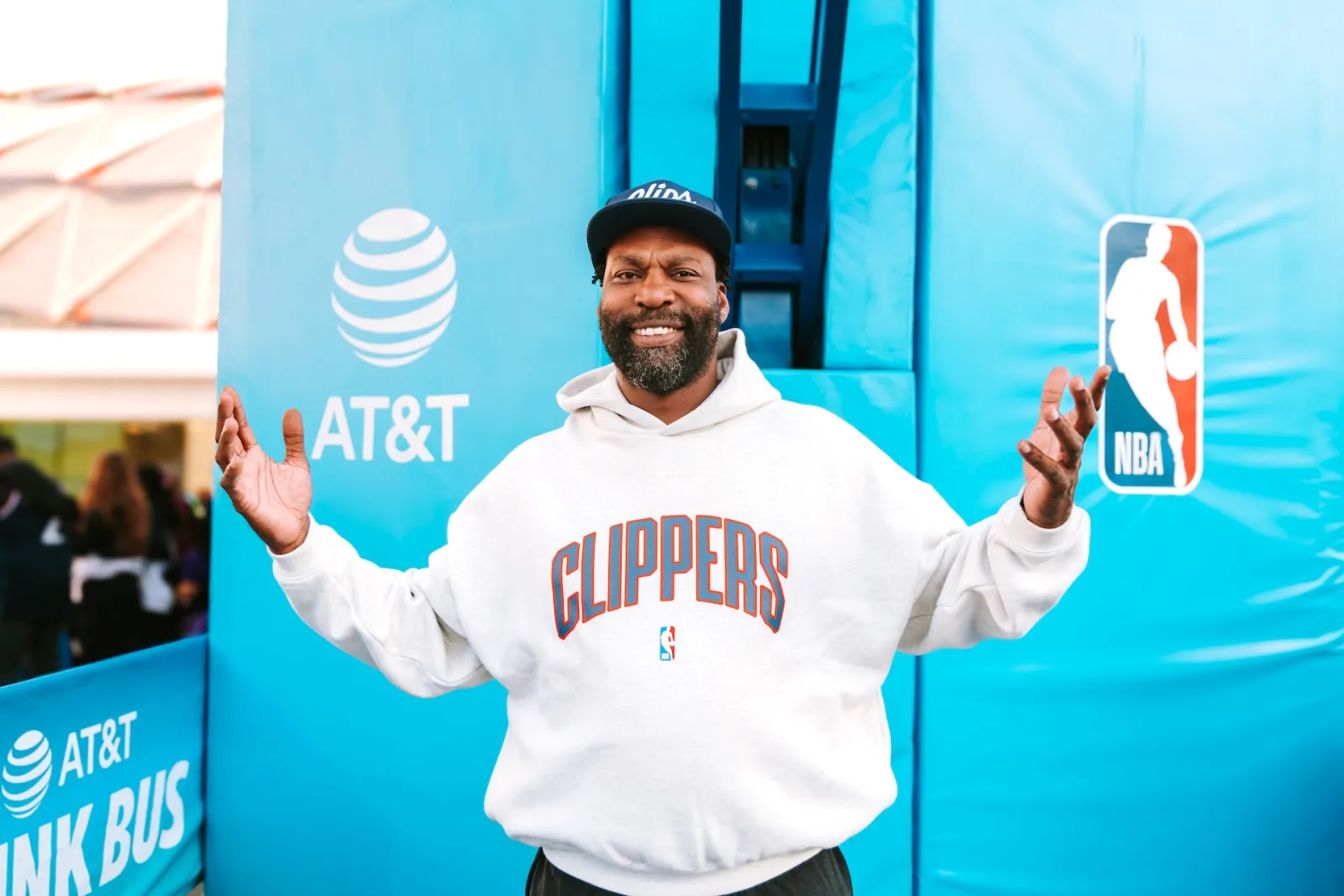
“I’m kind of reminded of it every time I go out,” Davis told Newsweek from the AT&T Dunk Bus outside of the Intuit Dome before the Los Angeles Clippers lost to San Antonio on Thursday night. “It’s a daily thing that I have a relive. There’s always a fan coming up and talking about the dunk. You take it all in stride.”
There are worse things you could be reminded of daily.
Davis let out a big laugh: “Totally. There were a lot of missed shots and a lot of mistakes made.”
Davis was the Charlotte Hornets’ No. 3 overall pick out of UCLA in the 1999 NBA Draft. His 13-year career was bookended by knee injuries, ending with a dislocated knee cap and complete tear of the right ACL and LCL in the New York Knicks’ playoff series against Miami in May 2012. He had quite literally given everything he had to the game.
The Los Angeles native provided countless All-NBA and All-Star moments as a player for fans of the Hornets, Warriors, Clippers, Cleveland Cavaliers, and Knicks. Davis maintains the same commitment to fans now.
From the AT&T Dunk Bus, Davis shared his perspective on the Warriors’ waning dynasty, jealousy of point guards in today’s NBA, and the origin of his Bart Oatmeal alter ego. Read it below.
How did you become involved with AT&T’s Dunk Bus?
Part of the Clippers organization, we also did something around All-Star Weekend. I just think it’s a super cool experience. It’s super fun for fans, and being here at the Intuit Dome is an amazing experience.
What do fans gravitate toward?
Wanting to dunk, obviously. The dunking, but also the video game station that they have. Now, basketball has become so interactive. The work that AT&T is doing is really bringing that fan experience.
Everything is about how you can entertain the fans. How do you make fans want to come out and participate? By giving them the opportunity to dunk, play video games, and have some of their favorite athletes sign autographs, those experiences and moments will last a lifetime for fans. I think we’re in the age of the fan experience, really capturing fans’ hearts and bringing that fandom to life.
Speaking of fans, which of the six cities you played in during your NBA career did you feel most connected to the fans?
I would say Charlotte and Golden State would be No. 2, but I would say every city, because my goal was always to connect with the community. Go out to schools, try to inspire the youth, so whatever city I played in, I felt it was my job, or what I wanted to be part of my brand, was always connecting to the city. Not only inner cities, but also the arts programs and entrepreneurs that represent that city.
Charlotte was the city that birthed me as an NBA player. Golden State was the city that really created that true connection with fans, and I grew a home. Then, I’d say New York for the simple fact that the Knicks gave me an opportunity to start to see what my next chapter in my career would look like with life after basketball. All of those places hold really special places in my heart.
Obviously, being from L.A., being home, and being part of the Clippers organization, L.A. is always No. 1.
You were a leader of the 2007 “We Believe” Warriors. Did you experience any envy when Steph Curry, Klay Thompson, Draymond Green, and Steve Kerr took over Golden State and got the glory as a dynasty, or do you feel like you set the foundation?
For us, we had to work with what we had. With Steph and Steve came a new regime — new ownership, new leadership — and they were able to flourish. I definitely don’t think it’s any envy. It’s more so love and rooting for Golden State because we share the same jersey. We share the same legacy.
For that next generation, you always want them to do better. Since we didn’t win a championship, the fact that they brought that championship and brought a dynasty to the Bay Area, no fans are more deserving than those fans in the Bay.
How do you think it’s going to end for Steph and this Warriors era?
That’s a tough question. I think that, with every year, the Warriors have been hit with injuries. But you never know. There’s so much talent and so much parity that really the team that wins is the team that stays the healthiest. We’ve seen that over the past few years. But I also think if you’ve got Steph Curry, you’ve got a chance of winning it all. I’ll always root for the Warriors and always root for Steph because he’s one of my all-time favorites.
Of the Warriors, Hornets, Clippers, Cavaliers, or Knicks — the teams you played for — which franchise do you think has the most potential moving forward?
If you look at the Knicks, you say, hey, the Knicks are right there. If you look at the Clippers and say, hey, the Clippers are right there. You look at the Hornets, and they’re a couple of years away. You look at Cleveland and say they’re right there. Golden State, if they can get and stay healthy, they’re right there. I’m in a good position because all the teams that I played for are actually ballin’ or they’re progressing and showing young talent.
Do you see yourself in any of the point guards in the league right now?
A lot of them kind of do, but not really. I like them all. I’m just a fan of this era of guards and this generation of guards. You look at what LaMelo [Ball] is doing and how he’s really starting to come into his own. I love Darius Garland. Big guards like Stephon Castle, [Jalen] Brunson.
I over-obsess with the point guards, especially in this era, because they’ve got the opportunity to do a lot of the scoring and carry the weight on scoring. You look at people like Jamal Murray, who is probably still more underrated than he gets credit for. [Tyrese] Maxey out of Philadelphia. I can go on and on talking about the point guards in this era because they’re all so good.
Would you rather play in the NBA as it is now, or are you still partial to your era?
Absolutely. I wish I was. I wish I could knock twenty years off my body and play in this era.
Don’t we all?
Even just ten years!
What was more intense: playing in the NBA or starring on Dancing With the Stars?
Playing in the NBA, but starring on Dancing With the Stars was very, very, very uncomfortable. It was a feeling I’ve never felt before. I’ve never been that nervous in my life.
It was total nerves, and you’re in your head. Usually, in basketball, you can just go out and be aggressive. In dance, you can’t be too aggressive because you’ll mess up the routine [laughs].
You’ve made a name for yourself by being willing to be uncomfortable, especially creatively, after your NBA career. I saw on your Instagram Story earlier that you were in the studio.Where did the stage name Bart Oatmeal come from?
My son came up with the name. I was just looking for a different identity to make music — an alias, an alter ego. My son and I came up with the name based on Bart Simpson, and he said my color is the color of oatmeal, so that’s how we created the legend of Bart Oatmeal.
But that’s just me tapping into the music side, the creative side, and really showing that there are all kinds of angles and dynamics to athletes that we don’t really appreciate or even look to see. You need hobbies. You need those creative outlets, especially when you play in a sport as intense as ours.
What does music give you that basketball never could?
I would say a sense of peace. A sense of perspective. It gives you a voice. In basketball, you have to abide by the rules. You have to say everything right, but mostly, you’re talking about the positivity of your team and winning a championship. With music, you get the opportunity to speak your language or speak what you feel in your heart and tell the story that you want. It’s more of a personalized way to accentuate your voice.
Was it a surprise to be able to find an identity after basketball fairly easily, or did you never hitch your identity to basketball in the first place?
I’ve always been independent — running my own [expletive]. I saw the transition as it was happening. For me, I’ve always been kind of like on a listening and learning internship tour, and that always guided me into learning new things. When it’s over, everybody goes through trying to figure out who they are or who they want to be when they grow up. For me, it was giving myself some options on who I wanted to be when I grew up, as I transitioned out of just being a day-to-day basketball player to the life I want to live now.
It’s actually crazy to consider you’re not that much older than LeBron James, and you’ve lived multiple lives since basketball, while he’s still in the NBA.
I know, right? [Laughs] He’s still hustlin’.
Would you have wanted to play that long?
Had I not gotten hurt, I definitely would have wanted to play that long. But I don’t think my body could have really lasted. I got a lot out of it. I started the NBA with almost a career-ending injury with my ACL, so it was a good ride. If I could’ve gotten a couple more years in, it would’ve been great.
This interview has been condensed and edited for clarity.
Um die besten Erfahrungen zu bieten, verwenden wir Technologien wie Cookies, um Geräteinformationen zu speichern und/oder darauf zuzugreifen. Wenn Sie diesen Technologien zustimmen, können wir Daten wie das Surfverhalten oder eindeutige IDs auf dieser Website verarbeiten. Die Nichteinwilligung oder der Widerruf der Einwilligung kann bestimmte Merkmale und Funktionen beeinträchtigen.
Functional
Always active
The technical storage or access is strictly necessary for the legitimate purpose of enabling the use of a specific service explicitly requested by the subscriber or user, or for the sole purpose of carrying out the transmission of a communication over an electronic communications network.
Preferences
The technical storage or access is necessary for the legitimate purpose of storing preferences that are not requested by the subscriber or user.
Statistics
The technical storage or access that is used exclusively for statistical purposes.The technical storage or access that is used exclusively for anonymous statistical purposes. Without a subpoena, voluntary compliance on the part of your Internet Service Provider, or additional records from a third party, information stored or retrieved for this purpose alone cannot usually be used to identify you.
Marketing
The technical storage or access is required to create user profiles to send advertising, or to track the user on a website or across several websites for similar marketing purposes.