Many cities on Florida’s west coast are at a high risk of significant tropical impacts this coming hurricane season, according to a new outlook published by AccuWeather on Wednesday morning.
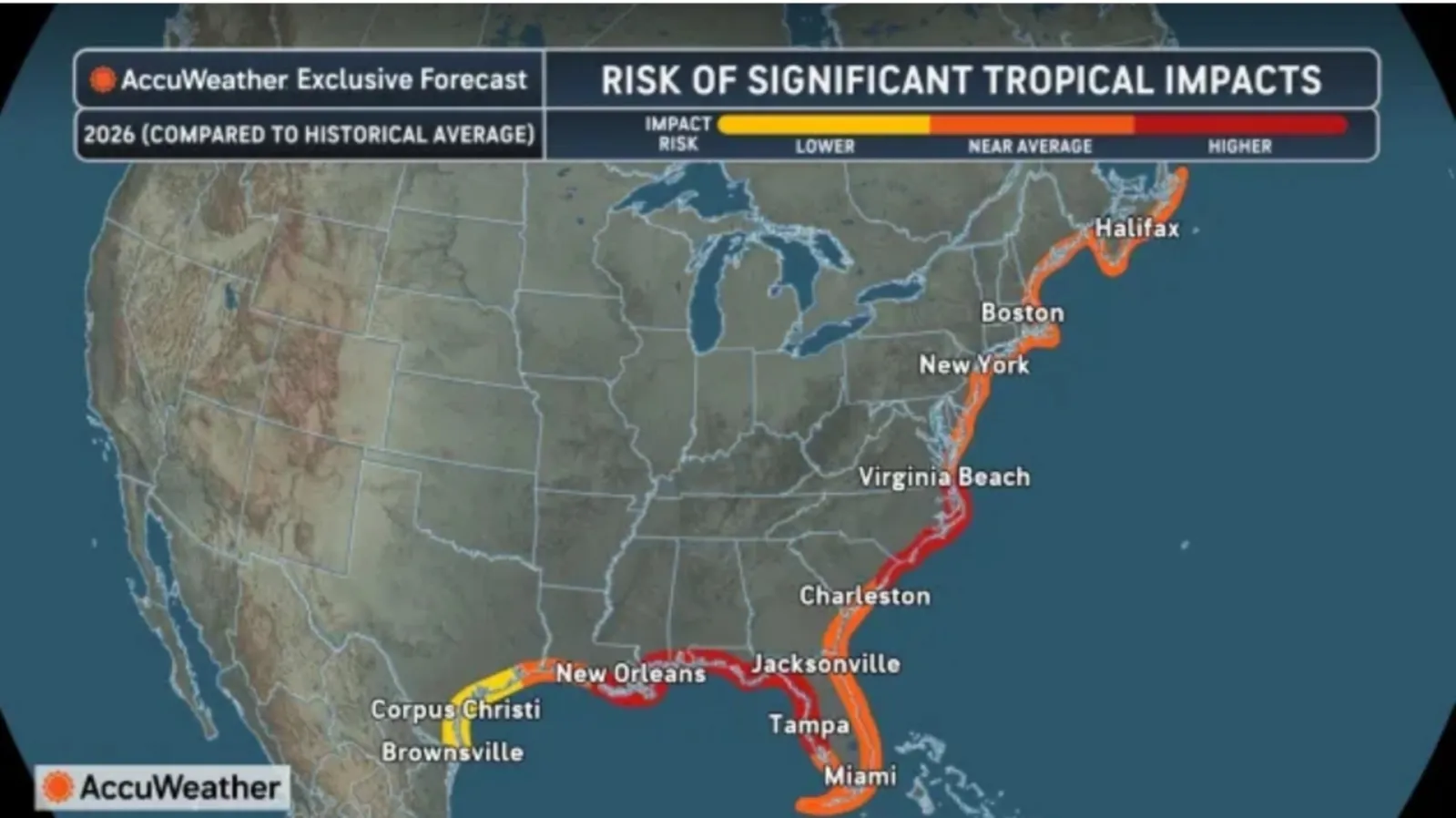
The 2026 Atlantic hurricane season begins on June 1 and runs through November 30. AccuWeather’s outlook, released on Wednesday, projects 11 to 16 named storms, four to seven hurricanes, and two to four major hurricanes—with three to five direct U.S. impacts anticipated. The central and eastern Gulf Coast, along with the Carolinas and parts of the Virginia coastline, are at higher-than-historical-average risk of significant tropical impacts this season, which includes much of western Florida’s coastline. The forecast highlights these areas as the most vulnerable to landfalling systems or storms passing close enough to produce damaging winds, storm surge or flooding.
To make the forecast, AccuWeather analyzed 14 years that had similar atmospheric conditions to this coming hurricane season, Alex DaSilva, the company’s lead hurricane expert, told Newsweek.
A map included with the forecast revealed the stretches of coastline with the chance of significant tropical impacts this coming hurricane season, with much of Florida’s western coast included in the highest risk zone. The high-risk zone, indicated in a red line, stretches from the Florida panhandle south to around Fort Myers.
This includes Pensacola, Panama City, Clearwater, Saint Petersburg, Tampa, Sarasota, and Venice, among many others.
Florida’s west coast, which borders the Gulf, is a popular destination for tourists seeking a beach vacation. Tourists flocking to the region could also be caught in dangerous conditions as the heightened hurricane risk expands beyond locals to the millions of visitors the state draws each year. With popular destinations packed during peak travel seasons, many travelers may be unfamiliar with evacuation routes, local emergency alerts, or the speed at which storms can intensify, putting them at greater risk if a hurricane approaches. Hotels, beaches, theme parks, and travel corridors can quickly become hazardous when winds strengthen and flooding begins.
Meanwhile, South Florida and the entire eastern coast face a near-average risk for significant tropical impacts this year, the AccuWeather map revealed.
In addition to the tropical concerns, DaSilva told Newsweek that AccuWeather is also particularly worried that any storms that do form could undergo rapid intensification, strengthening the cyclone from a tropical storm to a major hurricane over a period of hours. Warm ocean temperatures can contribute to the phenomenon, as warm waters can feed the storm with more energy.
Despite the risk level, DaSilva urged anyone who resides in or visits a hurricane-prone area to be prepared for the approaching season.
“It only takes one storm to cause a lot of problems,” he told Newsweek. “You should prepare equally for every upcoming hurricane season.”