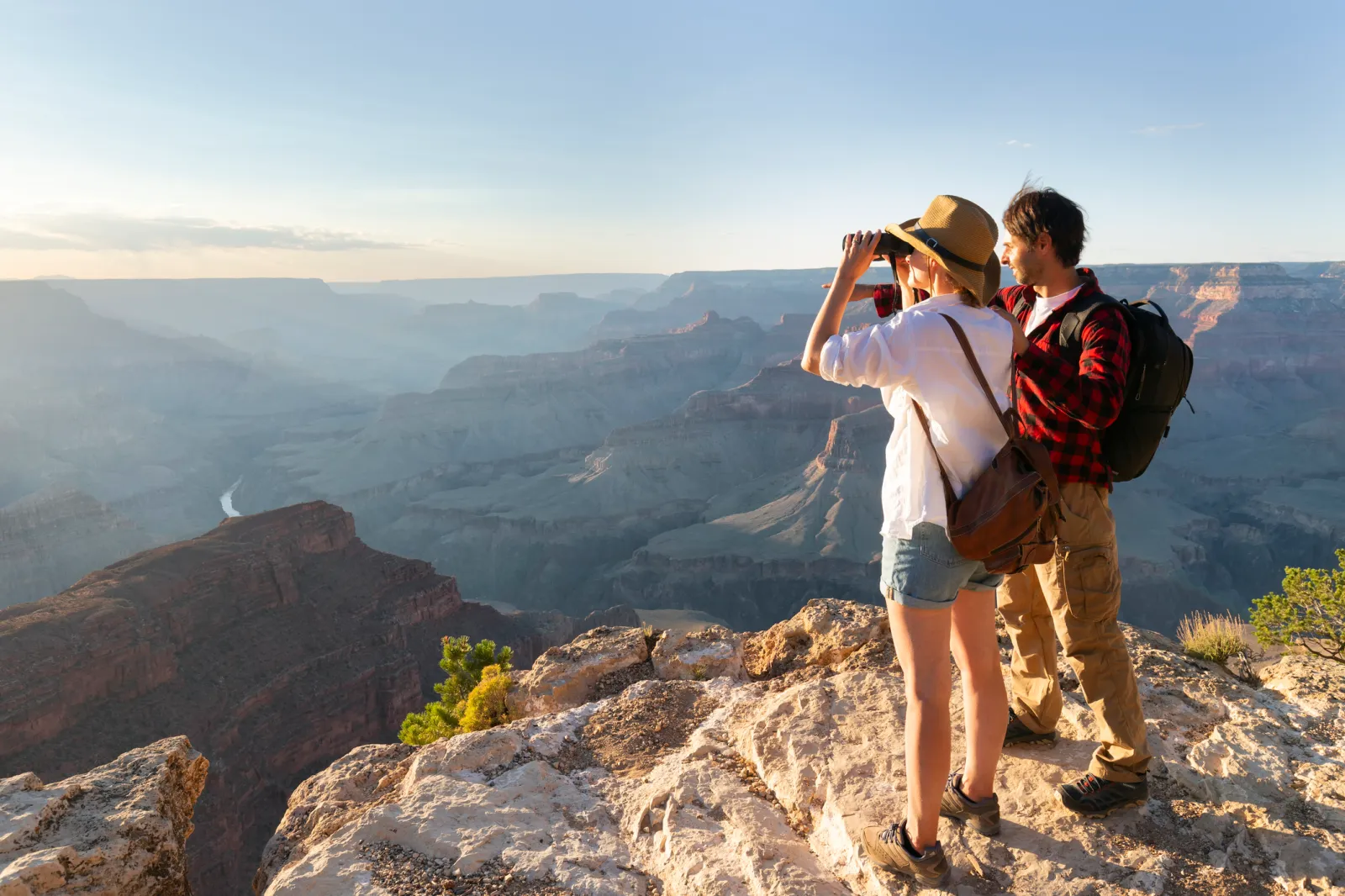
The number of travelers coming from abroad to visit America’s National Parks has significantly dropped, according to various travel agencies.
Why It Matters
President Donald Trump’s administration has been implementing various changes regarding the running of America’s National Parks. These changes have been met with mixed reactions, in some cases prompting public backlash, legal pushback and counter legislation, and in others, the moves have been applauded by some Americans.
What To Know
Intrepid Travel, which offers more than 300 U.S. National Park tours, has said, according to Reuters, that bookings are down 42 percent for 2026, with particular drops among those traveling from Canada, the United Kingdom, and Australia. Bookings made by Canadians have dropped hugely—by as much as 93 percent.
Reuters reported that another travel agency, Cazenove+Loyd has also announced its intention to scrap plans for tailor-made itineraries centered around the National Parks in states like Montana, Washington and California.
This comes following the Department of the Interior (DOI)’s change to the fees for foreign visitors for 2026, meaning that while Americans pay an annual cost of $80 for entrance into the parks, the same pass now costs non-residents $250.
Any non-residents without an annual pass now have to pay a $100 per person fee to enter 11 of the most visited parks in addition to the standard fee.
Newsweek has contacted the DOI, and Intrepid Travel and Cazenove+Loyd, outside of regular working hours via email for comment.
The same downward trend has been noticed by the National Parks Conversation Association (NPCA). The group recently called on the Trump administration to halt the fee changes for non-residents, as they it the “fee increase is contributing to long wait times and delays to enter already busy parks.”
Emily Douce, deputy vice president for government affairs for NPCA said that “many visitors are confused, while others are staying away entirely. And local businesses are losing money.”
The association said that families traveling from abroad are “choosing not to enter parks due to the high cost of non-resident entrance fees.” A family of five now have to pay around $400 to visit a park, which is “more than four times the amount that would have been charged prior to January 1, 2026,” NPCA added.
In a letter sent to DOI Secretary Doug Burgum, the association said: “We have heard stories of families from Europe and South America arriving at the doorstop of remote parks only to turn around when they learn about the new fee policy and decide it is too expensive.”
Julie Mullins, executive director of the Whitefish Convention and Visitors Center, located near Glacier National Park in Montana, said, according to the outlet National Parks Traveler, that spending by Canadian tourists at the center is down more than 14 percent compared with the same period last year.
Per the outlet she said, expenditures from Canadians dropped from $684,413 in February 2024 to $553,470 in February this year, citing data provided by Visa Destinations Insights.
More broadly, data from the Canadian government also showed that the number of residents visiting the U.S. was down by almost a quarter, at 24.3 percent, compared with January 2025. At the same time, the number of return trips Canadians were making to other overseas countries was up my 11.1 percent compared with January 2025.
This also comes following the World Travel and Tourism Council forecast that the U.S., under a “high-impact scenario,” could receive about 4.7 million fewer international arrivals if the Trump administration goes ahead with proposals to include a review of social media account information as part of certain visitor visa applications.
What People Are Saying
Emily Douce, deputy vice president for government affairs for the NPCA said: “The Park Service is stretched to the breaking point after losing a quarter of permanent positions since January 2025, including the very people needed to implement this policy. Requiring fee collectors to verify residency at already congested parks is worsening delays and causing chaos.
“With peak park season quickly approaching and America’s 250th anniversary drawing visitors nationwide, now is not the time to push a flawed policy. Secretary Burgum must halt this policy until it’s fixed and no longer strains the people who serve and protect our parks or keeps people from enjoying beloved places. NPCA stands ready to work with Secretary Burgum to find a solution that supports park access while ensuring high-quality experiences.”