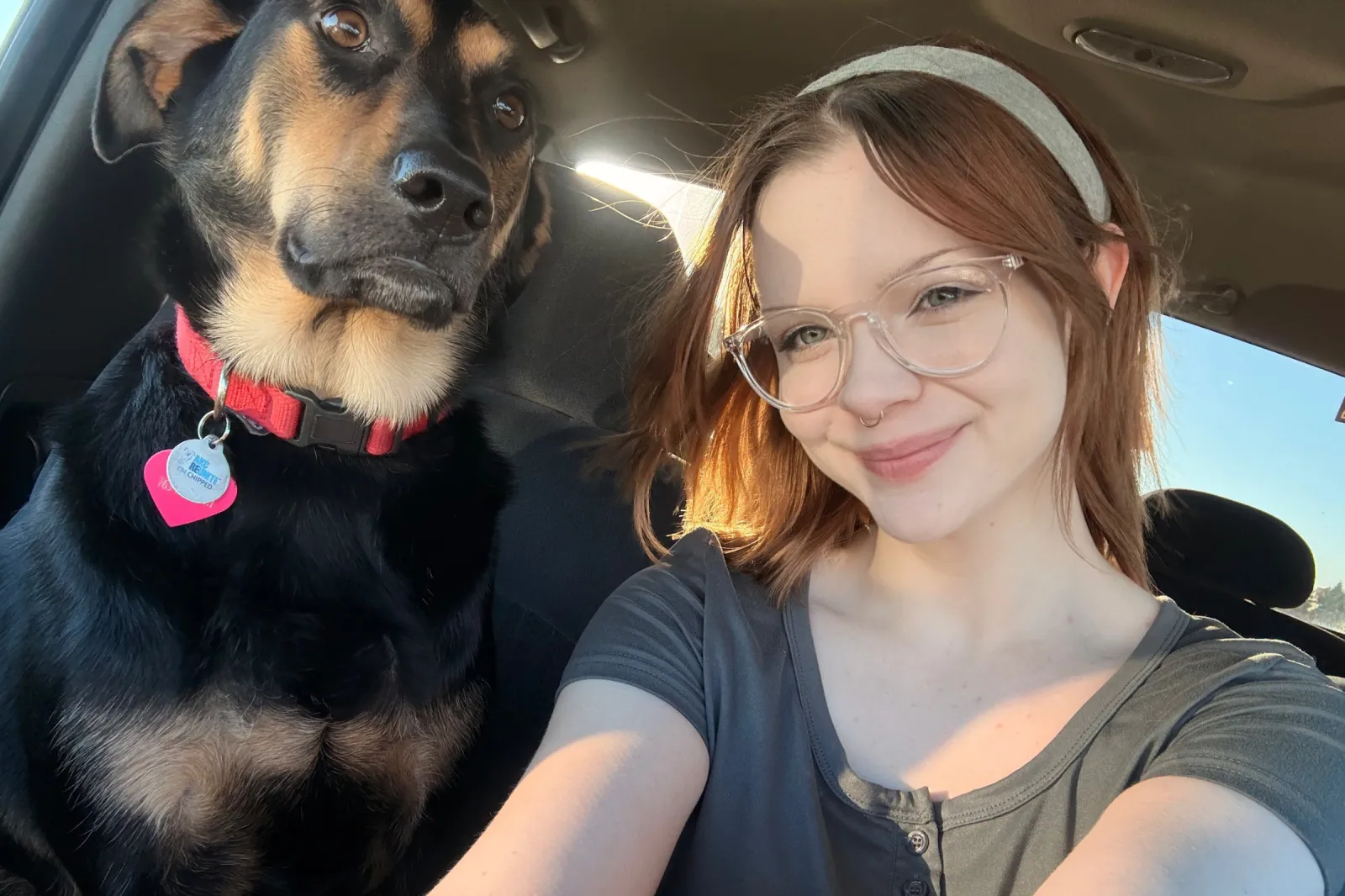
A woman recently celebrated her dog’s second birthday—knowing it would be her last.
Cherry, 22, from Minnesota, who goes by u/CobainTrain on Reddit, where she shared photos from Jinx’s celebrations that took place on December 3. While the images appear joyful as the mixed rescue dog smiles wearing a colorful party hat, the caption states she is “getting euthanized.”
Cherry told Newsweek that Jinx’s health took a turn for the worse, and what started as a cough ended with a fatal diagnosis in the space of a month.
On December 16, Jinx went to sleep for the final time, leaving her heartbroken parents behind.
What Is Blastomycosis?
Jinx was diagnosed with a fungal infection that can spread throughout a dog’s body called blastomycosis. The American Kennel Club states it is one of the most common serious fungal infections in dogs, especially in areas like the eastern United States and Canada. Dogs are about 10 times more likely to get blastomycosis than people.
How Do Dogs Get Blastomycosis?
The AKC explains dogs often inhale spores from soil, decaying wood, and leaves. These spores, found mainly in the upper Midwest and throughout much of the eastern U.S., can settle in the lungs and spread to other organs, including the eyes, if the infection isn’t controlled.
There isn’t exact data on how many dogs get this infection each year, but studies show that about 65 percent of dogs survive at least six months after being diagnosed.
“It’s so unfair and hurts so badly that I got robbed of many years with her,” Cherry said. “It progressed so quickly before we could realistically catch it.”
From Kennel Cough to a Devastating Diagnosis
Cherry told Newsweek that her pet was initially diagnosed with kennel cough.
“We were told just to let her rest and maybe sit in the bathroom while we shower so that the steam could soothe her throat. Then, it started getting worse,” she said. “The cough was more frequent, and it was very wet sounding.
“She was very lethargic and didn’t want to eat her food anymore.”
She was taken to the vet again, and an X-ray of her lungs showed white spots all over them. Jinx was prescribed antifungal medication and prednisone to reduce inflammation and suppress the immune system.
A week later, there wasn’t any improvement.
Cherry told Newsweek that within a couple of days, Jinx had “bloody sores and lesions popping up.
“She was extremely tired, she would only eat human food, she was limping, and her legs swelled up.
“By this point, we were about a month into the journey, and unfortunately a month was all we got.”
The Toughest Decision Any Pet Owner Faces
The young couple were forced to make a tough decision: either try another medication or euthanize their beloved pet, who they adopted at just eight weeks old.
“We chose to euthanize rather than give her a large chance of respiratory failure due to the die-off effect,” Cherry said. “By that point, she was so sick and her lungs were so bad that the chance of that was very likely, she was super uncomfortable with the lesions and would lick them all the time and gnaw on her swollen foot, we just knew that she wasn’t going to make it.
“When we brought her to her euthanasia appointment, the vet noticed she’d lost lots of muscle tone in her face too.”
‘I Am Grieving’
According to a Pew Research Center survey, nearly all U.S. pet owners (97%) say their pets are part of their family. So for many owners, it is like saying goodbye to a family member which is heartbreaking – especially when it feels far too soon.
Cherry told Newsweek: “I am grieving, but I feel lots of comfort from the way our vet handled it, and how peacefully and calm Jinx went.
“I didn’t get enough time with her, but I’m so blessed to have gotten to love her at all, even if it was for only two years.”
Cherry will miss Jinx’s “quiet comfort” the most and her quirks, like watching TV and barking at the animals on her screen.
“She would follow me everywhere and always be under my feet. She’d lay her head on my lap when I was sad or anxious,” she said. “I’ll just miss her being there.”
Cherry has received a sea of support in her post that has over 3,000 upvotes.
“I’m so sorry. I can tell just by looking at her that she feels loved and has had a wonderful life,” said one user.
Another wrote:” That’s sad beyond words. I’m sorry.”
Cherry’s story is a heartbreaking reminder of how quickly life can change for our pets. Regular checkups, taking persistent symptoms seriously, and early diagnostic testing can make a difference—especially in areas where blastomycosis is more common.
For grieving owners, compassionate veterinary care and community support can offer comfort during the hardest moments.