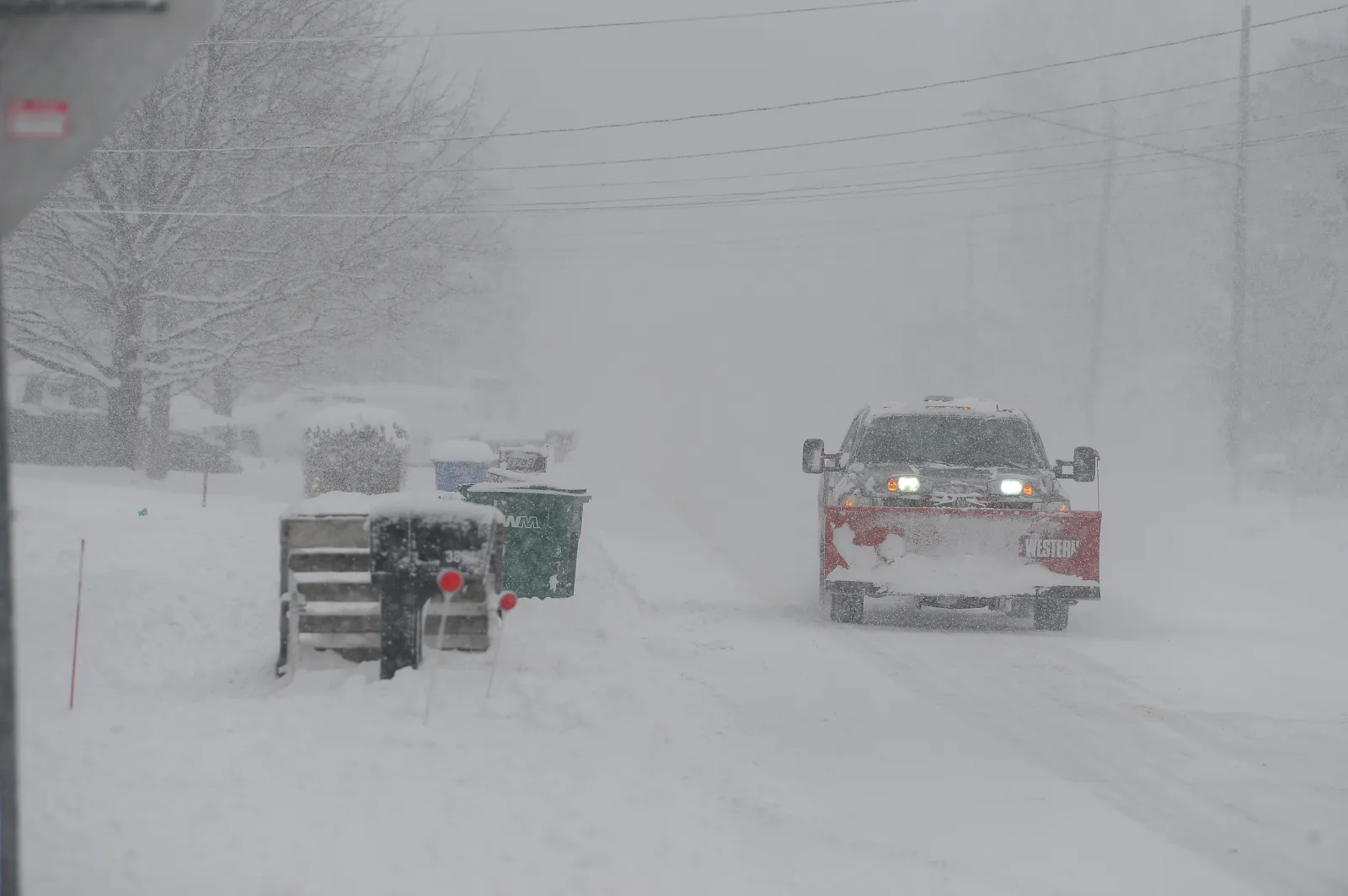
More than 500,000 people in New York State were advised against traveling on Thursday as heavy snow blanketed the region.
The National Weather Service (NWS) office in Binghamton, New York, updated a lake effect snow warning for northern and southwestern Onondaga County, including the city of Syracuse. The warning comes as the area has already faced multiple heavy snow-related alerts, including a winter weather advisory. The most recent update, published by the NWS at 11:28 a.m. ET, warned of additional accumulating snowfall that could bring the storm total to 9 inches in some places.
“Heavy lake effect snow. Additional snow accumulations of 1 to 2 inches over parts of northern Onondaga County. Areas of southwestern Onondaga County could see an additional 2 to 3 inches,” the warning said. “Total snowfall from this event will range from 5 to 9 inches.”
The lake effect snow warning was set to expire at 6 p.m. ET on Thursday, though that could change depending on the storm’s trajectory.
“Plan on slippery road conditions. The hazardous conditions could impact the Thursday evening commute,” NWS Binghamton said in the warning. “If you must travel, keep an extra flashlight, food, and water in your vehicle in case of an emergency. The latest road conditions for the state you are calling from can be obtained by calling 5 1 1.”
Newsweek reached out to the NWS Binghamton office for comment.
What Is Lake Effect Snow?
Lake effect snow is a weather phenomenon that occurs when cold, dry air moves over a large, warmer body of water, such as the Great Lakes. This temperature difference causes the air to pick up moisture from the lake’s surface. As the air moves over the land, it cools, and the moisture condenses, forming snow.
This process often results in heavy, localized snowstorms, particularly along the downwind shores of the lakes. This snow can be intense and concentrated in narrow bands, leading to significant snowfall in some areas while other nearby regions may see little to no snow.
“Lake effect snow will continue today, with more moderate bands setting up over the Finger Lakes,” NWS Binghamton posted on X on Thursday. “1-4in will be possible here, with the rest of the area seeing up to 1in of new accumulation. Snow should taper off by the evening with lingering showers possible into the overnight.”
Although not included in the lake effect snow warning area, the NWS office in Buffalo also warned of snow on its social media channels.
“Accumulating snows will make for a messy commute across much of the area early this morning,” NWS Buffalo said in the post. “Snow intensity will diminish throughout the day, while the relatively steep February sun angle helps mitigate impacts on the roads well after sunrise. Lingering snows taper off tonight.”
A winter weather advisory also remains in effect across the NWS Binghamton and Buffalo forecast areas. For the Binghamton region, the alert will expire at 6 p.m. ET, like the lake effect snow warning. For the Buffalo area, the alert will expire sooner, around 1 p.m. ET. However, people were still advised to exercise caution while traveling.
“Periods of snow will result in snow covered roads and limited visibilities,” NWS Buffalo said in the advisory. “Slow down and use caution while driving.”