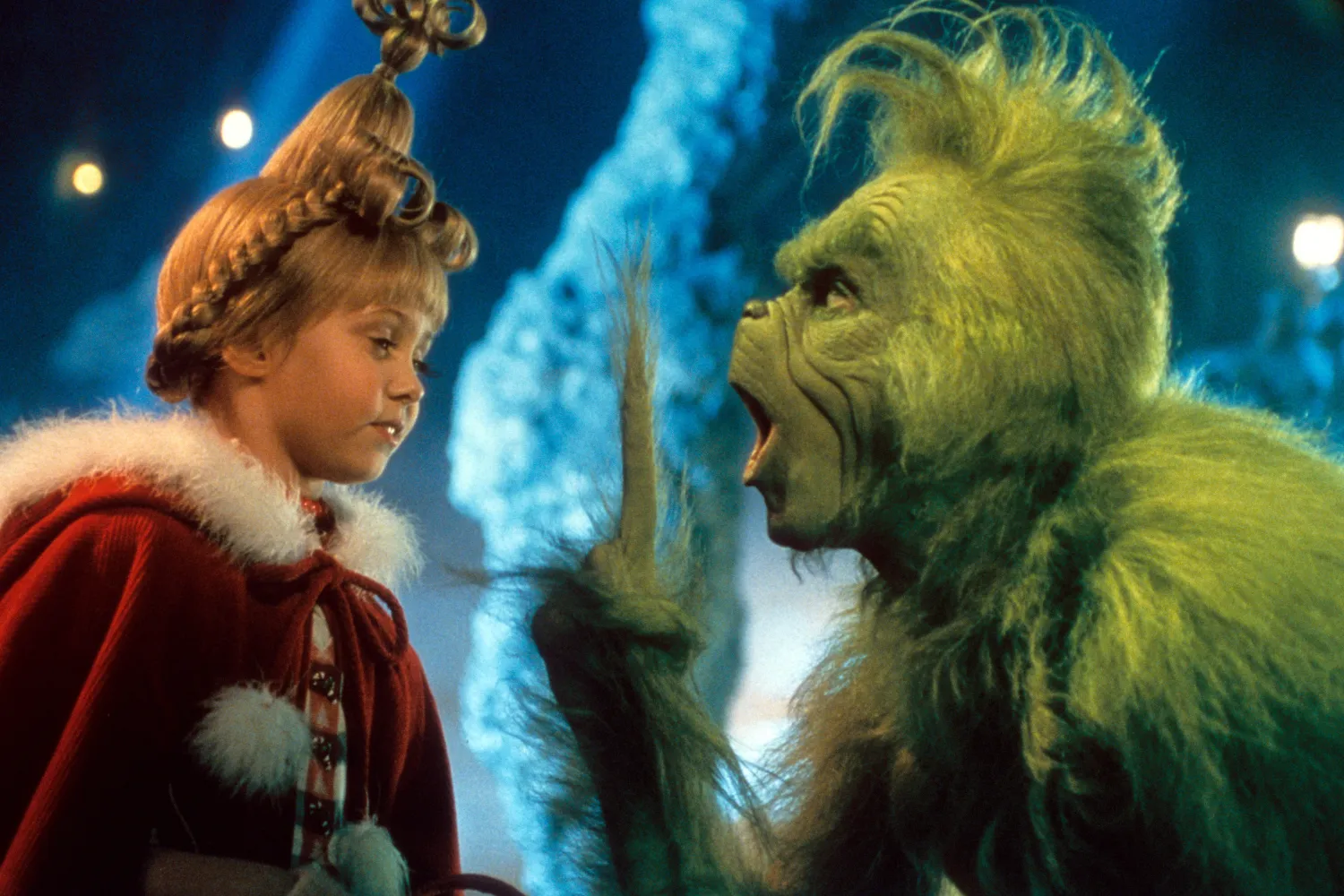
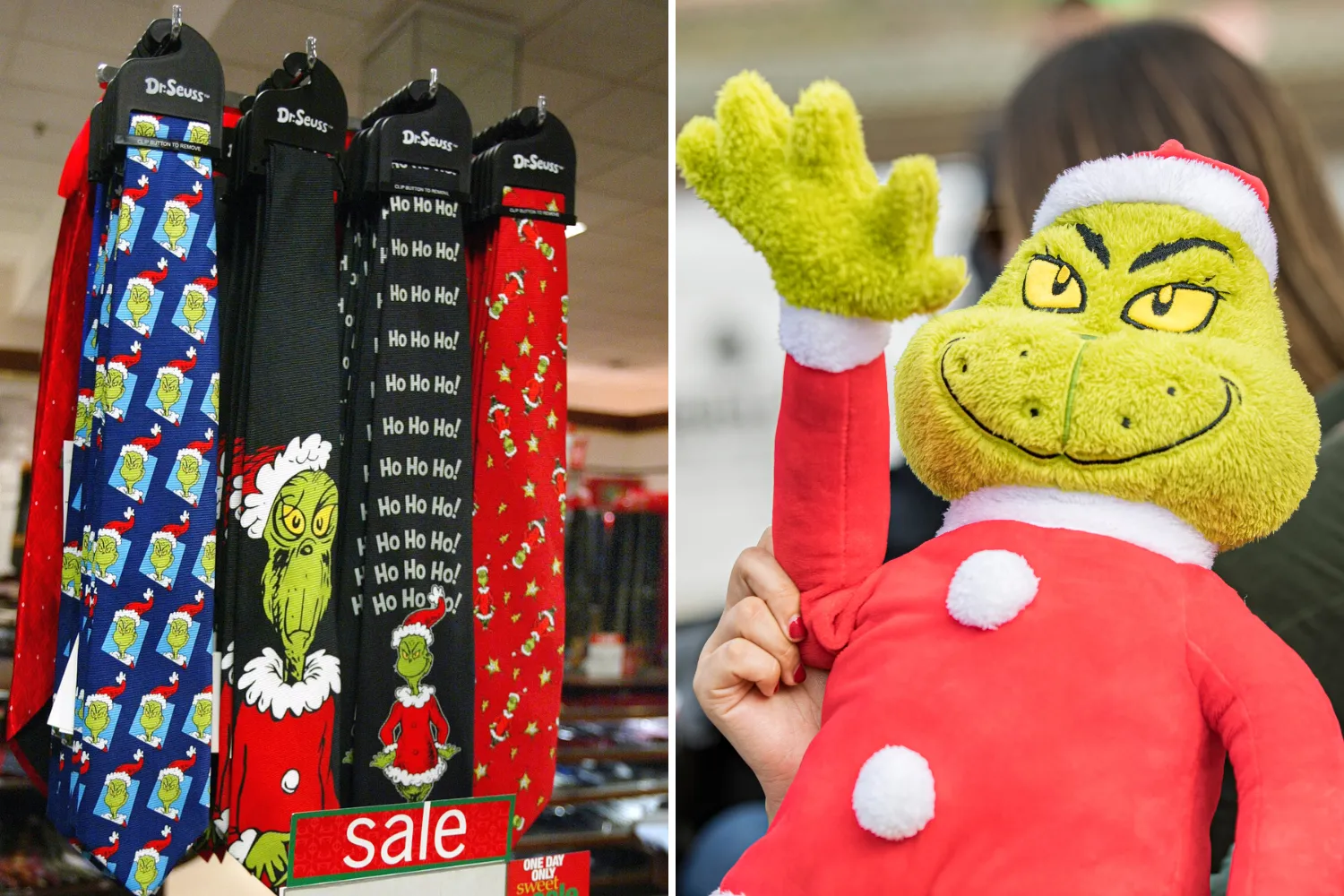
For a character defined by his disdain for tinsel, cheer and communal singing, the Grinch is having a remarkably merry December.
At Walmart, shelves are stacked with lime-green ornaments and fuzzy Grinch décor as the character prances through the retailer’s 2025 holiday commercial. McDonald’s has rolled out a full Grinch Meal—socks included. Online, one viral post summed up a growing sense of cultural déjà vu: “What’s up with the 2000 Grinch movie love all of a sudden?”
It is a fair question. A quarter-century after its release, the live-action How the Grinch Stole Christmas is as beloved as ever. According to Google Trends, interest in the film stayed relatively steady through the 2000s, spiked with the 2018 animated reboot, dipped again—and has climbed reliably each holiday season since.
But why is the Grinch still such an icon of the season?
From Box Office Smash to Millennial Touchstone
Released in November 2000, Ron Howard’s adaptation of the Dr. Seuss classic dominated theaters, grossing $261.9 million domestically and $347.2 million worldwide. Critics were less enchanted, with Roger Ebert memorably dismissing it as “a dank, eerie, weird movie about a sour creature.”
But critical ambivalence didn’t stop the film from embedding itself in millennial childhoods. Now, those same viewers are parents, introducing the movie to their own kids—and that generational handoff has proven crucial.
“Millennials grew up watching this film and are now parents,” Pamela B. Rutledge, director of the Media Psychology Research Center, told Newsweek. “Many say that the 2000 Grinch is the defining film of the millennial generation.”
Holiday movies, Rutledge said, function differently from other entertainment. Repetition is part of the ritual. Annual rotation alongside Elf, Home Alone and The Muppet Christmas Carol turns familiarity into tradition. “Familiar content provides a sense of personal continuity,” she said, “especially when we can share it with our children.”
A Green Anti-Hero for a Burned-Out Era
Jim Carrey’s Grinch had something special—he was recognizably human. Adapted by Jeffrey Price and Peter S. Seaman, the screenplay delivers jokes that double as shorthand for millennial ennui: “Am I just eating because I’m bored?” Or the line that reliably gives parents a laugh: “Honey! Our baby’s here…He looks just like your boss.”
Rutledge said the character resonates because he articulates feelings many associate with the holidays. “He embodies burnout, social fatigue and resistance to the pressure to ‘perform happiness,’” she added.
Gen Z engages differently with the Grinch—often through irony and memes. Lines like “6:30? Dinner with myself. I can’t cancel that again” resurface on social media each December, slotting the character neatly into contemporary internet humor.
Nostalgia, Merch—and the Paradox at the Center
Brand partnerships have only accelerated the Grinch’s return. McDonald’s launched its Grinch Meal in the U.S. and U.K., and Walmart has featured him prominently in its 2025 holiday campaign, while Universal theme parks continue expanding “Grinchmas.”
“The Grinch is a timeless cultural icon who gets everyone in the holiday spirit in his own way,” a McDonald’s spokesperson told Newsweek. “It only made sense to introduce The Grinch Meal as an exciting way for fans to treat themselves and embrace their inner Grinch this winter.”
This feedback loop—nostalgia, exposure, renewed relevance—is exactly how pop-culture icons endure.
And yet, commercialization has always been part of the Grinch’s modern story. As Newsweek reported in 2000, producer Brian Grazer spent more than two years trying to secure the rights from Dr. Seuss’s widow, Audrey Geisel, finally winning her over only after, by his account, “he begged.” Geisel oversaw everything from script tone to set details, rejecting bathroom jokes and even nixing a Cat in the Hat trophy from the Grinch’s wall.
The merchandising frenzy that followed—green Oreos, stamps, toys—stood in ironic contrast to the book’s central message: “Maybe Christmas doesn’t come from a store.” Geisel’s wry reply? “Well…there you have a paradox to end all paradoxes.”
Why the Grinch Keeps Winning Christmas
Rutledge believes the film’s resurgence also reflects the cultural moment. “Antiheroes tend to rise in times of economic hardship and social disillusionment,” she said. The Grinch’s irritation with noise, pressure and forced cheer resonates in an era of social-media burnout.
Though remastered for 4K in 2017, and reissued again in November 2025, the movie’s appeal runs deeper than anniversaries. It baffled critics, delighted audiences and has since inspired something close to cult devotion—quoted lines, annual viewings and micro-fandoms.
“Traditional cult films are usually underperform at the box office,” Rutledge said. But The Grinch, despite being a blockbuster, “has inspired cultlike behavior.”
So why is the Grinch still stealing Christmas, 25 years on? The answer may be that we have finally caught up to him. The world is tired. The holidays can be overwhelming. And, sometimes, the most-relatable Christmas icon is the one who didn’t want to go to the party because he couldn’t find anything nice to wear.