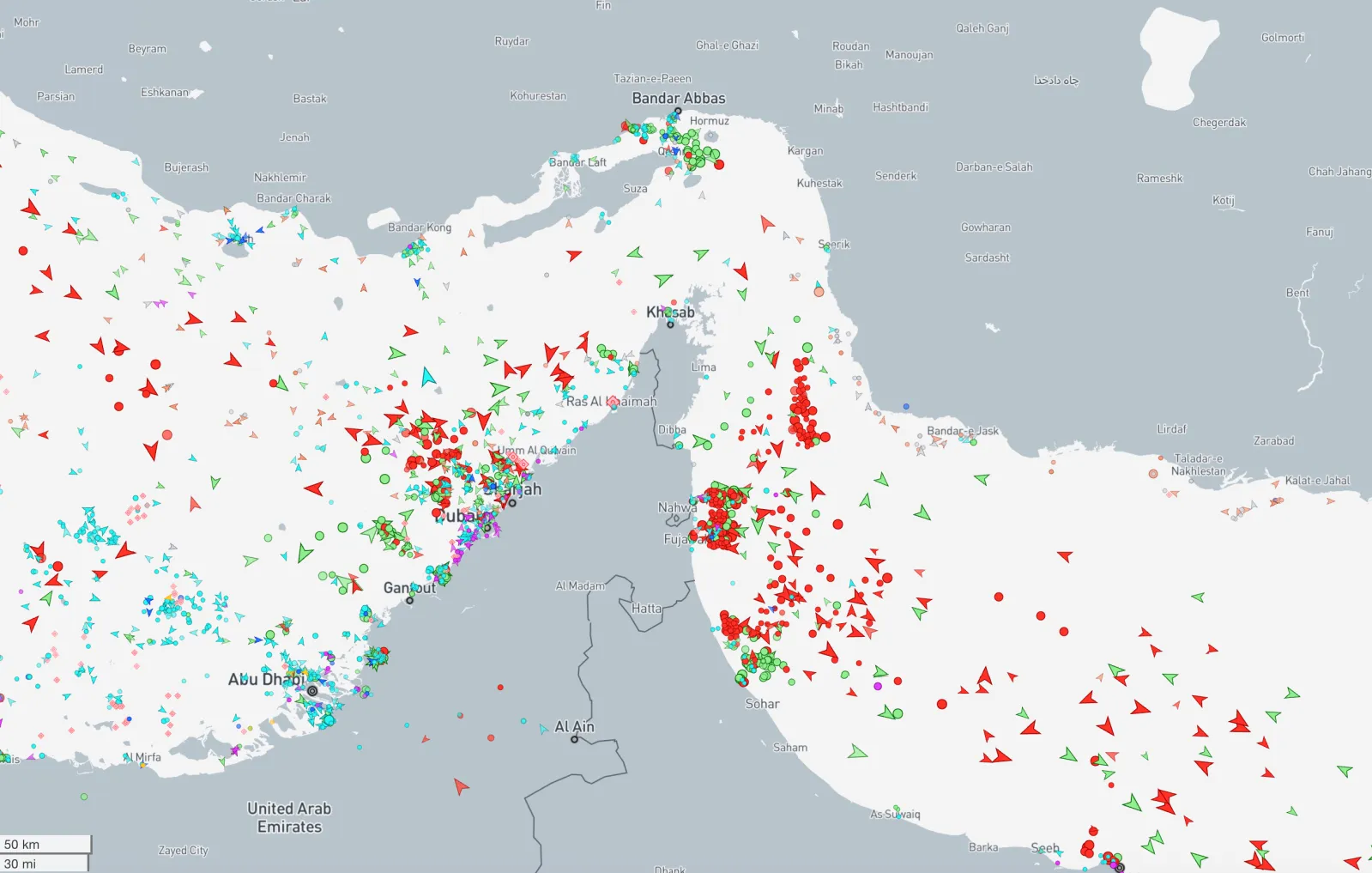
A map of shipping through the Strait of Hormuz off Iran shows a sharp drop in the number of vessels using the route that carries a fifth of the world’s oil and gas supplies as Iran’s Revolutionary Guards responded to U.S. and Israeli attacks with threats to anyone using it.
The map from MarineTraffic, which tracks global shipping, shows a buildup of ships at either end of the strait after reports of Iranian threats to vessels using the waterway as well as Iranian missile and drone attacks on Gulf Arab countries that host U.S. bases.
Why It Matters
Disruption to shipments of crude oil from some of the world’s top exporters is widely expected to send prices rising when markets reopen on Monday morning. Higher oil prices generally mean higher prices for gasoline and that in turn means higher inflation as rises in the cost of transport push up the cost of all goods.
Trying to stop shipping in the Strait of Hormuz is one of the ways that Iran can try to strike back against the attacks ordered by U.S. President Donald Trump, and which killed Supreme Leader Ali Khamenei, but they would also impact Iran’s own shipments of crude, which go largely to China.
What To Know
A timelapse of shipping traffic through the Strait of Hormuz shows a significant drop during Saturday and into Sunday although it is not total. At least one liquefied petroleum gas tanker could be seen transiting the route early on Sunday.
The Tasnim news agency, which is close to Iran’s Islamic Revolutionary Guard Corps, said the strait was closed to all traffic, although there was no immediate announcement from the government itself. Newsweek contacted Iran’s foreign ministry for comment.
The Iranian threats to shipping followed U.S. and Israeli attacks on Iran. President Trump said these aimed to eliminate a building danger for Americans, but also offered a chance for Iranians to take power from the Islamic Republic’s leadership. He specifically threatened the Iranian navy.
The Strait of Hormuz narrows to about 30 miles wide between Iran and Oman.
The UKMTO maritime security information body said in an advisory note that it had received multiple reports from ships in the Gulf stating that the Strait of Hormuz had been closed. They had been received on VHF Channel 16, which is used for sending emergency messages at sea.
Major trading houses had been halting shipments through the Strait of Hormuz amid Iranian threats to shipping after the U.S. and Israeli strikes, according to the Lloyd’s List maritime intelligence service. It said insurance companies had responded swiftly, with dramatic price rises and war risk notices for some policies being canceled.
The disruption pointed to likely sharp rises in the price of crude oil, which had risen in recent weeks because of the growing concerns of possible war between the United States and Iran. Benchmark crude oil futures closed at just over 67 dollars a barrel on Friday, near a seven-month high. Trading starts again on Sunday evening U.S. time.
Prices on the Polymarket prediction market pointed to a 92 percent chance of oil prices rising on Monday. The IG Weekend Oil – US Crude instrument, which gives an indication of prices when markets are closed, showed a rise of 8.26 percent.
What People Are Saying
MarineTraffic
“Amid reports of missile strikes and retaliatory actions across the region, several oil majors and trading houses have reportedly paused crude and fuel shipments through the strait as a precaution.”
Iran’s Tasnim News Agency
“Vessels in the area are receiving repeated messages from the Islamic Revolution Guards Corps (IRGC) telling them that no ship is allowed to cross the strategic strait.”
U.S. President Donald Trump
“We’re going to annihilate their navy.”
UKMTO
“Mariners are advised that VHF broadcasts or statements indicating closure of the Strait of Hormuz are not legally binding and do not constitute a lawful restriction on navigation under international law… Vessels are advised to transit with caution and report any suspicious activity, kinetic activity, or electronic interference to UKMTO.”
Trading Economics
“Oil prices are set to jump sharply when trading resumes Sunday night, as unprecedented U.S. and Israeli strikes on Iran have intensified Middle East tensions and heightened concerns over potential disruptions to global energy supplies.”
What Happens Next
Oil prices are likely to rise when markets reopen, but how far they rise and for how long depends on multiple factors, including whether Iran seeks to enforce a closure of the Strait of Hormuz and succeeds as well as whether OPEC countries significantly increase production to bring prices down. Several OPEC producers, such as leading exporter Saudi Arabia, came under attack from Iran. U.S. naval forces can also be expected to counter any Iranian efforts to disrupt oil supplies.