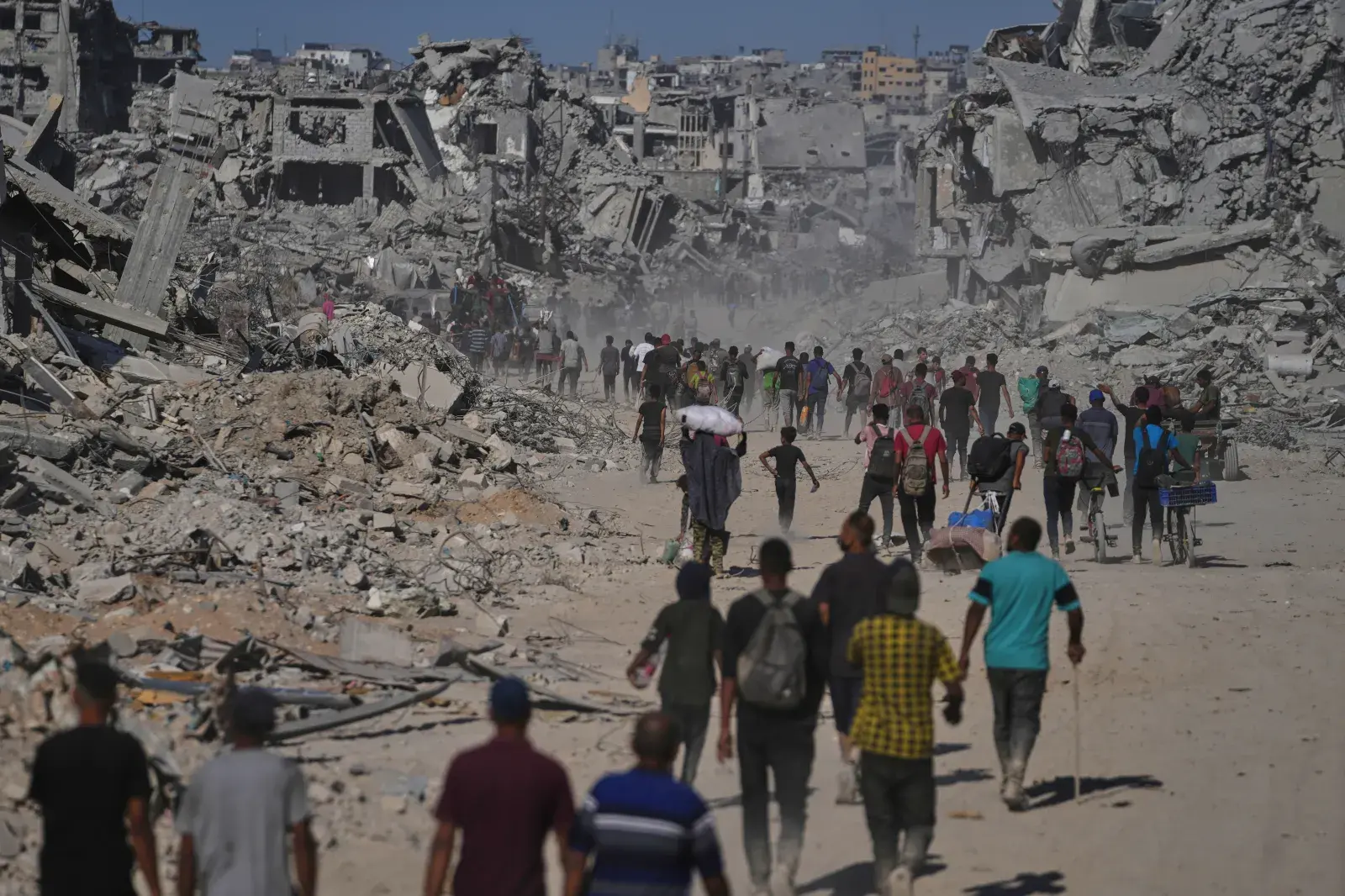
As the drone of warplanes fades and Israeli forces pull back from deep inside Gaza, thousands of Palestinians are returning to ruined homes, many for the first time in two years.
The temporarily lull follows an agreement by Hamas and Israel to begin the first phase of President Donald Trump’s 20-point peace plan, which calls for Hamas to release all hostages and for Israel to free about 2,000 Palestinian prisoners and detainees.
It is not Israel’s first cease-fire in the conflict nor the region. The country has paused fighting with Hamas several times over the past two years and brokered a separate deal with Hezbollah in Lebanon in late November 2024.
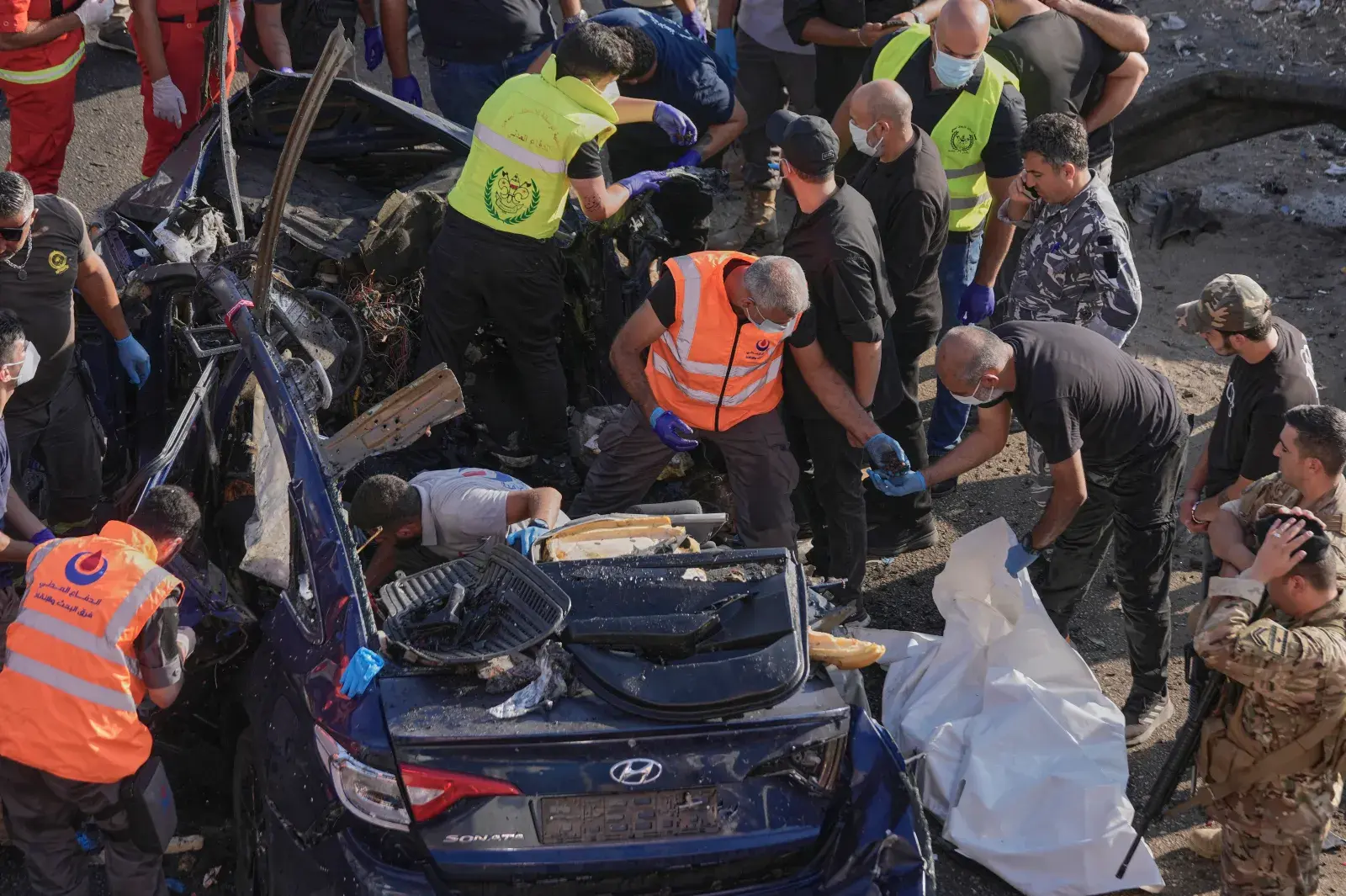
The deal followed Israel’s months-long military campaign, in which Israeli forces pushed north, launching a ground operation into Lebanon that caused mass displacement, instability, and civilian casualties. Israel said the initiative was aimed at dismantling Hezbollah.
The November 27 cease-fire agreement required Israel to withdraw its troops from southern Lebanon within 60 days and for Hezbollah to move its forces farther north. Israel requested more time to do so, and the deadline for Israel to remove its troops was extended.
Israel has since struck Lebanon many times, with the United Nations Interim Force in Lebanon (UNIFL) telling Newsweek in an email that they documented almost 6,300 air violations, including almost 100 air attacks, and almost 950 “trajectories detected from South to North” since November 27.
However, the Israel Defense Forces (IDF) have said their strikes are in response to Hezbollah violations. The IDF press team told Newsweek in an email Thursday that “the IDF operates in accordance with international law and takes all feasible measures to avoid harm to civilians.”
Earlier this month, the IDF struck targets in the Beqaa Valley, saying, “The storage of weapons and military training conducted by Hezbollah terrorists against the State of Israel constitute a blatant violation of the understandings between Israel and Lebanon and pose a threat to the State of Israel.”
Israel has been accused of many other violations in Lebanon, particularly in civilian areas, over the past few months, with the United Nations reporting that Israel has killed more than 100 civilians in Lebanon since the truce.
The reported breaks in the truce raises questions about whether this Gaza ceasefire will be different.
Israel-Hamas Ceasefire
“The only real guarantee that this ceasefire will last is President Trump’s leverage on Israel to finally end the war in Gaza. Without that political will from Washington, implementation risks faltering as before,” Sami Nader, director of the Institute of Political Science in Beirut, told Newsweek.
He added that the Gaza deal is a “major breakthrough,” a description echoed by much of the international community as Israelis, Palestinians and world leaders welcomed the announcement, many applauding Trump’s involvement.
However, Nader noted that the “success will depend on whether it leads to a credible process of disarmament before governance and reconstruction, rather than just a pause before the next round of fighting.”
Hanin Ghaddar, Friedmann senior fellow at the Washington Institute for Near East Policy, said in a phone interview with Newsweek on Friday that this “is not the same as previous ceasefires or attempts at a deal, this is different.”
She added that Arab countries put heavy pressure on Hamas and “Israel was also under a lot of pressure by Trump.”
Ghaddar noted that the “momentum” from Trump and Arab states in terms of external pressure, will likely lead to more enforcement of the ceasefire in the first stage, however, she said, “it’s a ceasefire, it’s not yet a peace deal…and ceasefires are historically fragile; look at Lebanon.”
Hilal Khashan, a political science professor at the American University of Beirut, is weary of the ceasefire hold, telling Newsweek in an email, “Israel can use the same justifications it used against Hezbollah for targeting Hamas and the Palestinian Islamic Jihad (PIJ), especially refusing to disarm or attempt to rebuild their military infrastructure fully.”
Khashan added: “Israel can also invoke the principle of self-defense—whether real or imagined—against Hamas and the PIJ [Palestine Islamic Jihad].”
While many across the political spectrum have applauded the feat, which comes after Hamas took around 250 people hostage and killed 1,200 people on October 7, 2023, and Israel’s ground and air offensives in Gaza which displaced more than 2 million people and killed more than 67,000 Palestinians, according to the Associated Press, some like former Green Party presidential candidate Jill Stein have expressed trepidation in the ceasefire viability.
In an X post early Friday, she wrote: “Reality check. Israel has broken its ceasefire in Lebanon 4,500 times in one year. Forget the Trump blather. Send a protection force to Gaza now.”
Looking Toward Lebanon
Given the interwoven nature of Israel’s conflicts with Hamas and Hezbollah, many experts are looking to Lebanon. Lebanese Parliament Speaker Nabih Berri on Thursday urged the international community to turn towards Lebanon following the Gaza deal, seeking reinforcement of Israel’s truce.
“We would be happy if the war of extermination against the Palestinian people in Gaza were to stop. But we must be wary of Israel reneging on the agreement. It has always evaded agreements and covenants, most recently the ceasefire deal with Lebanon last November,” Berri, speaking to the Association of Economic Journalists in Lebanon, said.
Ghaddar noted the “linked” nature of Israel’s conflicts with Hamas and Hezbollah, saying, “Lebanon is now an option for the Israelis if they want to focus on Hezbollah,” adding that if the forces aren’t busy in Gaza, “escalation might happen in Lebanon.”
Nader added that he “wouldn’t be surprised if Hezbollah soon faces a similar proposition: disarm or risk a new war. But this time Israel is confronting Iran’s deterrent directly—a different and potentially fiercer battle, one in which Israel won’t face the same isolation it did in Gaza.”
He continued, stating that up north, “the situation is totally different—Israel, the United States, and even key Arab states are aligned on the necessity to disarm Hezbollah. That shared objective means the next phase may not be about maintaining calm, but about reshaping the balance of power in the north.”
Khashan said: “If anything, President Donald Trump’s peace plan for Gaza will intensify the Israeli pressure to disarm Hezbollah,” suggesting this is leaving Lebanese people bracing for “the eventuality of a mini-war launched by Israel against Hezbollah to end Hezbollah’s military phenomenon.”
For Khashan, “the New Middle East envisioned by Israeli Prime Minister Benjamin Netanyahu, and endorsed by Trump, demands dismantling the alliance structure of armed militias constructed by Iran over the past 45 years.”
In the coming days, hostages and prisoners are expected to be exchanged, and the ceasefire is to hold, as leaders and U.S. diplomats continue talks on the plan.