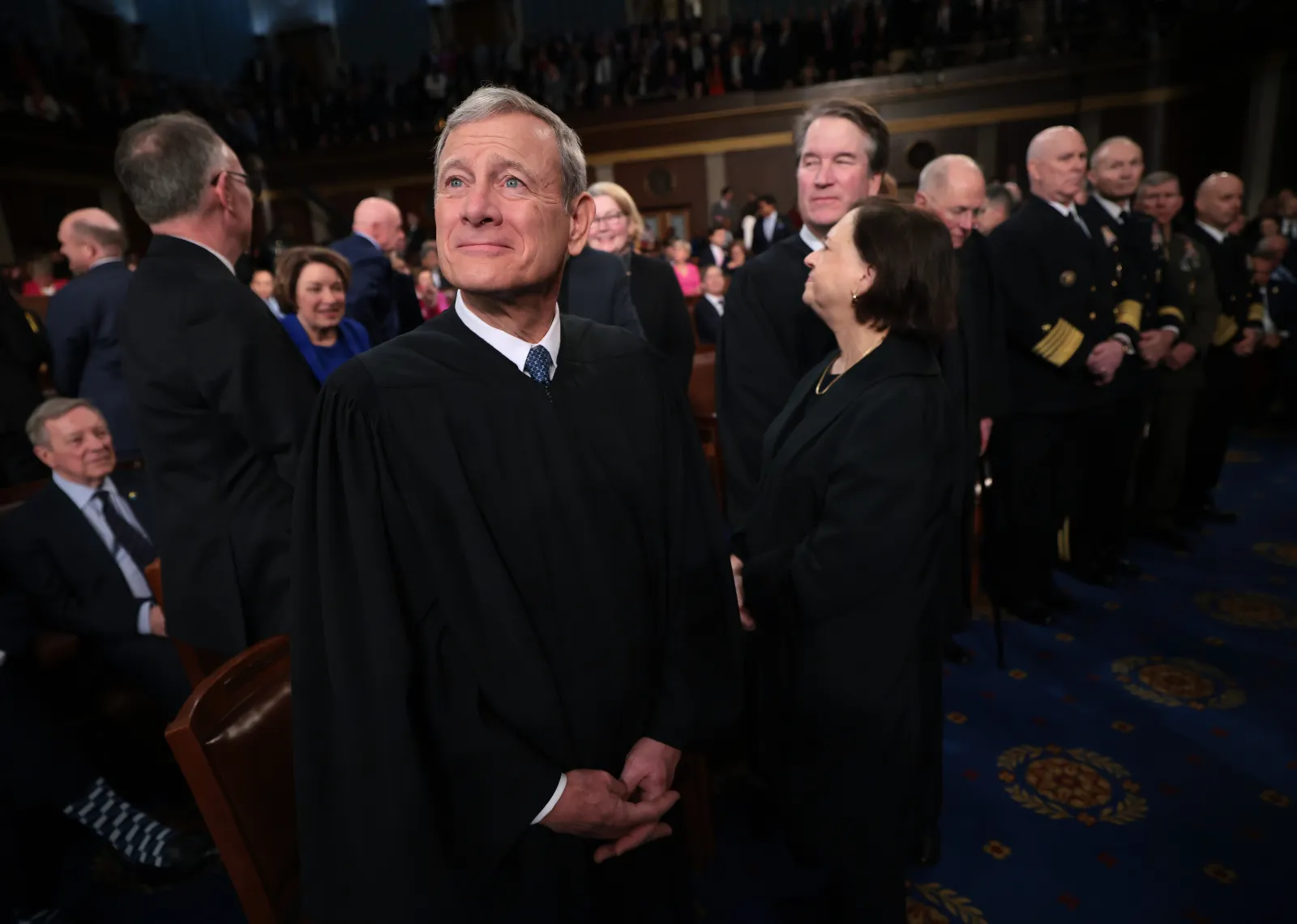
The majority of justices on the U.S. Supreme Court have failed in rising to the occasion during a critical period in America when their voices are “desperately needed,” former federal prosecutor Joyce Vance wrote in her Substack Civil Discourse about Chief Justice John Roberts’ year-end report on Friday.
Why It Matters
The 2025 report from Roberts comes at a time when the highest court in the land is under heightened scrutiny due to political pressures from President Donald Trump’s second administration, ongoing concerns about judicial independence and intensified public skepticism toward the court.
What To Know
The 13-page report touched on the history and principles behind judicial independence, including life tenure and salary protections for judges, but avoided direct discussion of contemporary political conflicts involving the federal judiciary. Roberts noted President Calvin Coolidge’s call to “turn for solace” to the Declaration of Independence and the Constitution “amid all the welter of partisan politics.”
Roberts briefly referenced historical events, including the attempted impeachment of Justice Samuel Chase in 1805, which set a precedent for judicial independence free from political retribution. However, direct mention of recent events—like Trump’s public criticisms of lower court rulings and his calls for the impeachment of federal judges—was notably absent.
Vance called out Roberts in her Substack over a picture chosen for the report, which showed an empty room.
“The past decade has made it clear that our institutions are only as strong as the people in them. That makes this photo a startling choice for a report about the judiciary, albeit likely unintentional,” Vance said. “But it’s a marker for what has become increasingly clear: that the majority on this Court has failed to show up in a moment when their institutional voice is desperately needed. The Court has been either unwilling or incapable of meeting the challenge to democracy that Donald Trump poses.”
Vance later concluded: “What is a Chief Justice to say in troubled times? It’s the role of the Court to stay out of politics. Still, we’re entitled to expect more from a man who has risen to the highest judicial office in America. Maybe the truth? Is that too much to ask for? Instead of cloaking himself in the mantle of history and self-righteousness, a little plain, unambiguous truth and clear commentary on the challenge the judiciary faces today would have done so much. A little courage. But regrettably, he doesn’t seem to have caught any of that.”
What People Are Saying
Roberts in part, at the end of his report: “As we approach the semiquincentennial of our Nation’s birth, it is worth recalling the
words of President Calvin Coolidge spoken a century ago on the occasion of America’s sesquicentennial: ‘Amid all the clash of conflicting interests, amid all the welter of partisan politics, every American can turn for solace and consolation to the Declaration of Independence and the Constitution of the United States with the assurance and confidence that those two great charters of freedom and justice remain firm and unshaken.’ True then; true now.”
Barbara McQuade, former U.S. attorney, to Newsweek via email on Friday: “I was pleased to see Chief Justice Roberts share the story of Samuel Chase, a signer of the Declaration of Independence and associate justice of the Supreme Court, who was impeached by the House and acquitted by the Senate. Chief Justice Roberts explained that Story’s case illustrated the important point that impeachment is an improper reaction to a court decision that political actors dislike. Chief Justice Roberts’ anecdote is important during this time when the president and other critics are attacking judges for their decisions, but I thought he buried the lead.
“I would like to have seen him argue more forcefully for judicial independence during this time of heated rhetoric and threats against judges. Instead, he wrote mostly about the history of the Declaration of Independence and the Constitution, as America looks to celebrate its 250th anniversary in 2026.”
What Happens Next
The Supreme Court’s 2026 docket is set to include consequential cases on presidential authority, immigration limits and other issues at the nexus of law and politics.