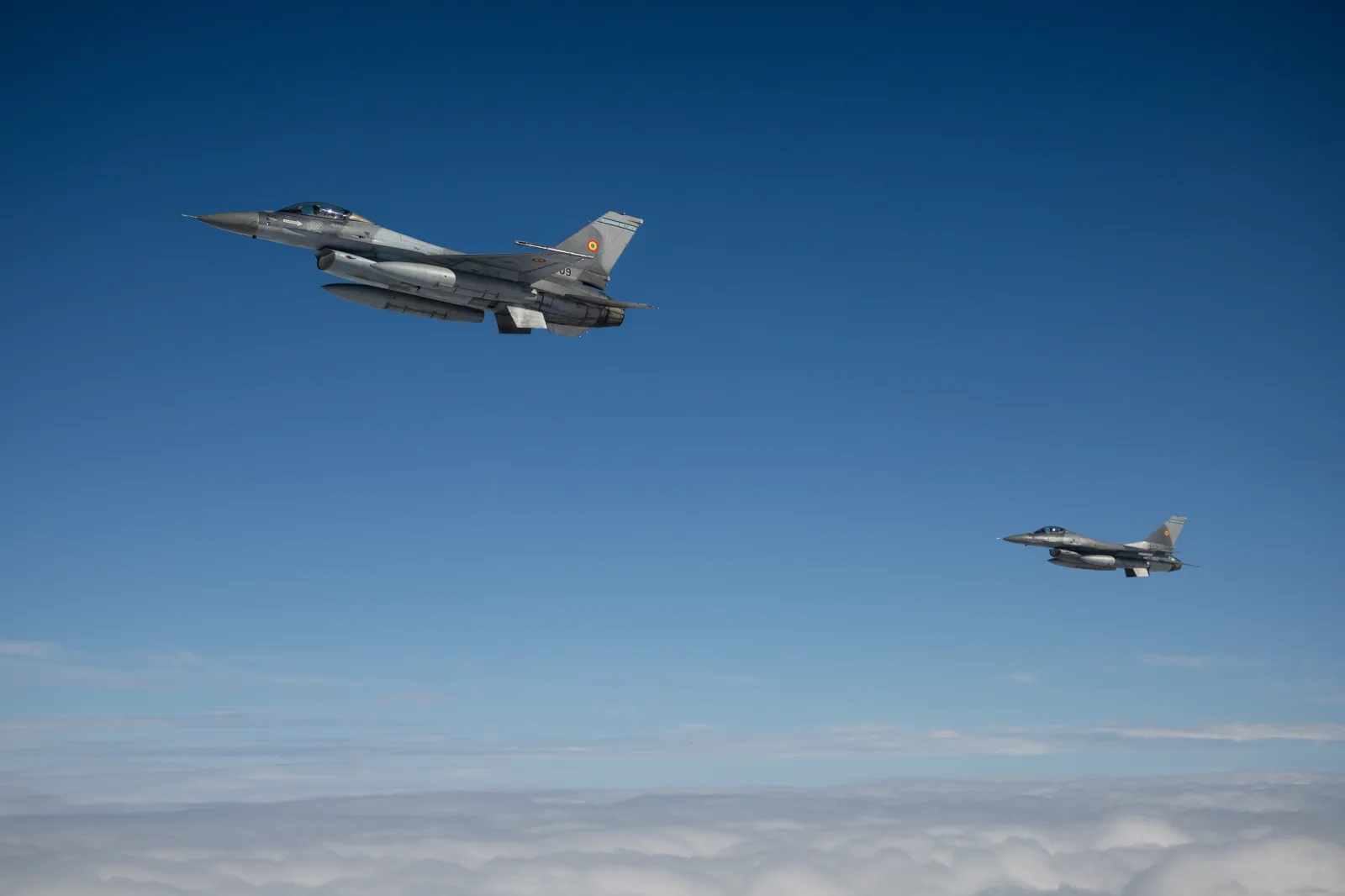
NATO member Romania scrambled F-16 fighter jets in response to a Russian drone attack on Friday, the country’s Ministry of National Defence said.
Officials said there was no violation of NATO airspace from the Russian weapons and that two jets were deployed to “monitor the border area with Ukraine.”
They said in a statement: “On Friday, January 2, the Ministry of National Defense’s surveillance system identified aerial drones launched by the Russian Federation towards Ukrainian ports on the Danube near the border with Romania.
“At around 11:50, two F-16 fighter aircraft from the 86th Air Base in Fetești were taken into the air to monitor the border area with Ukraine, in northern Tulcea County. At 12:00, the population in northern Tulcea County was warned via RO-Alert message.
“The alert state ended at 12:22 p.m. During the mission, no unauthorized intrusions into national airspace were recorded.”
Newsweek has contacted the Romanian Ministry of National Defence for comment.
The proximity of Russian strikes to NATO territory has raised security concerns in the region, prompting questions about the alliance’s readiness and deterrence capabilities.
Under Article 5 of the NATO treaty, an attack against one member can trigger a collective response, placing additional scrutiny on events close to the alliance’s borders.
This is a developing story. More to follow.