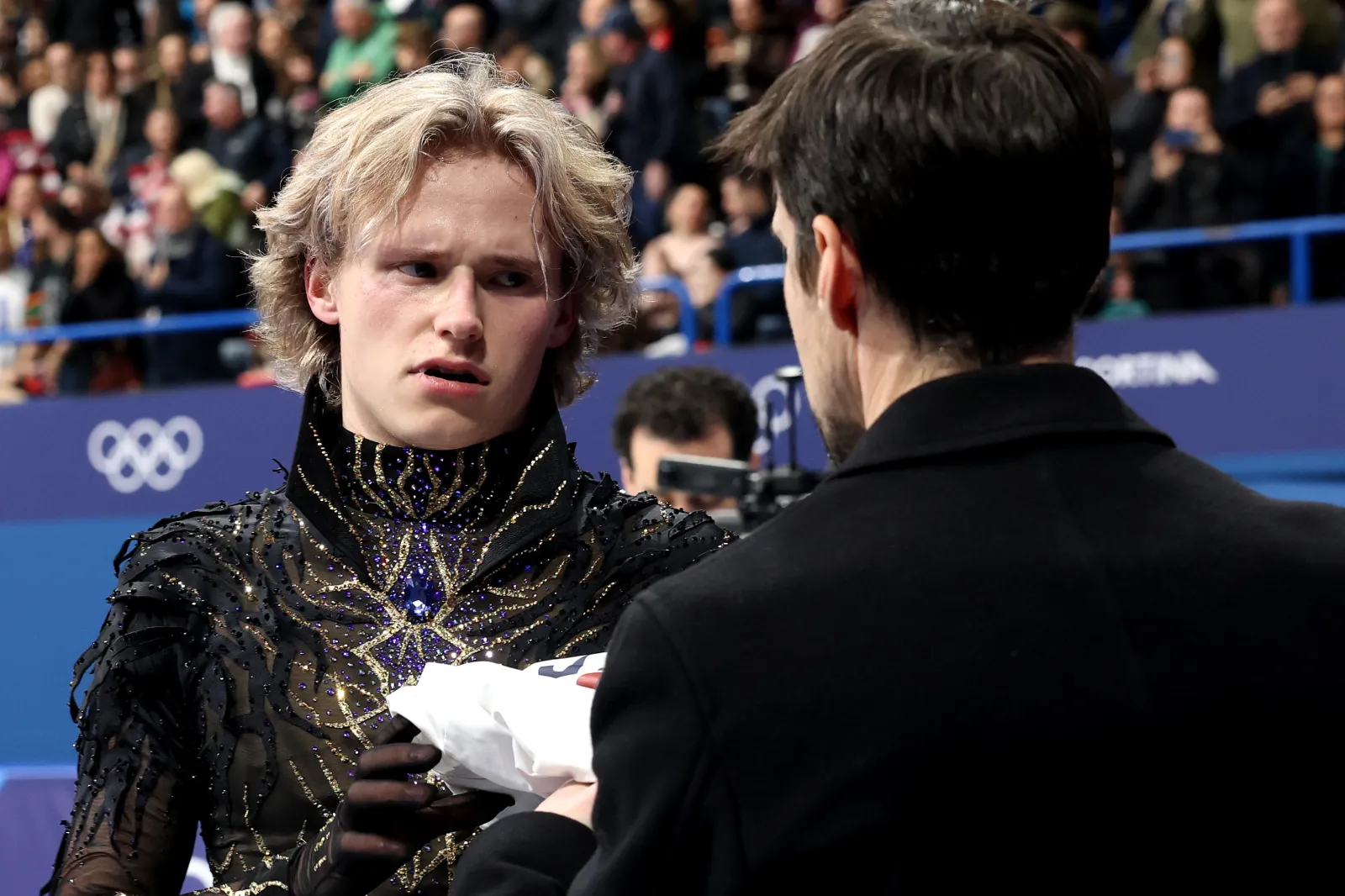
After Ilia Malinin finished eighth in the men’s free skate final last week — despite entering as the runaway favorite for gold — he opened up about the pressure he felt from the media.
Malinin received significantly more coverage than most other athletes leading up to the event, and understandably so. NBC, which is broadcasting the Olympics, along with other media outlets, aims to spotlight the athletes most likely to capture viewers’ attention — and Malinin certainly fit that bill.
“I think all of this pressure, all of the media, and being the Olympic gold hopeful, was too much,” Malinin said.
“The most honest way to say it is it’s just a lot on you — just so many eyes, so much attention. It really can get to you if you’re not ready to fully embrace it. So I think one of the mistakes I made going into that free skate was not being ready to handle that to the fullest extent.”
“I thought that all I needed to do was go out there and trust the process that I’ve always been doing with every competition,” Malinin added, via ESPN. “But of course it’s not like any other competition. It’s the Olympics. It was really just something that overwhelmed me, and I just felt like I had no control.”
More news: USA’s Mikaela Shiffrin Details Breakthrough Leading to Historic Olympic Gold
More news: Historic Connor McDavid News Announced After Canada’s Quarterfinal Olympic Win
Olympic fans have rallied around Malinin since his performance, and he has continued to draw more attention than nearly any other athlete, sitting down for several interviews in the days that followed.
His comments sparked debate over whether NBC and the broader media place too much pressure on elite athletes. On Wednesday, NBC Olympics president Gary Zenkel responded to criticism that the network centers its coverage around a handful of marquee names.
“I will tell you that our approach to the ‘before’ — which is to introduce the American audience to the athletes who are going to compete, to try to engage the audience in their story — the mantra is ‘make them care’ — has been the same for decades,” Zenkel said.
“I think the pressure of being on that Olympic stage and having one opportunity — and then you wait four years, or maybe you never get back — is why it’s such an extraordinary event. It’s why we, as mortals, are so drawn to it. They’re the best in the world. They’re the best in the world in that moment. Or they can be, or they have the potential to be.
“In his case, [Malinin] has been. But it’s on that Olympic stage that they’re ultimately — and maybe in their own minds — measured. I’ve heard unbelievable statements from athletes who have competed in the Olympics about how extraordinary it is to be in that moment, the greatest on the planet.
“So I think the Olympics place an enormous amount of pressure. Does NBC exacerbate that pressure to the point where they’re unable to perform at their true potential? I don’t know.
“So I’m going to say I don’t think so. And by the way, they’re getting a lot of attention from other media as well. And, of course, Ilia’s desire to participate with us even after the free skate — I think that’s entirely his call.”
Coverage of the Olympics — and any major sporting event — has largely remained the same over the years. The difference now is social media, which can amplify narratives and scrutiny to an entirely new level.
Networks are always going to center their attention around star athletes. Some thrive under that spotlight. Michael Phelps is a prime example — a marquee name who embraced the attention and went on to become arguably the greatest U.S. Olympian of all time.
Others, however, may not feed off that attention in the same way.
More news: Can Team USA Still Finish the Winter Olympics With the Most Golds?