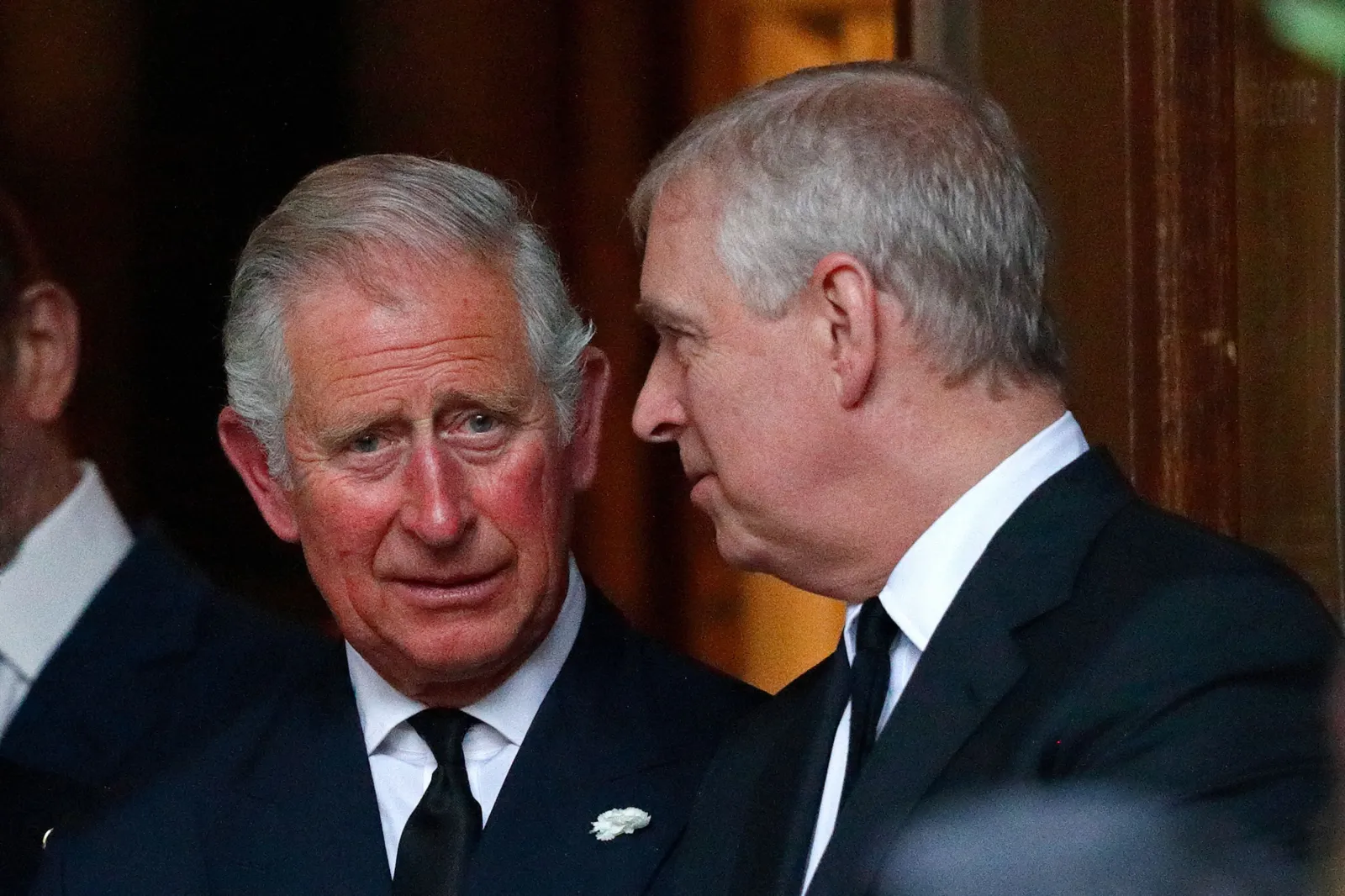
New Former Prince Andrew Allegation Could Turn Heat Up on Charles
February 2, 2026
4,965
Andrew Mountbatten-Windsor, formerly Prince Andrew, faces the prospect of a lawsuit from a second alleged Jeffrey Epstein victim, triggering what could turn into a major crisis for both Andrew and the monarchy.
An as-yet-unnamed woman is threatening to sue Andrew as her lawyer says she was “sent by Jeffrey Epstein over to Prince Andrew” in 2010 in order to have sex with Andrew, the BBC reported. She is said to have been in her 20s at the time.
Virginia Giuffre previously sued Andrew at civil court in New York in 2021, saying she was trafficked by Epstein and Ghislaine Maxwell to London, New York and the U.S. Virgin Islands and forced to have sex with Andrew in 2001. Andrew has always denied Giuffre’s allegations. Giuffre died by suicide in April 2025.
Newsweek reached out to Buckingham Palace, the woman’s lawyer and Andrew’s former representatives for comment.
Why It Matters
Andrew settled with Giuffre out of court in 2022, paying an undisclosed sum while denying liability. The cost of the settlement was so high, however, that he could not pay it alone and required financial help from Queen Elizabeth II and King Charles III.
That help would be far harder for the king to give in relation to the new allegation in 2026 than it was in 2022, in part because of new emails released, mainly as part of the Epstein files. Also, though, Charles has stripped Andrew of his “prince” title to show the public that the monarchy can provide accountability. Buying him out of a humiliating lawsuit could undermine the success of that strategy.
The New Allegation Against Andrew
Brad Edwards, the new accuser’s lawyer, told the BBC: “We’re talking about at least one woman who was sent by Jeffrey Epstein over to Prince Andrew. And she even had, after a night with Prince Andrew, a tour of Buckingham Palace.”
The BBC reported the woman was allegedly given tea at the palace after a sexual encounter and an overnight stay with Andrew at his Windsor home, Royal Lodge, in 2010. There was also, according to Edwards, email contact between Andrew and his client before they met in person.
Epstein was convicted of soliciting prostitution from a minor, a 14-year-old girl, in 2008 following a highly criticized plea deal in Florida, which saw the district attorney swerve bringing more serious charges against Epstein. By 2010, Epstein had served his sentence.
Andrew told the BBC he had cut off his relationship with Epstein in December 2010 during a visit to New York, though emails indicate they were still messaging each other into 2011.
A new email disclosed by the U.S. Department of Justice last week showed Epstein offering in August 2010 to arrange dinner for someone named “The Duke,” who signed off with the initial “A.” Andrew was Duke of York at the time.
“I have a friend who I think you might enjoy having dinner with,” Epstein wrote. “The Duke” replied: “Of course. I am in Geneva until the morning of 22nd but would be delighted to see her. Will she be bringing a message from you? Please give her my contact details to get in touch.”
“She 26, russian, clevere [sic] beautiful, trustworthy and yes she has your email,” Epstein wrote.
In a separate email chain, “The Duke” suggested to Epstein in September 2010: “We could have dinner at Buckingham Palace and lots of privacy.”
“Delighted for you to come here to BP,” they added. “Come with whomever and I’ll be here free from 1600ish to 2000.” Epstein replied: “See you at 4.”
There is nothing currently to suggest that either email chain relates directly to the new allegation from the unnamed woman in her 20s.
Also in the latest batch of Epstein files, photos showed Andrew on all fours over a fully-clothed woman lying on her back in what is believed, based on the decor, to be Epstein’s New York home. Andrew has his hand on the woman’s waist in the picture. The woman has not been identified, and there is nothing currently known to suggest there was a sexual encounter between them.
How the New Allegation Differs From Virginia Giuffre’s
One major difference between the two accounts is that Giuffre said she was 17 at the time she was flown to London and forced to have sex with Andrew in March 2001. Her lawsuit was filed in New York on the basis that she was a minor under New York law. The legal age of consent in Britain is 16.
The new allegation is from a woman who said she was in her 20s at the time, and there is no indication she will say she was forced to have sex with him when she was underage.
The new accusation is also nine years after the first and took place after Epstein’s conviction for solicitation, at a point when Andrew likely knew about Epstein’s jail time. In his reply to the August email, “The Duke” wrote: “How are you? Good to be free?”
Also, though, the law in Britain had changed by the time of the new allegations. Human trafficking laws started to emerge in Britain from 2003, with the Sexual Offences Act.
As described by Dominic Grieve in 2012, when he was Britain’s attorney general: “In terms of our legislation, the Sexual Offences Act 2003 criminalised the trafficking into, within, and out of, the UK for the purposes of sexual exploitation.”
How the Allegation Turns the Heat Up on King Charles
Andrew is widely understood to be out of money. He no longer has either PR or legal representation, and Newsweek understands that Charles will provide him with some financial support going forward as his brother leaves his Windsor mansion, Royal Lodge, for more modest accommodation provided by the king on the Sandringham Estate.
If a court case does emerge, Andrew may therefore struggle to settle out of court as he did with Giuffre, who was reportedly paid at least seven figures with funds from Queen Elizabeth II and Charles.
If the king were to help Andrew buy his way out of the case now, though, the public reception might well be very different.
Graham Smith, chief executive of anti-monarchy campaign group Republic, told Newsweek: “To pay someone off in order to protect your brother from a lawsuit, and thereby evade the normal course of justice, from the head of state, who’s also supposedly commonly the head of the judiciary, would just raise so many questions as to why he’s doing that and the standards of justice that he’s willing to defend.”
“His position should be considered untenable, and it certainly would be if it was anybody else,” Smith added. “I think he would have to abdicate.”
Dickie Arbiter, former press spokesperson to Queen Elizabeth II, told Newsweek: “They’re in cuckoo land. I don’t see the logic at all. They’re clutching at straws.”
Arbiter pointed to the fact that the new accuser was not a minor at the time she says the sexual encounter took place and added: “I’m not sure what the case is and I’m not sure where Republic are coming from, they’re clutching at straws.”
Robert Jobson, author of The Windsor Legacy: A Century of Royal Scandal, Secrets & Survival, told Newsweek: “Public sentiment has limited patience for the perception that the royal family is using their wealth to suppress Andrew answering these sordid allegations.
“Any settlement risks being interpreted as an attempt to silence claim, a concern many voiced regarding the Virginia Giuffre Roberts agreement.
“In the court of public opinion, such perceptions this would prove very damaging for the King and the monarchy.”
What Happens Next
The new allegation is in its earliest stages with no case yet filed. Edwards appears to have attempted to contact Andrew’s former U.S. legal team only to discover they no longer represent him, according to the BBC.
If a case were to be filed, then Edwards would have to serve Andrew papers in person. That might prove difficult, given that Andrew is either behind the security team at the Windsor mansion he is about to leave or on the private Sandringham estate, which he is about to move to.
If Andrew refuses to accept the paperwork, that could create its own reputational crisis for Charles, as the appearance would be that the king was helping to shield Andrew from justice by letting him live at Sandringham, a protected royal residence, albeit privately owned.
Do you have a question about King Charles III and Queen Camilla, Prince William and Princess Kate, Meghan Markle and Prince Harry, or their family that you would like our experienced royal correspondents to answer? Email royals@newsweek.com. We’d love to hear from you.
Um die besten Erfahrungen zu bieten, verwenden wir Technologien wie Cookies, um Geräteinformationen zu speichern und/oder darauf zuzugreifen. Wenn Sie diesen Technologien zustimmen, können wir Daten wie das Surfverhalten oder eindeutige IDs auf dieser Website verarbeiten. Die Nichteinwilligung oder der Widerruf der Einwilligung kann bestimmte Merkmale und Funktionen beeinträchtigen.
Functional
Always active
The technical storage or access is strictly necessary for the legitimate purpose of enabling the use of a specific service explicitly requested by the subscriber or user, or for the sole purpose of carrying out the transmission of a communication over an electronic communications network.
Preferences
The technical storage or access is necessary for the legitimate purpose of storing preferences that are not requested by the subscriber or user.
Statistics
The technical storage or access that is used exclusively for statistical purposes.The technical storage or access that is used exclusively for anonymous statistical purposes. Without a subpoena, voluntary compliance on the part of your Internet Service Provider, or additional records from a third party, information stored or retrieved for this purpose alone cannot usually be used to identify you.
Marketing
The technical storage or access is required to create user profiles to send advertising, or to track the user on a website or across several websites for similar marketing purposes.