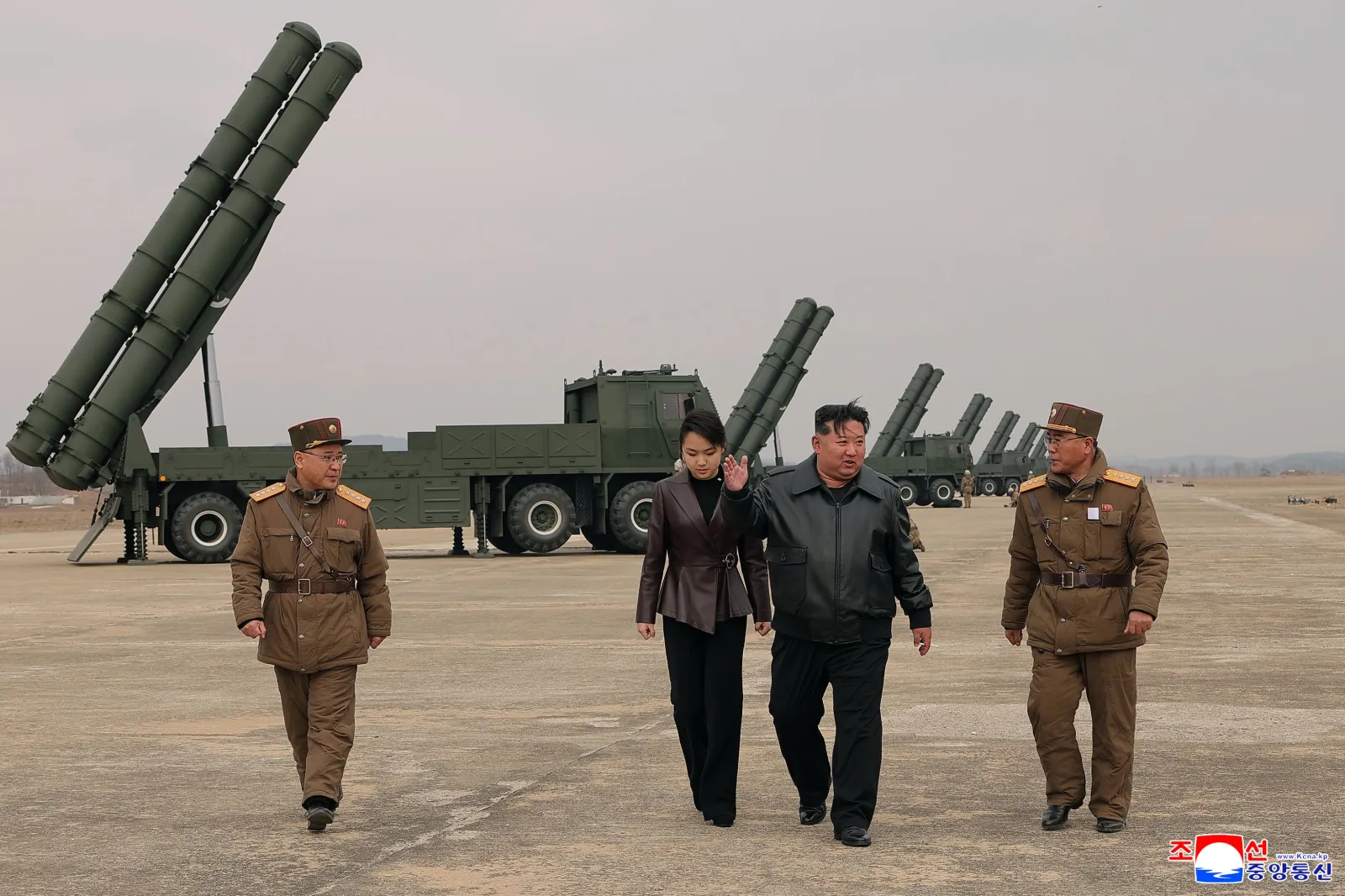
North Korean leader Kim Jong Un observed a test of a high-thrust, solid-fuel missile engine and declared it a major advancement in the country’s strategic military capability, state media reported Sunday, signaling Pyongyang’s continued push to field nuclear-armed missiles capable of reaching the United States.
Newsweek reached out to the White House and Department of Defense via email on Saturday for comment.
Why It Matters
The engine test suggests Kim is intent on enlarging and modernizing North Korea’s long-range missile arsenal at a moment when diplomatic talks between Washington and Pyongyang remain stalled. Observers say the increased thrust capacity is likely tied to efforts to place multiple warheads on a single missile — a capability that would significantly complicate U.S. missile defense planning.
The test also comes weeks after North Korea fired more than 10 ballistic missiles into the sea during U.S.-South Korean military exercises, underscoring the pace of Pyongyang’s provocations even as Trump administration officials have signaled interest in renewed engagement.
What To Know
Kim observed a ground jet test of a newly upgraded engine built with composite carbon fiber material, according to Korean Central News Agency (KCNA). The engine’s maximum thrust reached 2,500 kilotons, up from roughly 1,971 kilotons recorded in a similar solid-fuel engine test in September.
The test was conducted under North Korea’s five-year military escalation program, which includes upgrading what state media calls “strategic strike means” — widely understood to mean nuclear-capable intercontinental ballistic missiles (ICBM) targeting the continental U.S. KCNA did not specify when or where the test took place.
Solid-fuel missiles carry a tactical advantage over North Korea’s older liquid-fuel systems, which must be fueled before launch and are more easily detected. Solid-fuel missiles can be deployed with far less warning, reducing the window for preemptive action.
Some foreign experts say North Korea still faces technological hurdles before it has a fully operational ICBM, including ensuring warheads survive the extreme conditions of atmospheric reentry. Others dispute that assessment, citing the decades Pyongyang has invested in its nuclear and missile programs.
North Korea has aggressively expanded its arsenal since Kim’s diplomacy with President Donald Trump collapsed in 2019. At a Workers’ Party congress in February, Kim left the door open for dialogue but demanded Washington abandon denuclearization as a precondition for talks.
What People Are Saying
Kim Jong Un, according to KCNA: The engine test carries “great significance in putting the country’s strategic military muscle on the highest level.”
Japan’s Ministry of Defense, in a statement posted to X following last month’s missile launches: “North Korea’s series of actions threaten the peace and security of Japan, the region, and the international community” and “violate relevant UN Security Council resolutions.”
What Happens Next
With Operation Freedom Shield — the annual U.S.-South Korea military exercise — concluded earlier this month and diplomatic discussions ongoing between Washington and Seoul over potential outreach to Pyongyang, North Korea’s continued weapons testing complicates the path to any renewed talks.
South Korean Prime Minister Kim Min-seok told reporters after meeting Trump in Washington that the president remains eager for another meeting with Kim Jong Un — though Pyongyang has repeatedly rejected calls to return to the negotiating table without conditions.
Reporting from the Associated Press contributed to this article