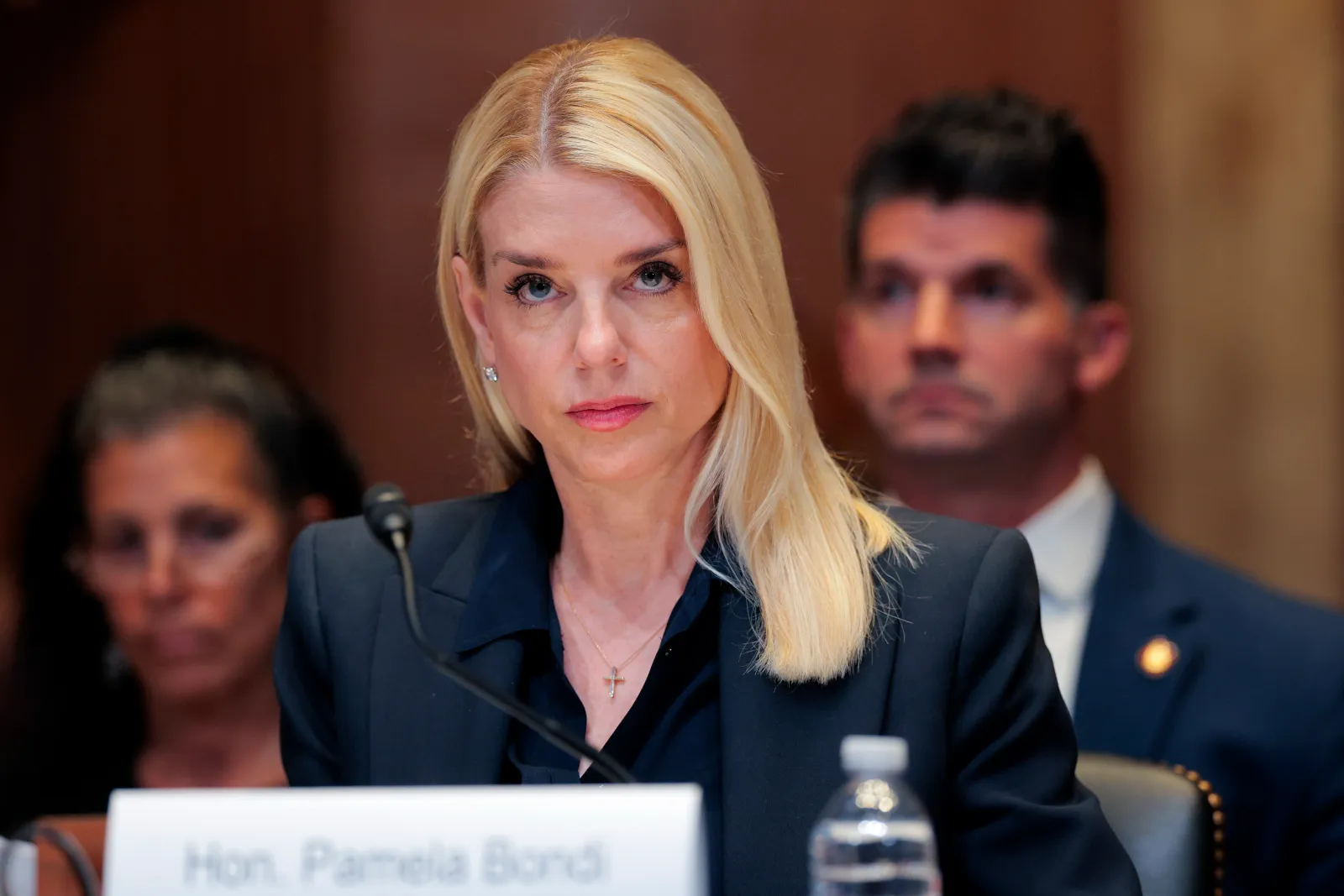
Attorney General Pam Bondi has admitted that the Justice Department (DOJ) made mistakes in handling the Jeffrey Epstein files, including errors in redacting sensitive information, according to a letter sent to federal judges.
Why It Matters
The disclosures, detailed in a court filing in the U.S. District Court for the Southern District of New York, come amid mounting scrutiny of the department’s handling of victim privacy and compliance with the Epstein Files Transparency Act.
Under the bill, which was signed into law on November 19, 2025, the Justice Department was required to release all unclassified records, communications, and investigative materials concerning Epstein within 30 days. However, the DOJ missed that deadline, and in a court filing earlier this month reported that it had made public only 12,285 files since being ordered to do so.
The DOJ has now posted more than 3 million pages, 180,000 images, and 2,000 videos tied to the Epstein investigation, marking the largest government release of materials under the Epstein Files Transparency Act.
The files include emails, financial records, and other documents referencing high-profile figures.
President Donald Trump’s administration faced criticism over the slow and incomplete release of documents related to Epstein, prompting calls for investigations and scrutiny of the DOJ and its leadership.
What To Know
In a letter to federal judges overseeing the cases, DOJ officials, including Bondi, Deputy Attorney General Todd Blanche, and U.S. Attorney Jay Clayton, said the department had temporarily taken down thousands of documents that may have contained victim‑identifying information. Around 9,500 files were removed from the DOJ’s public repository so they could be re‑reviewed and further redacted before being reposted.
DOJ lawyers said some documents were flagged by victims or their counsel, and others were identified independently for further review.
“Based on a sampling of documents for purposes of preparing this letter, there are instances where redactions appear to have been inadvertently missed despite what is clearly a robust effort by the reviewer,” the DOJ wrote in a letter to federal judges overseeing the Epstein case and that of his associate Ghislaine Maxwell.
“As just one example, in a document that consists of more than 80 pages of scanned material from a hard-copy file, victim identifying information was comprehensively redacted throughout, but the document has been flagged for further review because on one page, the first name of a victim appears.”
In the court filing, DOJ attorneys wrote that victims and their counsel have been able to identify new names and other identifiers that were not initially included in the department’s review process. They said the department has removed documents that were flagged and is working to ensure additional redactions are made where appropriate.
The errors have drawn criticism from survivors and legal advocates. Attorneys representing victims have said that poor redactions have exposed private information, creating real‑world risks for survivors and compounding their trauma. A recent review by The Wall Street Journal found that at least 43 victims’ names remained visible in the files after the January release.
The latest release of files also referenced prominent figures from the tech, business, and public spheres, including Microsoft co-founder Bill Gates, Tesla CEO Elon Musk, internet entrepreneur Reid Hoffman, and the former British royal prince, Andrew Mountbatten-Windsor.
What People Are Saying
The DOJ wrote in its letter: “Hundreds of documents have been flagged for further review relating to individuals and entities that had not previously been identified to the department through this process as identifying of a victim.”
A spokesperson for the department told Business Insider: “The department had 500 reviewers looking at millions of pages for this very reason, to meet the requirements of the act while protecting victims,” the spokesperson said. “When a victim’s name is alleged to be unredacted, our team is working around the clock to fix the issue and republish appropriately redacted pages as soon as possible.”
What Happens Next
The Justice Department said it will continue reviewing and redacting documents flagged by victims or their counsel.
In a polarized era, the center is dismissed as bland. At Newsweek, ours is different: The Courageous Center—it’s not “both sides,” it’s sharp, challenging and alive with ideas. We follow facts, not factions. If that sounds like the kind of journalism you want to see thrive, we need you.
When you become a Newsweek Member, you support a mission to keep the center strong and vibrant. Members enjoy: Ad-free browsing, exclusive content and editor conversations. Help keep the center courageous. Join today.