Republicans in Congress and in several statehouses are ramping up efforts to challenge a 44‑year‑old Supreme Court decision that guarantees undocumented children access to free public education, setting the stage for a major constitutional fight over immigration, education and the reach of the Fourteenth Amendment.
The Context
In 1982, the Supreme Court ruled that denying undocumented children violated the Equal Protection Clause, with one conservative justice joining all four liberal justices on the court to form a majority. It’s become a cornerstone of public school policy nationwide, but is being called into question again, and, with a stronger conservative majority on the Court than in 1982, overturning the ruling could radically reshape public education.
The renewed push has been fueled by recent congressional hearings, state‑level legislation and behind‑the‑scenes pressure from Trump administration officials, according to reporting from The New York Times and other outlets. If successful, the effort could fundamentally reshape who is entitled to attend public schools in the United States and reopen a question the court has left untouched for more than four decades.
Republicans are pushing for the Supreme Court to revisit Plyler. The Heritage Foundation, a conservative think tank, has explicitly called on states to pass laws denying free public education to undocumented students in order to force a Supreme Court showdown. Heritage argued that states have a legitimate interest in prioritizing limited taxpayer resources for citizens and lawful residents and urged the court to reverse the 1982 precedent.
“Illegal aliens should not be eligible for federal, state, or local government benefits, including through their children, because the receipt of such benefits facilitates longer unlawful residence in the United States and takes resources from American citizens and lawful immigrants,” Lora Ries, director, Border Security and Immigration Center, wrote.
Those arguments are surfacing on Capitol Hill, too. In March, the House Judiciary Subcommittee on the Constitution and Limited Government held a hearing titled “Immigration Policy by Court Order: The Adverse Effects of Plyler v. Doe,” where Republican lawmakers contended that the decision imposed unfair financial burdens on states and school districts.
“It’s time we meet the moment to overturn Plyler v. Doe. It’s time for Congress and the courts to address the glaring failures of this court decision and finally alleviate Texans and Americans alike from this burden,” Representative Chip Roy, a Republican from Texas, said during the hearing.
The political pressure has also extended to the states. According to The New York Times, White House immigration adviser Stephen Miller recently questioned Texas lawmakers about why the state continues to fund education for undocumented children, urging them to pass legislation that would directly conflict with Plyler and invite a legal challenge. Such a move, Miller suggested, could be replicated by other Republican‑led states if the court signals a willingness to revisit the ruling.
In Tennessee, bills moving through the legislature would allow public schools to refuse to enroll undocumented students, seemingly in violation of Plyer. Legislators in Idaho have also introduced a bill that would require public schools to check students’ immigration status, and a bill introduced in New Jersey would charge undocumented students to enroll at a public school. The Oklahoma Board of Education also passed a resolution in January 2025 that would require parents to show their child’s citizenship status, but it was blocked by the House.
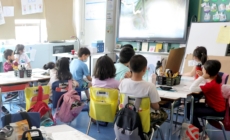
Democrats countered that the ruling has paid long‑term economic dividends and warned that overturning it would create a permanent underclass of uneducated children. It’s unclear how many students would be impacted by the overturning of the ruling. The Center for Immigrant Studies estimated that 3.2 million public school students are from immigrant households that are headed by an illegal immigrant, but it’s unclear how many of those kids do not have legal status themselves.
“You would be asking school personnel to now act like they are Department of Homeland Security officers checking for immigration status, collecting and recording immigration status, and then reporting that information,” Ignacia Rodriguez Kmec, an attorney with the National Immigration Law Center, told Education Week.
Supreme Court Plyler v. Doe Ruling Explained
The Supreme Court decided Plyler v. Doe in 1982, striking down a Texas law that allowed school districts to deny enrollment to children who were not “legally admitted” to the United States or to charge them tuition. In a narrow 5–4 decision, the justices held that denying undocumented children access to a free K‑12 education violated the Equal Protection Clause of the Fourteenth Amendment.
Writing for the majority, Justice William J. Brennan Jr. concluded that undocumented children are “persons” under the Constitution and therefore entitled to equal protection of the laws. While the court stopped short of declaring education a fundamental right, it found that Texas had failed to show a substantial state interest that justified imposing what the court described as a “lifetime hardship” on a discrete class of children who were not responsible for their immigration status.
The decision made clear that states could not withhold funding for undocumented students or deny them enrollment in public elementary and secondary schools. Since then, Plyler has served as the legal foundation for federal guidance barring schools from asking about students’ immigration status and for civil rights enforcement under Title VI of the Civil Rights Act, which prohibits discrimination in public education.
Who Voted in Favor of Plyler v. Doe
The Plyler decision was decided by a closely divided court. The five justices who formed the majority were William J. Brennan Jr., Thurgood Marshall, Harry Blackmun, Lewis F. Powell Jr. and John Paul Stevens. Brennan authored the majority opinion, with concurring opinions from Marshall, Blackmun and Powell. Powell was the sole conservative justice to vote with the liberal bloc on the Court.
Chief Justice Warren E. Burger dissented, joined by Justices Byron White, William Rehnquist and Sandra Day O’Connor. The dissenters argued that the Constitution did not require states to provide free public education to undocumented children and that the issue should be left to Congress or the states.
Because the ruling rested on a slim majority and applied an intermediate form of equal‑protection analysis, critics have long viewed it as vulnerable—particularly as the ideological makeup of the Supreme Court has shifted to the right since the 1980s. With a 6-3 conservative majority now, Republicans are better positioned to put the case before the Court.
How Does Birthright Citizenship Case Impact Plyler v. Doe
The stakes around Plyler have risen sharply as the Supreme Court considers a separate case challenging birthright citizenship under the Fourteenth Amendment. That case, which the court is set to hear this week, asks whether children born in the United States to non‑citizen parents are automatically entitled to citizenship. Legal experts say a ruling narrowing birthright citizenship could have ripple effects for public schools and undocumented students—even if Plyler itself is not directly overturned.
“The law is still the law, children can still go to school. Now, we know that that is being complicated at this moment by immigration enforcement around schools,” Alejandra Vázquez Baur, co-founder and director of the National Newcomer Network, told NPR. “The birthright citizenship issue complicates that even further.”
For now, Plyler v. Doe remains the law of the land. But with coordinated efforts by conservative lawmakers, think tanks and state officials—and with the Supreme Court already poised to reconsider long‑settled interpretations of the Fourteenth Amendment—supporters and critics alike say the 44‑year‑old decision may be facing its most serious threat yet.
But advocates warn that weakening birthright citizenship could embolden states to test the limits of Plyler, arguing that the constitutional logic protecting undocumented children no longer applies in the same way. Education policy analysts told NPR that public schools are often the primary access point for services such as free meals, special education and mental health support—services that could become harder to administer if children’s legal status is called into question.