Satellites Find US Aircraft Carrier in Caribbean Waters
3 hours ago
4,236
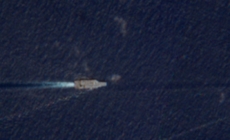
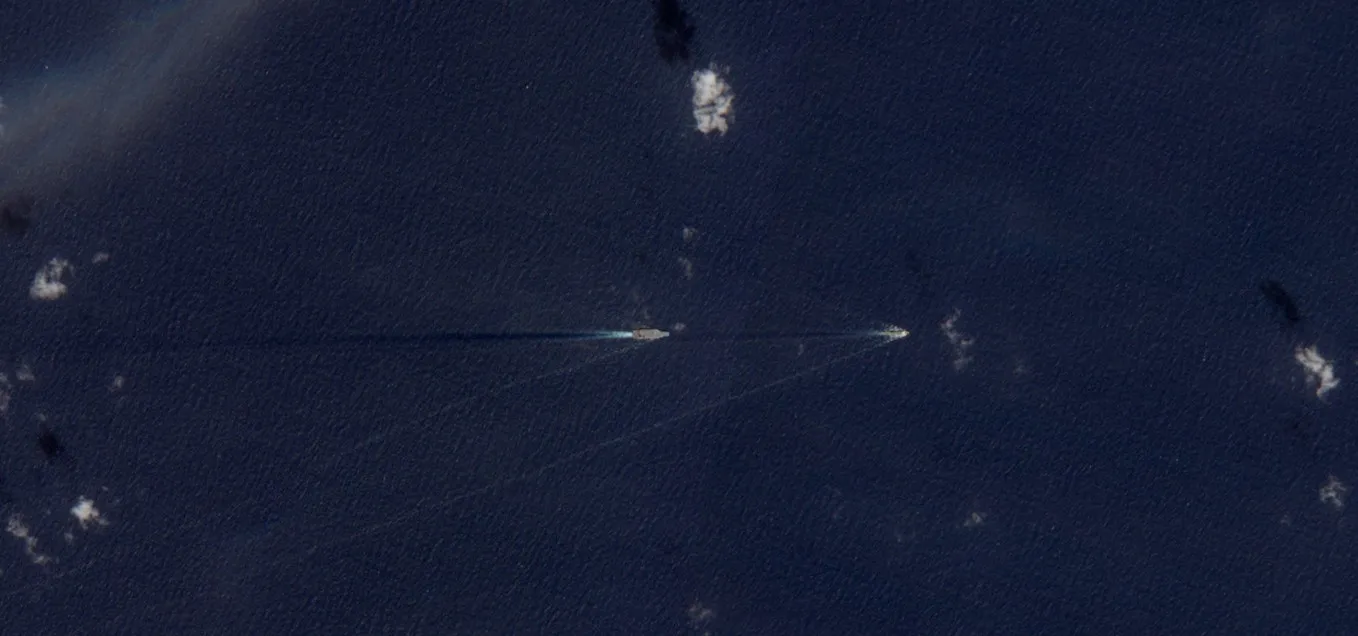
The USS Gerald R. Ford nuclear-powered aircraft carrier was spotted on December 15 north of the Gulf of Venezuela in the Caribbean Sea, where it was deployed in November to support counter-narcotic operations under the United States’ Operation Southern Spear, significantly increasing U.S. military presence and capabilities in the region amid heightened tensions with Venezuela.
Why It Matters
The U.S. has intensified lethal strikes on suspected drug‑smuggling vessels, carrying out the most recent series attacks on three boats in the eastern Pacific that killed eight people, bringing the total number of people killed in the campaign so far to at least 95 in 25 attacks, according to Associated Press reporting and U.S. military announcements.
The role of the aircraft carrier in the strikes remains unknown as lawmakers have raised questions pertaining to the legitimacy of the killings and human rights concerns, but the Gerald R. Ford has conducted aircraft sorties for surveillance and as a show of force against President Nicolás Maduro’s regime in Venezuela.
This media contains content some readers may find distressing or offensive. Viewer discretion is advised.
What To Know
Earlier this month, the Gerald R. Ford made a scheduled port call in the U.S. Virgin Islands for crew rest and recuperation after entering the region in November. The carrier operates F/A-18 fighter jets and MH-60 Seahawk helicopters and has also maneuvered alongside U.S. Air Force B-52 bombers in the region.
The aircraft carrier has shifted south toward Venezuelan waters, satellite imagery showed. It was spotted Monday about 380 miles south-southwest of Ponce, Puerto Rico, according to the Army Recognition Group defense website The U.S. has amassed warships and more than 15,000 personnel in the Caribbean.
Critics and analysts doubt that the carrier is deployed for counter‑drug operations, raising questions that its presence is intended to pressure Venezuela. “[Carriers] are superbly suited for conducting air attacks and supporting amphibious landings,” the Center for Strategic and International Studies (CSIS) noted in an October analysis.
Caracas has condemned U.S. pressure through military threats and sanctions. President Donald Trump has threatened military action against Venezuela including possible land strikes. The administration has not disclosed the scope of its campaign.
What People Are Saying
Alain Servaes, chief editor, Army Recognition Group, wrote Monday: “The Ford’s presence makes clear that naval aviation and sea power will play a central role in shaping the operational environment. This applies whether in support of U.S. special operations force raids or in preparation for longer-term deterrence in the hemisphere.”
Democratic Representative Ro Khanna of California told a House hearing on Friday: “The Trump administration has sent the USS Gerald R. Ford aircraft carrier, our largest aircraft carrier…After Iraq, after Libya, after 20 years in Afghanistan, after Yemen, we do not need another regime-change war. It is time for the American people to oppose a regime-change war in Venezuela.”
What Happens Next
The carrier is positioned to increase maritime monitoring closer to Venezuelan’s coast as risks of a military confrontation grow.
Um die besten Erfahrungen zu bieten, verwenden wir Technologien wie Cookies, um Geräteinformationen zu speichern und/oder darauf zuzugreifen. Wenn Sie diesen Technologien zustimmen, können wir Daten wie das Surfverhalten oder eindeutige IDs auf dieser Website verarbeiten. Die Nichteinwilligung oder der Widerruf der Einwilligung kann bestimmte Merkmale und Funktionen beeinträchtigen.
Functional
Always active
The technical storage or access is strictly necessary for the legitimate purpose of enabling the use of a specific service explicitly requested by the subscriber or user, or for the sole purpose of carrying out the transmission of a communication over an electronic communications network.
Preferences
The technical storage or access is necessary for the legitimate purpose of storing preferences that are not requested by the subscriber or user.
Statistics
The technical storage or access that is used exclusively for statistical purposes.The technical storage or access that is used exclusively for anonymous statistical purposes. Without a subpoena, voluntary compliance on the part of your Internet Service Provider, or additional records from a third party, information stored or retrieved for this purpose alone cannot usually be used to identify you.
Marketing
The technical storage or access is required to create user profiles to send advertising, or to track the user on a website or across several websites for similar marketing purposes.