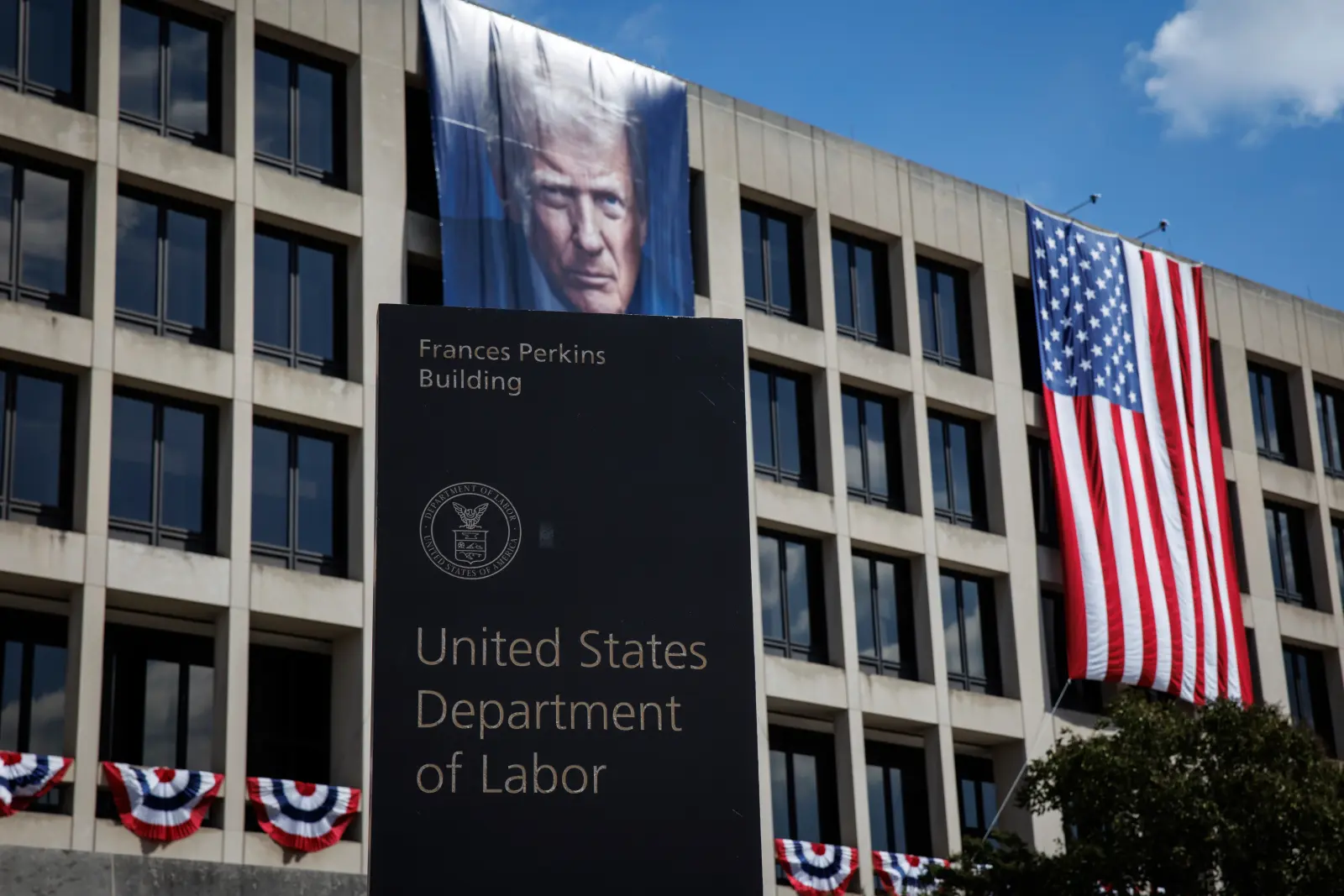
While the government shutdown has postponed official reports on the health of the jobs market, economist Mark Zandi believes nongovernment data shows that the labor market continues to be on weak footing.
In a series of posts on X, the chief economist for Moody’s Analytics warned that delays to government data, in particular the nonfarm payrolls report from the Bureau of Labor Statistics (BLS), had created “a serious problem for assessing the health of the economy and making good policy decisions.”
“But the private sources of jobs data are admirably filling the information gap, at least for now,” he added. “And this data shows that the job market is weak and getting weaker.”
Why It Matters
While private reports provide useful estimates, official Labor Department readings are critical—“There is no more important economic data,” as Zandi wrote—for policymakers at the Federal Reserve. Members of the central bank’s Open Market Committee rely on these data points to gauge the health of the labor market and the appropriate monetary policy to navigate weaknesses and resurgent fears over inflation.
What To Know
The BLS nonfarm payrolls report, which was due on October 3, has been delayed amid the ongoing government shutdown. The BLS is one of the Labor Department bureaus that suspends “all operations” in such circumstances, including data gathering and the publication of new reports.
Friday’s report was expected to showcase another weak period for U.S. hiring, with Trading Economics forecasting that only 50,000 jobs were added in September and unemployment holding steady at 4.3 percent. This would follow similarly weak gains of 22,000 in August and 79,000 in July, as well as a decline of 13,000 jobs in June.
According to Zandi, things may have been even bleaker last month than consensus forecasts suggest, based on his analysis of adjacent data from Revelio Labs, a workforce intelligence platform, and the National Employment Report published monthly by ADP Inc.
Revelio, which scrapes career networking sites to estimate job growth, estimates that the U.S. economy added about 60,000 jobs in September—with strong gains in the education, health services and retail sectors pared by declines in leisure and hospitality.
Zandi said of the 60,000 added jobs, “Even this paltry gain likely overstates things, as Revelio’s data has been revised significantly lower as of late, as more data comes in.”
Meanwhile, ADP’s employment report estimated that private sector employment fell by 32,000 jobs in September. Nela Richardson, the firm’s chief economist, said the figure “further validates what we’ve been seeing in the labor market, that U.S. employers have been cautious with hiring.”
While Revelio believed that combining ADP’s estimates with its own meant the BLS “would likely have reported approximately 38 thousand jobs gained in September,” Zandi said his own analysis suggested “that there was essentially no job growth during the month.”
He said his conclusion was backed up by the difficulties many Americans reported in finding employment. The Conference Board’s latest survey of consumer confidence found that 26.9 percent of consumers believed jobs in the U.S. were “plentiful” in September, down from 30.2 percent in August. An unchanged 19.1 percent described jobs as “hard to get.”
What People Are Saying
Mark Zandi, the chief economist at Moody’s Analytics, wrote on X: “The federal government shutdown hit home last Friday when the shuttered Bureau of Labor Statistics failed to release the September jobs numbers. There is no more important economic data, particularly now, when the job market is sputtering and the Federal Reserve is a few weeks from another meeting when it must decide whether to continue cutting interest rates. The #BLS has done all the work putting the data together—the jobs report sitting on the proverbial shelf set to be released—but the shutdown forestalled this.”
The Bureau of Labor Statistics told Newsweek last week: “Due to the federal government shutdown, the Bureau of Labor Statistics (BLS) will suspend data collection, processing, and dissemination. … Once funding is restored, BLS will resume normal operations and notify the public of any changes to the news release schedule on the BLS release calendar.”
Mark Hamrick, a senior economic analyst at Bankrate, told MarketPlace that private data points such as ADP’s “are very consistent with what we’ve been seeing otherwise, and that is, this is a low-hire, low-fire job market.”
He wrote on LinkedIn: “Markets and policymakers were hoping for confirmation on whether the labor market was cooling gradually or slowing more sharply. That answer is delayed, and the timing could not be worse.”
What Happens Next
Should the government shutdown extend into next week, the Labor Department’s September inflation report could also be delayed, further adding to the Federal Reserve’s uncertainty in the lead-up to its late-October meeting.
According to the contingency plan published last week by the Department of Labor, “all active data collection activities for BLS surveys will cease” during a shutdown, which would also lead to a “reduction in [the] quality of data collected.” Bankrate’s Hamrick said this could disrupt even October’s jobs report, “as survey collection is scheduled to take place around October 12.”