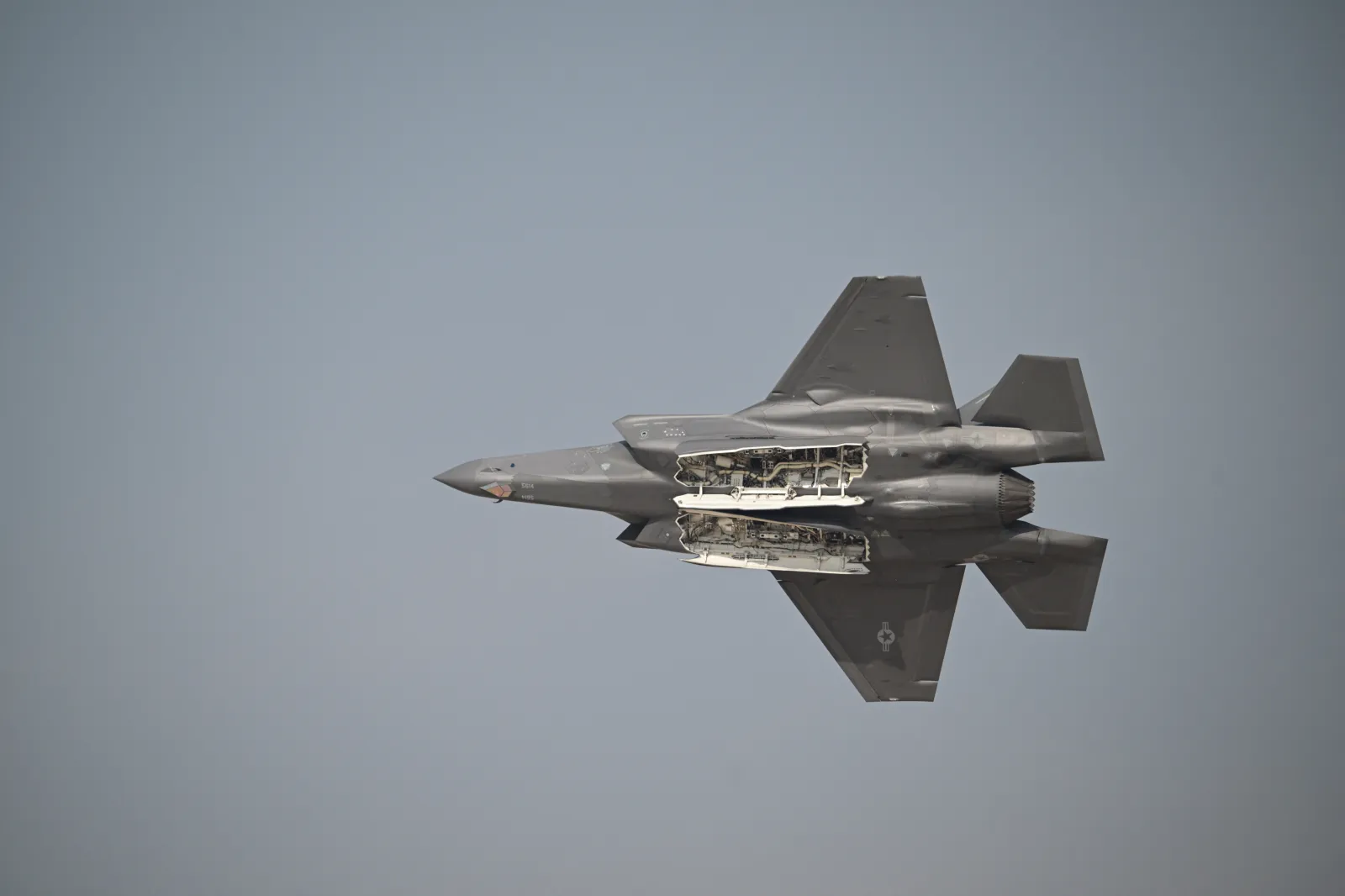
The U.S. has reiterated that Turkey must give up the S-400 missile defense system it purchased from Russia to be eligible for the acquisition of advanced F‑35 fighter jets.
“As laid out in U.S. law, Turkiye must no longer operate nor possess the S-400 system to return to the F-35 program,” U.S. Ambassador to Turkey Tom Barrack wrote in a statement on his X account. Turkish President Recep Tayyip Erdogan has been discussing the issue with President Donald Trump for months.
Why It Matters
Turkey had intended to buy at least 100 U.S.-made F‑35s and was one of the eight original partner nations involved in the jet’s development and industrial production. Despite U.S. warnings, Turkey signed a deal with Russia in 2017 to acquire the S‑400 air‑defense system and began receiving the first shipments of the system in 2019, prompting the U.S. to remove Ankara from the F‑35 program.
U.S. officials view the S-400 as a security risk that may reveal sensitive information about the F‑35 in terms of detection and data collection. Barrack’s statement aligns with the administration’s unchanged policy on the long-discussed issue of Turkey’s potential return to the program.
Turkey, a NATO ally, has emerged as a strong military power, accelerating an ambitious indigenous program of advanced weapons production, diversifying its capabilities and seeing a boost in defense exports.
What To Know
The Trump Administration removed Turkey from the F-35 Joint Strike Fighter program in July 2019. The White House said at the time that the Russian S-400s threaten the jet’s advanced capabilities and undermines NATO interoperability, though it stressed that Turkey remains a valued ally and partner.
Barrack made similar comments earlier this week, saying Ankara could resolve remaining issues over its Russian S-400 air defense system within four to six months, according to media reports.
In October, Turkey signed a deal to purchase 20 Eurofighter Typhoon fighter jets and plans to acquire more to replace its aging F-16 fleet while awaiting clarity on the possibility of obtaining F-35 aircraft. Turkey is also developing its own Kaan fighter jet, a decision accelerated by its removal from the F‑35 program.
“I hope the promises given will be fulfilled, and we will gain strong capabilities with the F-35s,” Erdogan said in November, confirming talks were going in a positive direction, according to outlet Turkiye Today.
What People Are Saying
President Donald Trump told Politico’s Dasha Burns in an interview released Tuesday: “I mean, there are countries that are difficult for NATO. Not that they shouldn’t be. I think it’s good to have them. Turkey’s an example. Erdoğan is a friend of mine… He’s a tough cookie. I actually like him a lot… But they have a hard time dealing with him, and they ask me to call him… But you know, they shouldn’t really have a hard time with him.”
U.S. Ambassador to Turkey Tom Barrack wrote on X Tuesday: “The positive relationship between President Trump and President Erdogan has created a new atmosphere of cooperation, which has led to the most fruitful conversations we have had on this topic in nearly a decade. Our hope is that these talks will yield a breakthrough in the coming months that meets both the security requirements of the United States and Türkiye.”
Can Kasapoğlu, senior fellow at the Hudson Institute wrote in an Atlantic Council analysis in November: “The Eurofighter Typhoon is not the F-35. The combat aircraft lacks low observability. Thus, combat-deploying the Eurofighters in heavily defended airspace would require very careful planning, intensive electronic warfare support, and coalition enablers.”
What Happens Next
The Eurofighter can serve as Turkey’s industrial bridge amid the gap between not having the F‑35 and the slow rollout of its Kaan multirole jet.