Walk down the grocery aisles and you might find yourself wondering: Are today’s soda drinkers looking for indulgence or function?
Well, the beverage market is figuring, why not let them have their pop and drink it too?
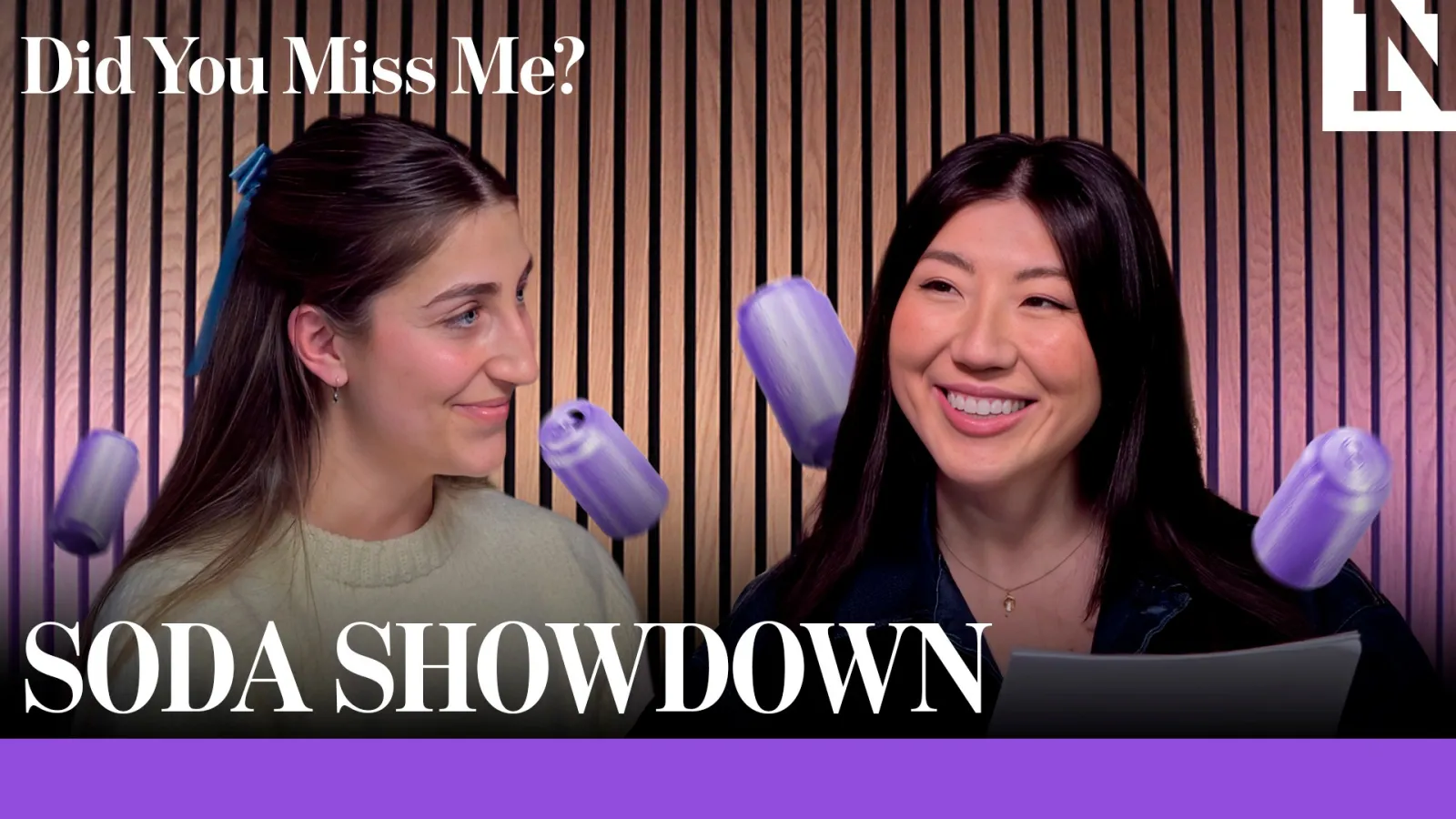
“We used to see these trends where you would have different phases, where things would be in fashion, they’d fall out of fashion, they’d come back,” Katherine Fung, a senior reporter at Newsweek, said on the latest episode of the podcast Did You Miss Me?
“But because [our] culture is so fragmented now, we see both clean and healthy sodas being popular, but also these really indulgent and gluttonous dirty sodas,” she said.
While young people once celebrated reaching the legal drinking age with beers and vodka, Gen Z is turning away from the bottle and toward fizzy options—both “better-for-you” beverages as well as cream-filled and syrup-loaded drinks.
A 2024 survey from consumer insights group Suzy found that 65 percent of Zoomers are open to switching from alcoholic beverages to non-alcoholic options, compared to just 35 percent of Gen X and 25 percent of Boomers.
“What else are you drinking if you’re not drinking alcohol?” Mandy Taheri, a culture and politics reporter at Newsweek, asked on the episode.
Taheri and Fung discussed the medicinal roots of soda on the newest edition of Did You Miss Me?, as well as how the Mormon women of #MomTok put the internet onto dirty sodas and why some brands are bringing back limited editions of their defunct flavors.
Where to Listen to Did You Miss Me?
You can stream the podcast on Spotify or Apple Podcasts.
Watch Here: Did You Miss Me? Podcast Full Episode
What Is Dirty Soda?
Because members of the Church of Jesus Christ of Latter-day Saints abstain from alcohol and coffee, the Mormon community in Utah has turned to dirty sodas as a drink alternative.
These customizable beverages are typically made by adding flavored syrups and coffee creamer to a soda base, like Dr Pepper or Coke.
Dirty sodas gained mainstream popularity thanks to the Hulu reality series The Secret Lives of Mormon Wives, which features the Utah-based soda shop, Swig.
Ahead of their time in Newsweek‘s recording studio, Taheri and Fung took a trip to Cool Sips in New York City to try a dirty soda firsthand.
The Nostalgia Factor
“[Gen Z is] nostalgic driven in a way,” Taheri said. “So, this is sort of like bottling up flavors of childhood, indulgent life and it’s just refabricating it for today’s world.”
Several brands have brought back limited-edition flavors to make a nostalgic appeal to younger consumers, while others, like Stiller’s Soda, have created a new category that focuses exclusively on nostalgia.
“It’s almost like [soda] surpassed milkshakes as that Americana drink,” Fung said.
Can Soda Be Healthy?
Soda’s history dates back to the early 1800s, when pharmacists began mixing carbonated water with herbs as a form of medicine.
Dr Pepper, which is the oldest major soft drink in the U.S., was created by a pharmacist in Waco, Texas, in 1885, and used the slogan “Drink a Bite to Eat at 10, 2 and 4” to suggest that the soda served as an energy-boosting snack. Coca-Cola, which was originally marketed as a nerve tonic and brain booster, was first sold at Jacobs Pharmacy in Atlanta, Georgia, in 1886.
Despite those alleged health ties, widespread concerns about soda links to obesity, diabetes and disease peaked more than a century later, in the 2000s and 2010s. In an effort to combat obesity, former New York City Mayor Michael Bloomberg proposed a “soda ban” to cap sugary drinks at 16 oz across the city’s venues.
But in 2015, entrepreneur Allison Ellsworth began selling homemade apple cider vinegar drinks at farmers’ markets in Austin, Texas. After Mother Beverage, as it was initially named, appeared on Shark Tank, it rebranded as Poppi. The brand surged in popularity and was later acquired by PepsiCo for $1.95 billion.
Poppi led the way for other functional beverage brands like Olipop, Culture Pop, Bloom Pop and Cove to come onto the market, and seemingly deliver on the health promises of the soda brands from the 1800s. Keurig Dr Pepper’s “State of Beverages 2025” report found that over 50 percent of consumers expressed interest in trying drinks with probiotics, prebiotics or fiber. There were also nearly 60 percent saying they were interested in drinks with added protein.
The recent craze around protein has largely been driven by the popularity of GLP-1s. As of 2025, 12 to 18 percent of American adults report having used the drug. In response, doctors have advised patients to focus on maintaining muscle mass while losing weight. Earlier this year, the Dietary Guidelines of Americans also raised its recommended protein intake to reflect that.
“If you’ve been in a grocery store, every single thing you can buy has added protein in it,” Fung said. “They actually now recommend 1.2 to 1.6 grams of protein per kilogram of body weight, which is 100 percent more than what they were previously recommending.”
Watch the full conversation between Taheri and Fung in the video player above or on YouTube. You can also stream the podcast on Spotify or Apple.
Um die besten Erfahrungen zu bieten, verwenden wir Technologien wie Cookies, um Geräteinformationen zu speichern und/oder darauf zuzugreifen. Wenn Sie diesen Technologien zustimmen, können wir Daten wie das Surfverhalten oder eindeutige IDs auf dieser Website verarbeiten. Die Nichteinwilligung oder der Widerruf der Einwilligung kann bestimmte Merkmale und Funktionen beeinträchtigen.
Functional
Always active
The technical storage or access is strictly necessary for the legitimate purpose of enabling the use of a specific service explicitly requested by the subscriber or user, or for the sole purpose of carrying out the transmission of a communication over an electronic communications network.
Preferences
The technical storage or access is necessary for the legitimate purpose of storing preferences that are not requested by the subscriber or user.
Statistics
The technical storage or access that is used exclusively for statistical purposes.The technical storage or access that is used exclusively for anonymous statistical purposes. Without a subpoena, voluntary compliance on the part of your Internet Service Provider, or additional records from a third party, information stored or retrieved for this purpose alone cannot usually be used to identify you.
Marketing
The technical storage or access is required to create user profiles to send advertising, or to track the user on a website or across several websites for similar marketing purposes.