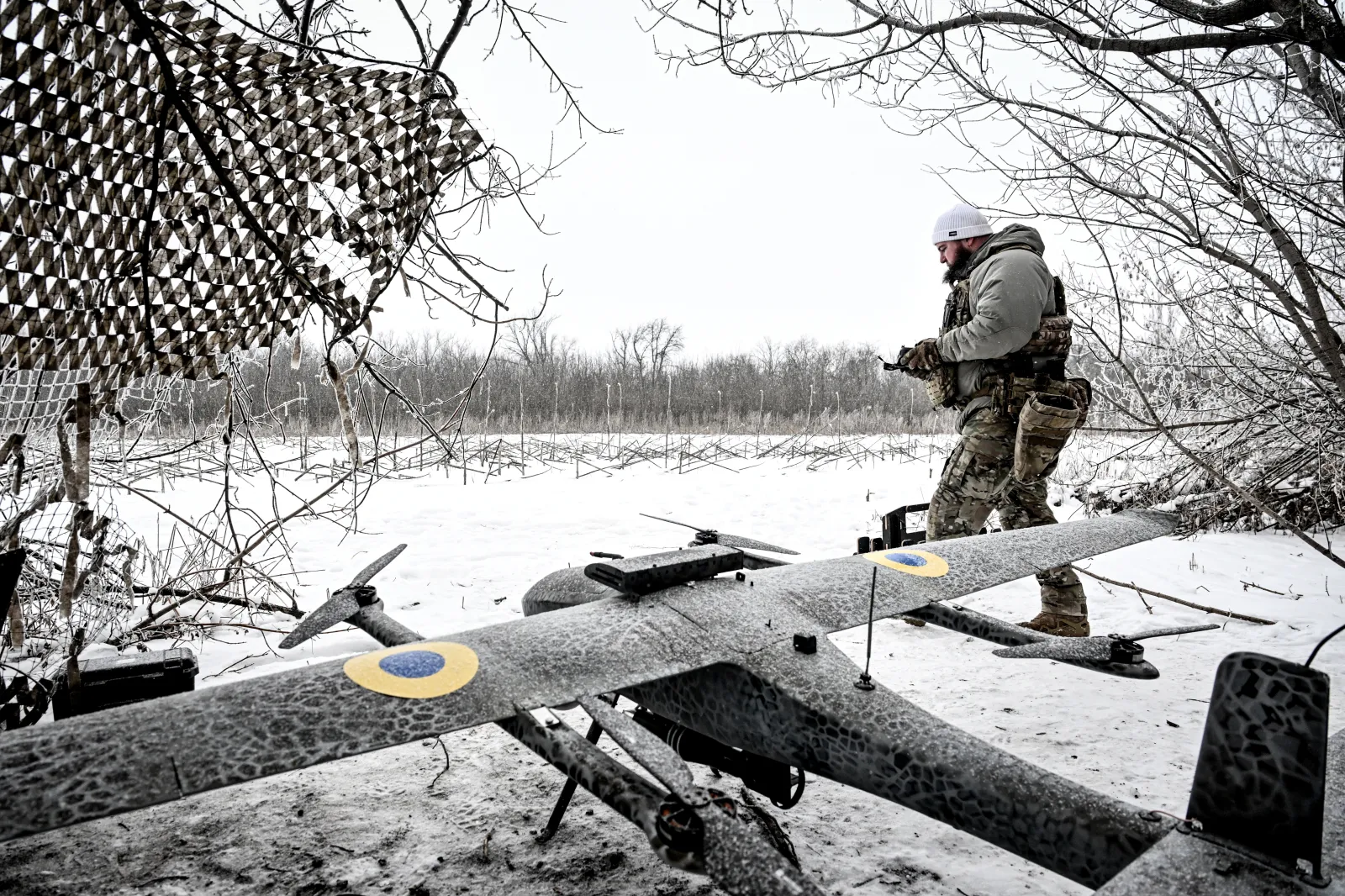
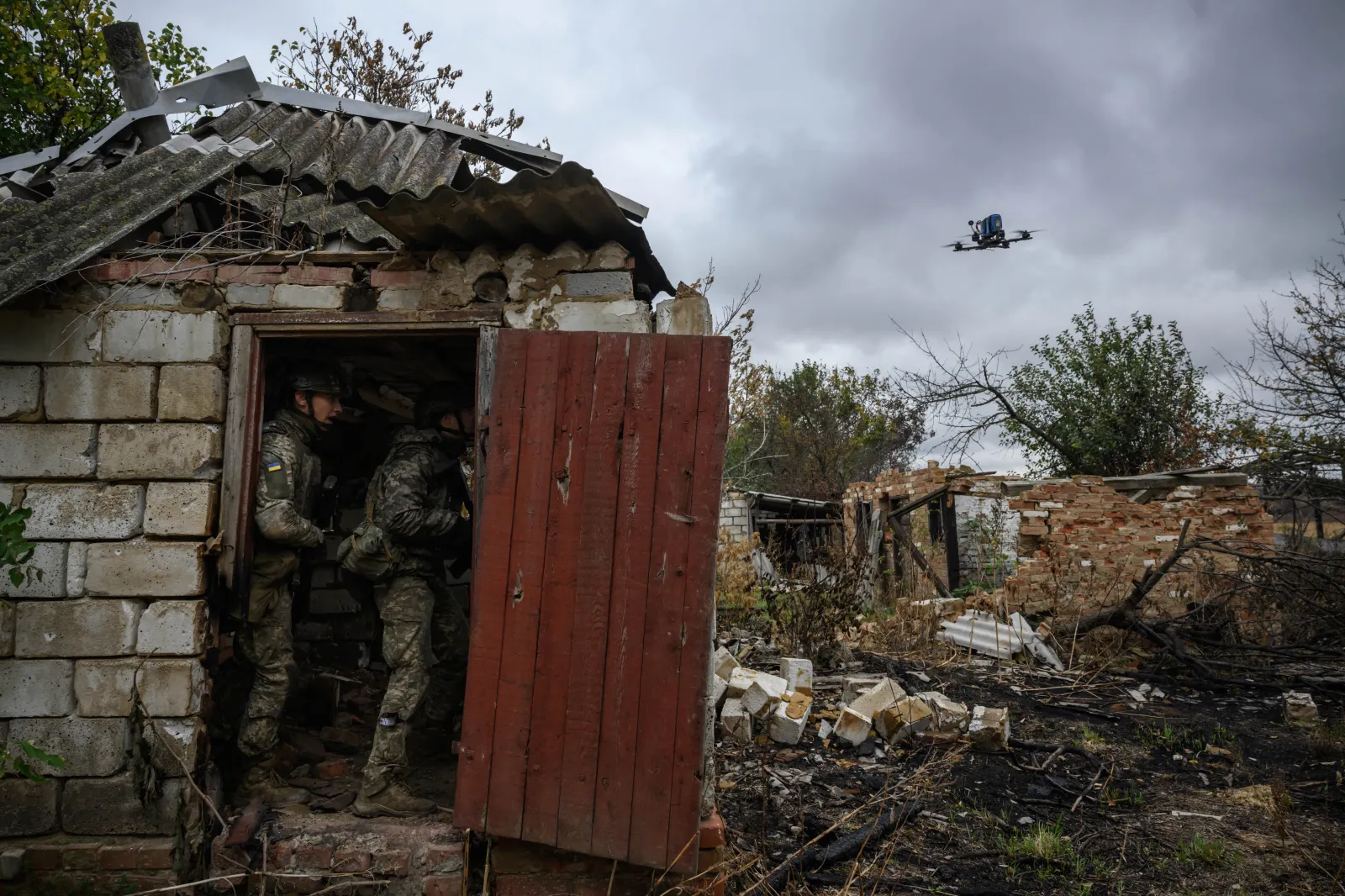
Looking up above Ukraine’s snaking front lines, some drones zip toward far-away targets while others hover lower— buzzing right above the heads of soldiers on the contact line, searching for their next target.
“There is constant activity in the air almost everywhere,” says one Ukrainian soldier on the front line. He declined to provide his name or any details about where he’s been deployed, as he was not authorized to speak.
But real-life Star Wars, he says, is “unfolding right now.”
Drones, or unmanned aerial vehicles (UAVS), have arguably become the best-known characteristic of the Russia-Ukraine war now entering a fifth year.
UAVs are responsible for 80 percent of Ukrainian strikes on Russian targets, Ukrainian President Volodymyr Zelensky said earlier this year. Most of these drones are made inside Ukraine, with factories working flat out to keep soldiers supplied.
The drones are a central part of Ukraine’s strategy—indeed, the fresh-faced new defense minister, Mykhailo Fedorov, is a former drone czar. On land, in and on the water plus in the air, Ukraine has developed them all. But for the most part, Russia has never been far behind.
As such, the front lines weaving through eastern and southern Ukraine have been largely stuck since Russia’s initial incursion in 2022. They have barely moved in years, chewing up lives and vast stocks of military equipment for incremental Russian territory gains.
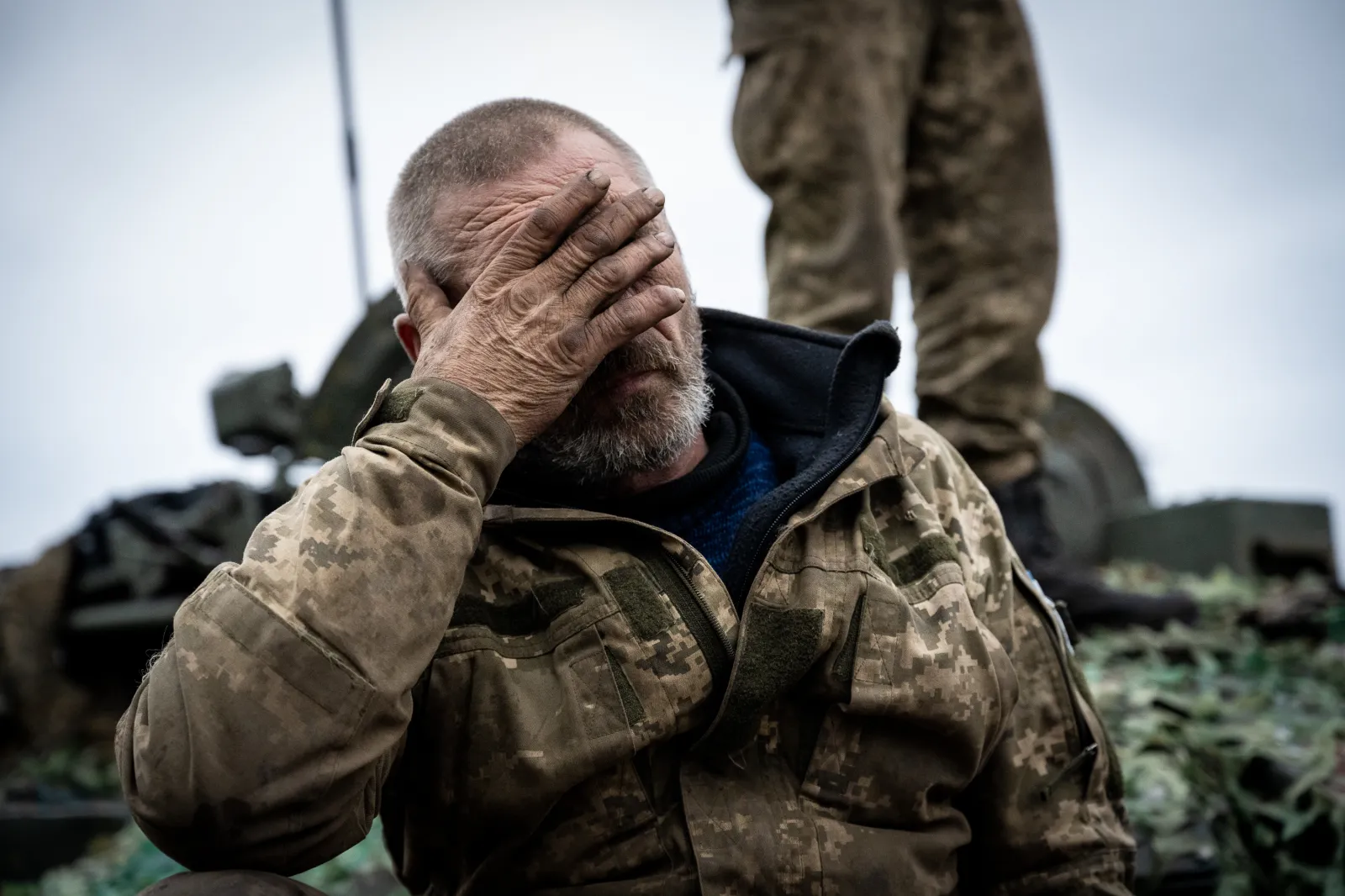
It’s what analysts and soldiers call an attritional war. The idea is that one side will try to grind away at the other, destroying its capabilities and morale bit by bit. Characterized by mass casualties and an insatiable hunger for hardware, it is warfare that purchases bites of territory at a sky-high price.
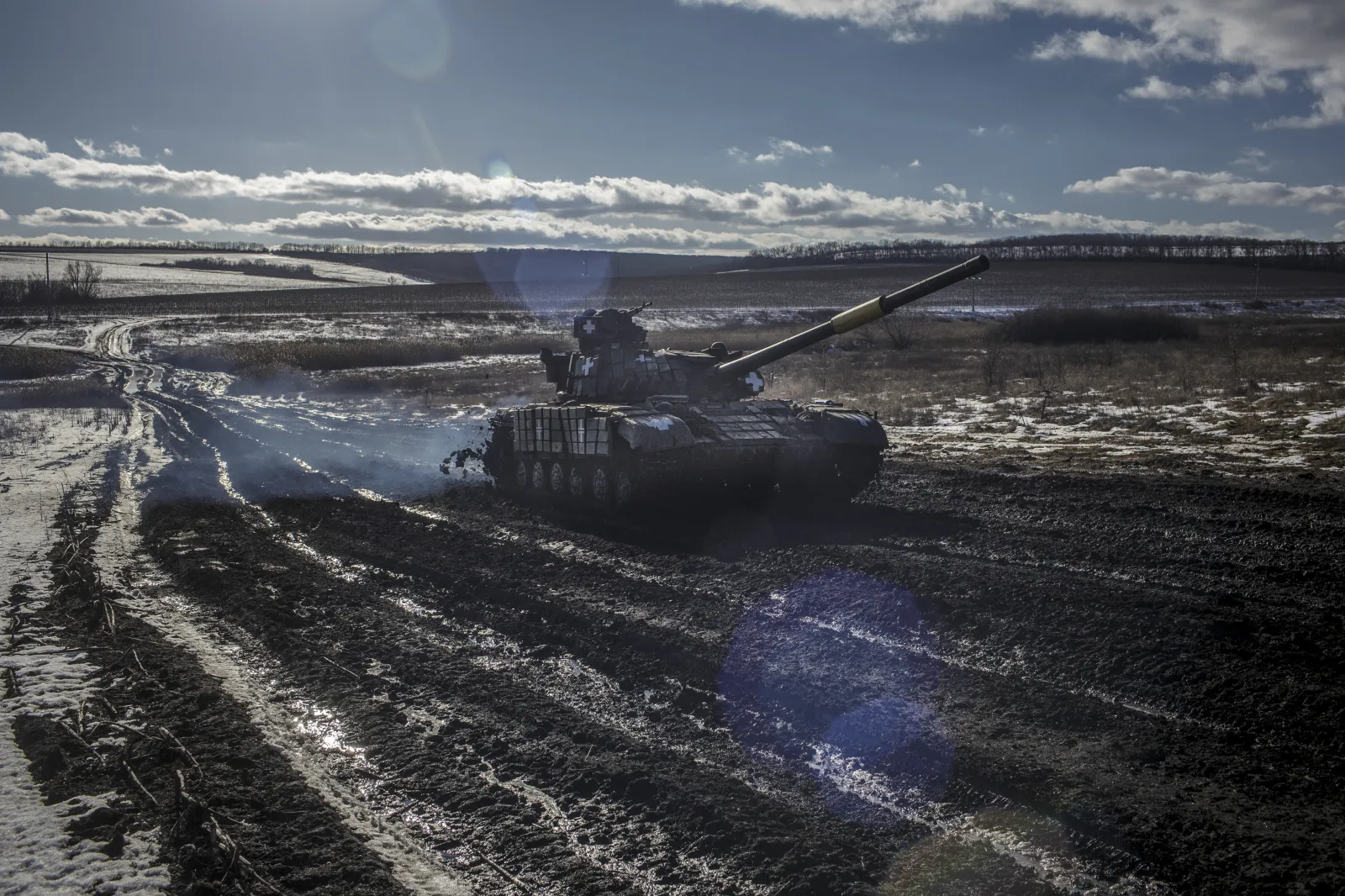
Photographs of tanks mired in mud and soldiers peeping up from trenches in Ukraine’s east resurrect the ghosts of the four years of fighting in World War I.
About nine million soldiers from a host of countries died in the bloodshed from 1914-1918. Russia’s 1.2 million casualties, based of Ukrainian estimates, are still a way off this horrifying statistic. Ukraine’s casualty count is harder to come by but is thought to be roughly half of Russia’s.
Yet the parallels are there and the years of shuffling advances are a far cry from the Kremlin’s hopes of capturing Ukraine in just days, after it launched its full-scale invasion four years ago today.
The Early Phase
The first months of the war were a different story. Before February 2022, Russia controlled Crimea—the peninsula to the south of mainland Ukraine that Moscow annexed in 2014—and backed separatists in Ukraine’s eastern Donetsk and Luhansk regions. Collectively, they’re known as the Donbas, Ukraine’s former industrial heartland.
The initial assault from February 2022 handed Russia rapid wins. The Kremlin quickly gained control of vast swathes of the south, including key cities like Kherson and Melitopol. It seized Enerhodar, the purpose-built city in Ukraine’s southeastern Zaporizhzhia region that houses Europe’s largest nuclear power plant. Mariupol, initially a beacon of Ukrainian defiance on the Black Sea, fell to Russia in May 2022.
Russia also hoovered up territory in the Donbas, in the northeastern Kharkiv region and to the north of Kyiv. Tens of thousands of troops headed for the Ukrainian capital and became embroiled in weeks of battles in its suburbs. Reports emerged of mass graves being dug.
Ukraine was in trouble in the Donbas then, too. Though kitted out with enough artillery systems, troops had no ammunition to fire at Russian forces, said Nick Reynolds, a research fellow for land warfare at British think tank Royal United Services Institute.
Just a month into its full-scale invasion, Russia controlled almost 27 percent of Ukrainian territory—about 161,905 square kilometers (62,500 square miles) of land, according to calculations by the U.S.-based Institute for the Study of War. This included the seven percent that Moscow had taken over in 2014 in Crimea.
But Ukraine soon hit back, beginning its most effective counteroffensive of the war.
The vaunted American-made HIMARS— High Mobility Artillery Rocket Systems—arrived by June 2022 and set the conditions for Russia’s positions to collapse around the north-eastern city of Kharkiv, Reynolds said.
By September, Kyiv’s troops had retaken Kupiansk, a strategic rail hub east of Kharkiv City, and Izyum, south of Kupiansk.
Russia was then forced to retreat from Kherson City in November 2022 and camp out on the left bank of the Dnieper River while Ukrainian troops stared at them from the river’s western edge.
Ukraine retook more than 56,900 square kilometers (about 22,000 square miles) of territory in that massive counteroffensive, said the ISW’s Kateryna Stepanenko, a Russia specialist. By the end of that year, Russia held 17.84 percent of Ukraine, she said.
Much of 2023 was then carried by Ukraine’s continued rollback of the front lines. There was what would be an ultimately doomed mission to establish a Ukrainian foothold in Krynky, a village east of the Dnieper.
But since then, neither Ukraine nor Russia have been able to make the advances that defined the first year of the full-scale war.
Ukraine Settles In for the Long Haul
There have been small changes in pockets close to the Ukrainian border with Russia, namely during Kyiv’s brief but punchy incursion into Kursk from August 2024 until March 2025.
Russia has also taken territorial nibbles out of the Kharkiv border area and over into Dnipropetrovsk.
Months of fighting ended in Russia capturing the Donetsk city of Bakhmut in May 2023, a victory announced not by officials in Moscow but by former Kremlin henchman Yevgeny Prigozhin—the head of Russia’s Wagner mercenary outfit. His glory was brief; his leadership of a botched, anti-Kremlin rebellion the next month ended with his death in an aircraft accident in August 2023.
Avdiivka was next to crumble. Russia concentrated on the city from October 2023 and finally pushed Ukraine out in February 2024. Capturing Avdiivka was a strategic and symbolic victory for Moscow, with Russian troops raising flags in the former Ukrainian stronghold that weathered a decade on the front lines.
Avdiivka, like Bakhmut before it, became a “meat grinder”. More Russian lives were fed into the tough urban fight for Avdiivka than Soviet soldiers were killed in Moscow’s war in Afghanistan, experts said.
The months of defending the city cost Ukraine dearly, too. Similar stories played out in Chasiv Yar, west of Bakhmut, and around Pokrovsk, the once-essential logistics hub that has been pummeled by more than a year and a half of attacks.
One Million Russian Deaths for One Percent Gain
From the end of 2022 to the start of February 2026, Russia seized 1.55 percent of Ukrainian territory, Stepanenko said. Moscow currently holds just under 20 percent of Ukrainian soil.
By Ukraine’s numbers, Russia has sustained 1,136,350 casualties from the beginning of 2023 to February 4, 2026.
While accurate tallies are very hard to come by and should be taken with a grain of salt, Western estimates often cite Kyiv’s figures.
If right, Russia has lost on average 121 troops for each square kilometer (about .39 sq. miles) gained in this period, Stepanenko said.
In 2022, Russia’s first push propelled it to reach an average rate of advance of 210 square meters (2,260 sq. ft.) per day, according to the ISW assessments. This fell to 1.2 square meters (about 13 sq. feet) per day in 2023, and 9.8 square kilometers (3.8 sq. miles) in 2024. Throughout 2025, Russia inched forward by an average of 13.2 square kilometers (5.1 sq. miles) a day, Stepanenko said.
This type of attrition was “inevitable,” Reynolds told Newsweek. “It’s very, very difficult to conduct offensive operations in the way that we had conceived of in the past,” he said.
In a war where cheap systems like drones are so widely used and troops are constantly replaced, “even where there is battlefield success, battle by battle, neither side can exploit or reinforce success, and therefore they lose momentum,” Reynolds said.
Both Kyiv and Moscow also have effective air defenses that make the front line “suicidally dangerous” for aircraft and even areas close to it deeply unappealing, he added.
And what one army has done, the other has been quick to replicate. Drones and the corresponding anti-drone technology, like electronic warfare, are just one part of the “technological arms race” Russia and Ukraine are running, Reynolds said.
Since 2024, Russia’s most prominent offensives have advanced slower than the most brutal campaigns of almost any war over the last century, according to a January report by the Center for Strategic and International Studies think tank.
It added that as many as 325,000 of Russia’s troops had been killed since February 2022, and that its battlefield fatalities were more than five times greater than all Russian and Soviet wars combined since World War II.
No major power has suffered anywhere near these numbers of casualties or fatalities in any war since then either, per the CSIS report.
Europe’s Best Equipped Army
Ukraine now produces more drones, electronic warfare equipment and intelligence kit than it buys domestically, Rustem Umerov, secretary of the country’s National Security and Defense Council, said on February 12. Its defense production exceeds $55 billion, he said.
Days earlier, Zelensky had said Ukraine would open 10 weapons export centers in Europe by the end of the year. The first export licenses have already been granted.
But its value lies in its soldiers, too. While Kyiv has leaned heavily on Western support to prop up its war effort—albeit less so in recent years—it has been Ukrainian personnel collecting battlefield experience and operating cutting-edge technology that Kyiv’s backers have never had to use in a similar way.
Ukraine now has ample expertise in large-scale land operations and how to maintain an extensive air defense network that European NATO states do not have, David Blagden, an associate professor of international security and strategy at the U.K.’s University of Exeter, told Newsweek last year.
Although many Ukrainian troops have trained abroad, it’s common to hear top soldiers from NATO countries describing tactics its own forces have learned from Ukraine’s battlefields.
Strategy has become a mix of Soviet-inherited doctrine and NATO’s fighting style, a reflection of the physical hardware at Ukraine’s disposal.
The end of the story is still yet to be written. Rounds of U.S.-brokered peace talks in the United Arab Emirates have produced only public assurances that progress is slowly being made, not ink on a page.
U.S. President Donald Trump’s loud promise to end the war in just 24 hours when he returned to office last year quickly faded away, negotiations become grinding, much like the fighting still playing out in the background.
Meanwhile, the rest of the world is watching closely—if, perhaps, not attentively enough for some. Ukraine’s backers are still clinging to their old ways of waging war, the Ukrainian soldier deployed on the front lines said, “while the reality on the battlefield has already changed fundamentally.”