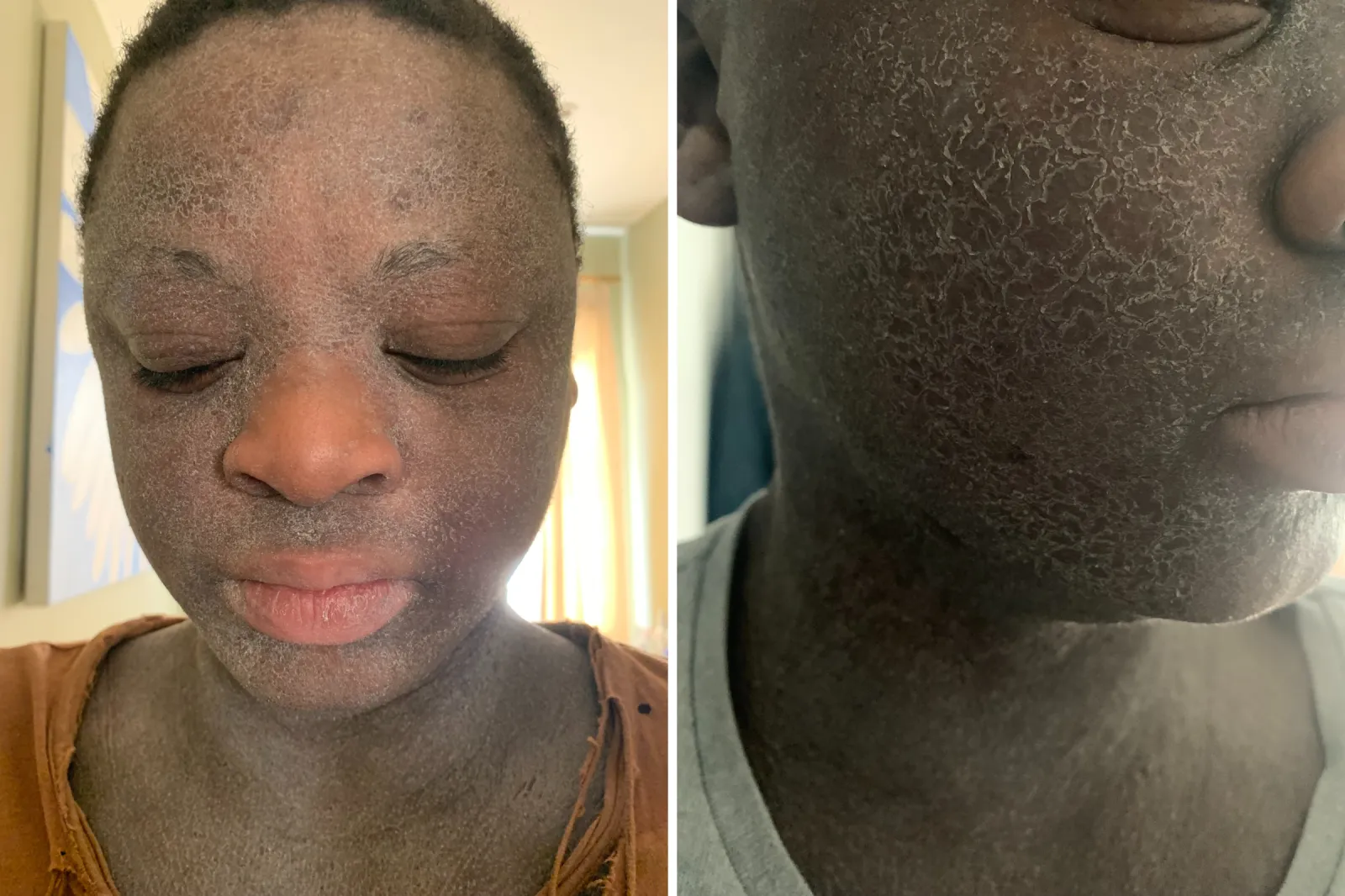
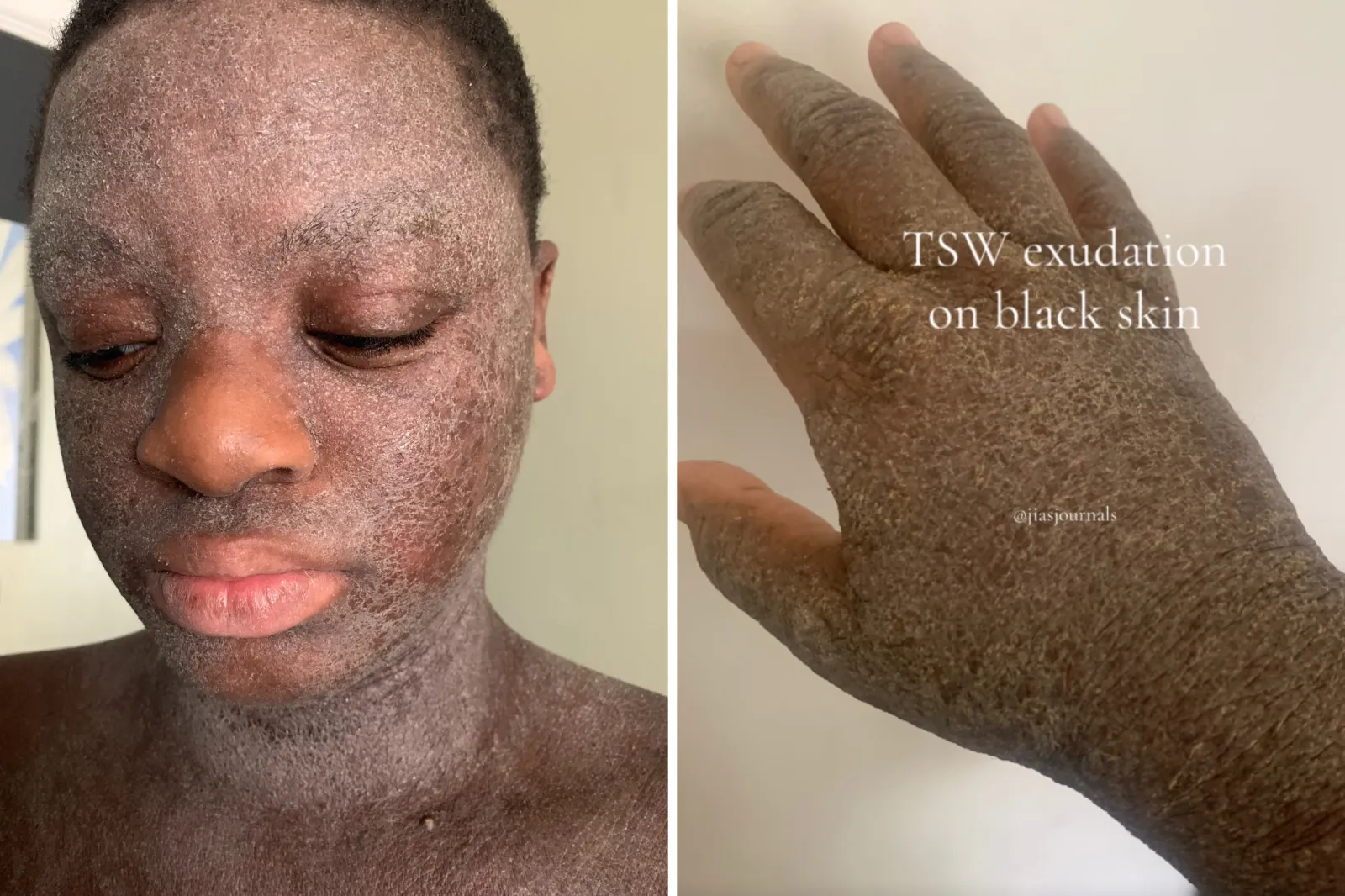
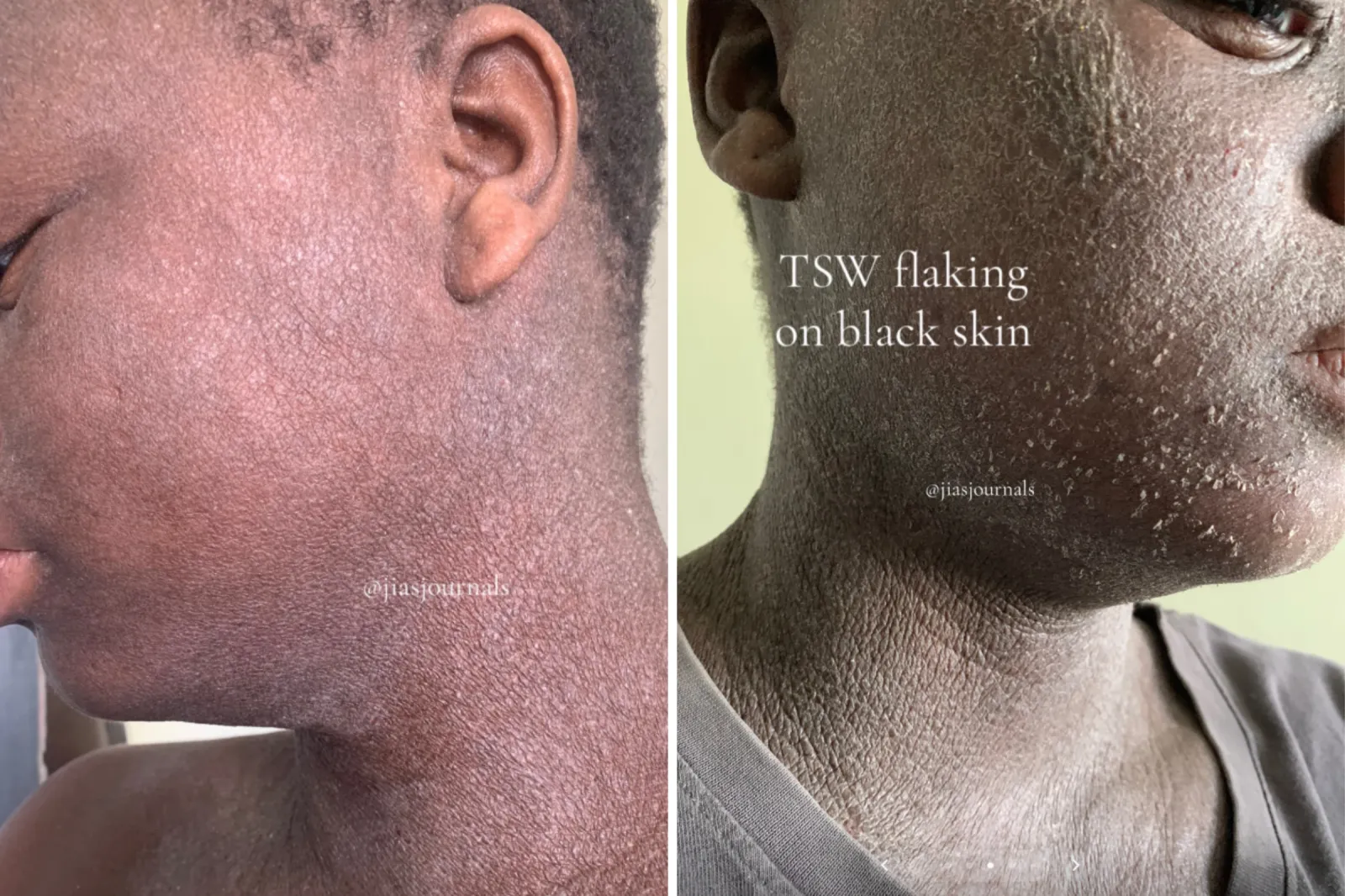
A woman who was prescribed steroid creams for eczema when she was just 2 years old has documented the pain of what living with topical steroid withdrawal (TSW) looks like.
Jia Patrick has suffered from eczema for as long as she can remember, having spent more than 16 years using topical steroids to treat it. She was around 2 when she was first prescribed steroid creams, and they became a prominent option throughout her childhood.
While the steroids would sometimes help, Patrick, 23, told Newsweek that, every time she finished the cream, her eczema would return “with a vengeance.” It became even itchier, flakier and more painful than when she started.
By 2019, Patrick, from the U.K, became far more aware of the negative effects the steroids were having. By that point, she was a teenager with more understanding of her body and wanted to make a change.
“I experienced a burning sensation upon every application, which prompted me to look into the efficacy of using topical steroids for eczema,” Patrick said. “I remember seeing an infographic outlining the side effects of topical steroid creams for skin conditions including eczema, with the title ‘topical steroid withdrawal,’ a term I had never heard before.”
After doing a small amount of research, Patrick stopped using all topical steroids to treat her eczema. Upon learning about TSW, she was concerned about further health implications—not realizing that, by suddenly stopping all use, her skin would suffer, nonetheless.
Just one week after she quit using all steroid creams, Patrick experienced symptoms that she now realizes were the early signs of TSW. “I had no idea how severe the symptoms would be. My face became red, and I began developing dark, thick patches that were rapidly spreading from the inner folds of my arms,” she said.
What Is Topical Steroid Withdrawal?
Topical steroids are applied directly to the skin to reduce inflammation and speed up healing. While they are used to help with itching and soreness, they aren’t a cure for eczema. When a person stops using steroids for their skin, they may experience the painful effects of TSW.
The National Eczema Society says that symptoms of TSW include a burning sensation, flaking, shedding, peeling skin, swelling in affected areas, redness of the skin, thin skin, hair loss, shivering, fatigue and depression.
The condition appears to be associated with prolonged use of topical steroids and is more commonly seen among adult women who apply mid- or high potency corticosteroids. There is no clinical diagnosis for TSW yet, but the National Eczema Society adds that the standard approach is to stop using the steroids and allow skin to heal.
Living With the Condition
After Patrick developed painful and inflamed patches on her arms, they spread all over her body. They weren’t just in places she had experienced eczema or applied the topical creams either, as the TSW symptoms ultimately covered her body.
Patrick regularly sought advice from doctors and medical professionals, but says she was constantly “met with invalidation.” She was told on multiple occasions that she had severe eczema, and that is what she was treated for, rather than acknowledging TSW as the problem.
“One of the most alarming things is that TSW spread to areas where I have never had any skin issues before or applied any steroid creams,” Patrick said. “I also experienced incessant peeling of the skin on my face, a truly harrowing experience.
“Due to the severity of symptoms, there were periods when I was unable to bathe, take myself to the loo and even struggled to eat or blink. The pain that accompanies the physical symptoms is excruciating,” she continued.
It wasn’t just the physical side effects either, as Patrick’s mental health suffered enormously. She didn’t know how long she was going to feel this way for, and she didn’t feel listened to by her doctors. As the months turned into years, she felt frustrated, hopeless and isolated.
Patrick completed a phototherapy treatment to help her body heal, but that didn’t seem to have any effect. The only time she noticed improvement was when she tried ultra-cold atmospheric plasma therapy, which uses ionized gas to deliver energy to the skin. Now, Patrick is focusing on a healthy lifestyle, prioritizing whole foods, hydration and stress management to let her body heal from within.
“At the beginning of 2025, I thought I had gone through the worst of it and was becoming hopeful. However, in spring, I began experiencing the worst flare-up I have ever had that left me bedbound for weeks,” Patrick said.
Patrick started sharing her experience on social media (@jiasjournals on TikTok) to document the reality of TSW and connect with others. Friends and family were constantly supportive, but Patrick knew there was a community out there who would understand what she was going through on a deeper level.
Many of her TikTok posts have gone viral, which Patrick hopes will help to spread her important message of encouragement.
She said: “Do whatever you have to do to keep your sanity. TSW will be one of the most-testing things you go through, and you will certainly have low moments. I, and so many others, have been victims of NHS systemic negligence. I wasn’t born with TSW, and people must be held accountable for what they continue to do to patients.”
Is there a health issue that’s worrying you? Let us know via health@newsweek.com. We can ask experts for advice, and your story could be featured on Newsweek.