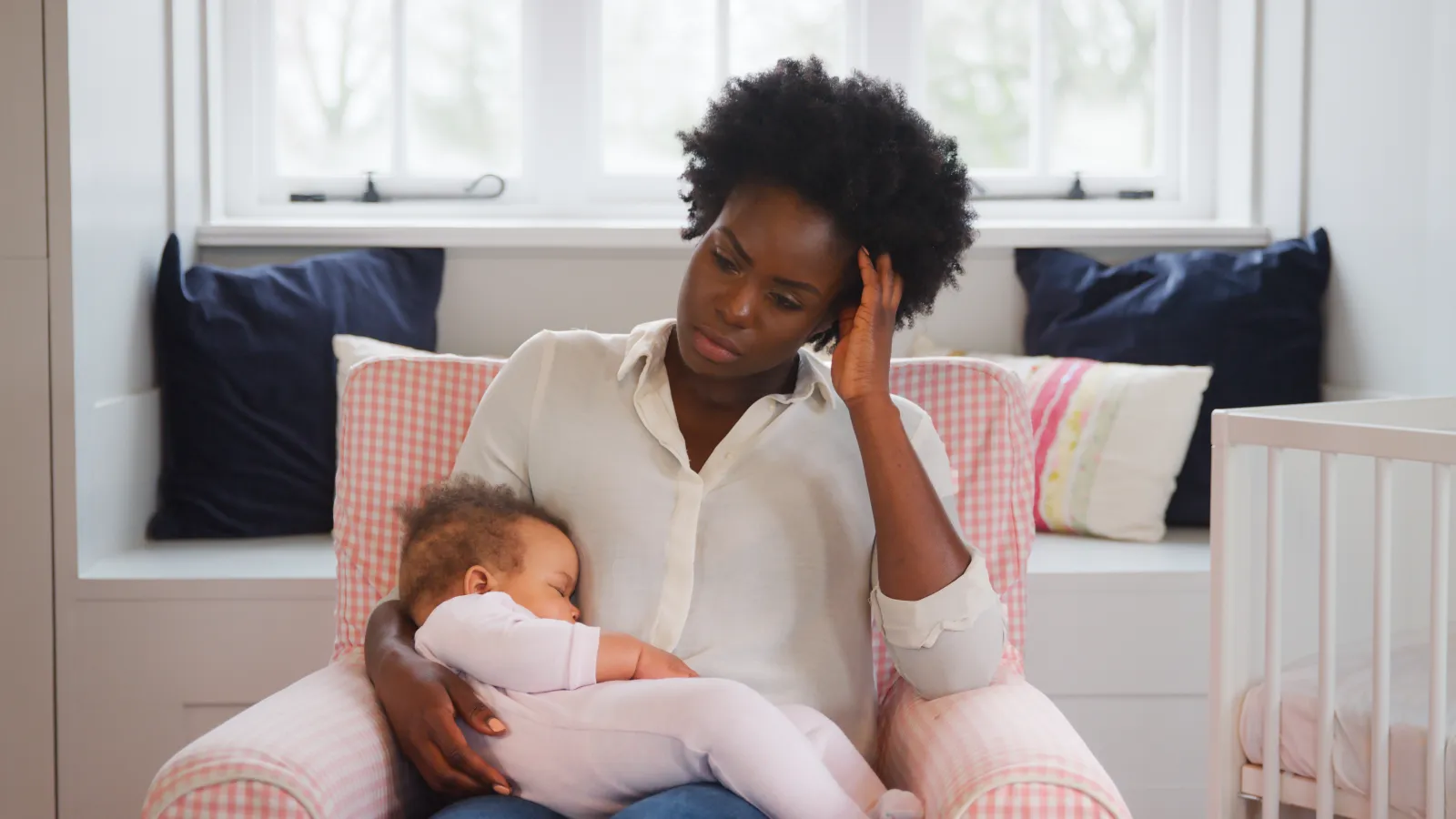
One woman’s sentence about what new mothers really need in the weeks after giving birth has sparked debate online.
In a viral post on Threads, @simonsaysvote wrote: “HEAR ME OUT: Less baby showers, more visiting a postpartum mom and holding the baby so she can shower.” At the time of writing, the post has received over 35,000 likes, comments and shares.
Newsweek reached out to @simonsaysvote Instagram direct message.
For some, the post struck a nerve. Many commenters agreed that help after the baby arrives matters far more than games, gifts and decorations beforehand.
Several mothers said practical support—not socializing—was what they craved most in the early days of recovery.
“Or let me hold my baby and you help with some dishes,” one commenter wrote. Another added that true support might look like quietly cleaning the house, doing laundry or setting up a meal without expecting conversation. “You can decide if you want to leave your room,” they said, emphasizing how overwhelming even well-meaning visitors can feel.
Others pushed back strongly on the idea of visitors holding a newborn at all. “I don’t want a bunch of people coming to my house and handling my newborn while I’m showering. No,” one user wrote.
Another explained that the postpartum period can heighten protective instincts, especially in the first weeks. She recalled feeling stressed when others held her baby, noting that her daughter cried unless held by a small circle of people.
That perspective aligns with broader conversations around postpartum mental health. Research has long shown that the weeks after birth are a vulnerable time, marked by physical recovery, hormonal shifts, sleep deprivation and an increased risk of anxiety and postpartum mood disorders.
“Postpartum depression has various complex causes, potentially involving hormonal changes, physiological and psychological stress, life changes, and genetic factors,” Renyi Liu, a researcher at the School of Physical Education at the China University of Geosciences in Wuhan, China, previously told Newsweek. “Factors such as rapid hormone level fluctuations, sleep disturbances, anxiety about new roles, and changes in personal identity can negatively impact mood.”
Yet not everyone viewed baby showers negatively. Some parents pointed out that these play an essential financial role, especially in countries like the U.S., where paid maternity leave is not guaranteed and the cost of baby essentials can be overwhelming.
“Most everything I needed was bought for me at the baby shower. I honestly only needed to buy breast pump stuff and formula on my own,” one wrote. She added that diapers, meals and community support made a tangible difference during the first month at home.
Another commenter described the opposite experience—having a baby shower sprung on her as a surprise. Standing in front of dozens of strangers, she said, triggered a panic attack.
Taken together, the responses underscore a growing shift in how parents think about support. Rather than one-size-fits-all traditions, many are calling for more-personalized care—asking new parents what they actually want, whether that’s gifts, meals, cleaning help or simply space.
As one commenter put it, “This kind of consideration is only done by those who have experienced the pain or who know how it actually feels.”